0%

Choosing a contact lens manufacturer is a quality decision, not just a sourcing exercise. Grand View Research estimated the global contact lens market at USD 18.4 billion in 2023, with continued growth projected through 2030. Market estimates differ by research scope, but the direction is clear: demand is expanding, and buyers need suppliers that can scale without letting consistency slip.

The CDC estimates that about 45 million people in the United States wear contact lenses, based on data cited in its 2015 MMWR report. That scale makes manufacturing controls matter. A lens may look simple in its blister pack. Behind it are material specifications, dimensional checks, packaging integrity, and reliable lot records. Small details matter. Yet a polished brochure cannot prove them. Buyers should ask for current quality documentation, product test data, traceability procedures, and clear explanations of how defects are handled.

This guide outlines ten practical checks, from regulatory readiness and technical expertise to production capacity, customization, communication, and total cost. It also considers less visible risks, such as delayed materials or unclear change-control practices. Some suppliers may meet every stated requirement and still be a poor fit for a specific product or market. That is easy to overlook. Compare evidence, not promises, and verify claims directly with the manufacturer. Use the checklist as a starting point, then adapt it to your product, volume, and quality needs.
10 Tips for Choosing a Contact Lens Manufacturer

Defining Your Product, Market, and Supply Requirements

Before contacting a contact lens manufacturer, write a product brief that describes the wearer, use case, and lens design. Specify lens type, material preferences, replacement schedule, power range, and packaging needs. A daily disposable and a reusable lens require different production plans. Details matter. Note which requirements are essential and which are open to discussion; otherwise, early quotations may compare different products.

Define the market with evidence, not just a broad claim that demand is growing. Identify the intended customer, likely order size, price range, and sales channels. Requirements can differ by region, so confirm applicable product registration, labeling, and quality documentation with qualified regulatory professionals. A rough forecast is still a forecast, not proof of demand. It is easy to overestimate sales when early interest comes from a small group.

Then translate demand into supply expectations. Ask about minimum order quantities, production lead times, capacity, packaging options, batch traceability, and how changes are controlled. Request technical and quality records relevant to the product, and clarify how samples will be evaluated. A sample can reveal comfort or packaging issues, but it cannot establish consistent production quality by itself. Leave room for uncertainty in your plan; some assumptions will need revisiting once actual orders and delivery performance become visible.

10 Tips for Choosing a Contact Lens Manufacturer

Defining Your Product, Market, and Supply Requirements

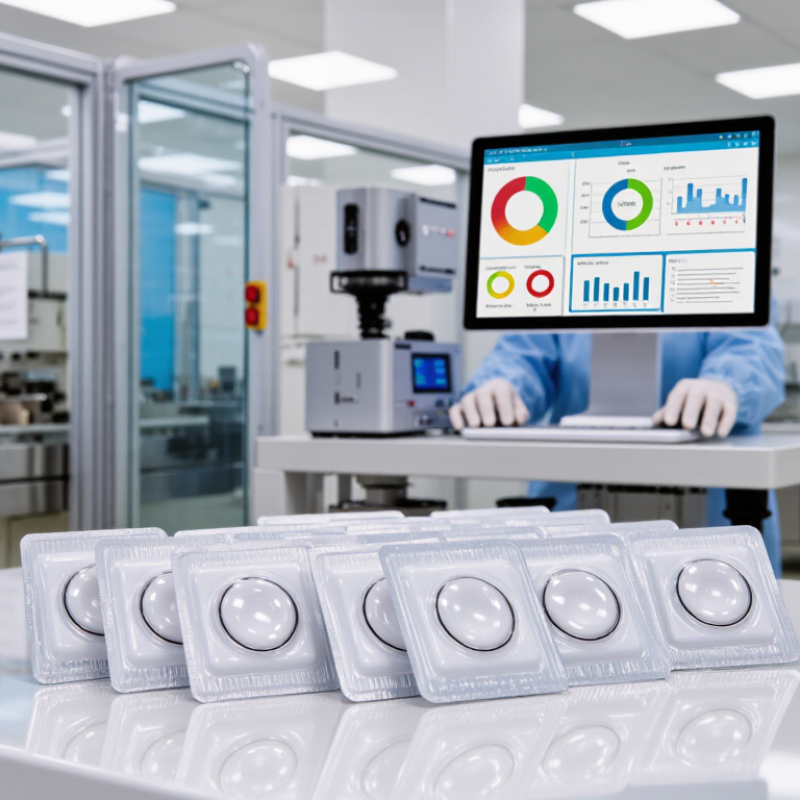
Use this illustrative planning scorecard to structure supplier discussions—not as market research or a universal ranking. Confirm your lens type, prescription range, target markets, applicable regulatory requirements, quality documentation, order volumes, lead times, packaging, and traceability needs before comparing manufacturers.

Checking Regulatory Compliance and Manufacturer Credentials

A contact lens is a regulated medical device, so a manufacturer’s credentials deserve more than a quick glance. Check that its quality-system certificate is current and covers the specific product and manufacturing site. ISO 13485 certification is useful evidence of a medical-device quality system, but it is not market authorization. Paperwork is not proof. Verify the relevant device authorization or establishment status through the regulator’s public records for your target market.

Ask for recent audit results, documented corrective actions, and evidence of lot-level traceability. A reliable supplier should be able to connect a finished lens to its materials, production records, and release checks. Review how it validates sterilization, handles complaints, and controls production changes. Details matter. Certificates can look complete while leaving a factory or product outside their stated scope; that gap is easy to miss.

The stakes are practical. A 2014 CDC report in Morbidity and Mortality Weekly Report found that 99% of surveyed adult contact lens wearers reported at least one risky lens-care behavior. A 2010 study in Eye & Contact Lens estimated nearly one million U.S. ambulatory visits and $175 million in annual costs from contact lens-related corneal infections. These figures concern wearer-related complications, not factory defects. Still, they underline why documented controls and clear complaint follow-up matter. Ask for evidence, and check that it matches the exact product you plan to source.

Evaluating Lens Materials, Designs, and Product Range

Evaluating a lens manufacturer means looking beyond material names. Ask for oxygen-transmissibility data, surface-treatment details, and evidence from real-world wear. Silicone hydrogel allows more oxygen through than conventional hydrogel, but oxygen alone does not guarantee comfort. Base curve, edge profile, and surface wetting matter, too. The TFOS International Workshop on Contact Lens Discomfort report (2013) reviewed studies with discontinuation rates ranging from 12% to 51%. That range is wide. It cautions against treating one material as a universal answer. Request test methods and results, not just claims.

Design and product range should match practical needs. Compare daily, two-week, and monthly replacement options, plus spherical, toric, and multifocal designs where relevant. Check whether the manufacturer offers parameter choices that support precise fitting, such as varied base curves and powers. Ask how performance is assessed after several hours of wear, when dryness or lens movement may become noticeable. A large catalog can look impressive. It can also hide gaps in technical support or supply consistency. Review sample documentation, quality controls, and reported complaint trends; then ask what the data cannot show. Real-world comfort is individual, and even good evidence leaves some uncertainty.

Assessing Manufacturing Quality, Capacity, and Traceability

A contact lens manufacturer’s quality system should be visible in routine work, not just polished documents. Ask how incoming materials are checked, molding settings are recorded, and failed lenses are handled. Request recent, anonymized batch records and audit evidence. Look for defined sampling plans, calibrated instruments, and documented corrective actions. A spotless presentation proves little. Small gaps matter.

Capacity is more than a monthly output figure. Compare quoted volume with actual line utilization, shift patterns, maintenance windows, and backup equipment. Ask how demand spikes affect inspection time and release schedules. If possible, observe the production area and see whether operators can explain key checks consistently. A busy line may still produce reliable results, but controls must scale with output. Numbers need context.

Traceability should link raw materials, lens batches, packaging, inspection results, and shipment records in a usable system. Test it with a sample batch: can staff locate its records quickly, identify affected lots, and explain the escalation path? Note response times and missing fields. Digital systems help, yet data entry can still be wrong. That deserves scrutiny. Ask how long records remain accessible and who verifies corrections. No system is perfect; pay attention to how exceptions are handled.

Comparing Costs, Communication, and Long-Term Support

A low quoted price can hide costs that appear later: tooling, packaging changes, testing, or small production runs. Ask for an itemized estimate and clarify which services are included. Compare the total cost over a realistic order cycle, not just the price per lens. Small costs add up. Request sample timelines, minimum quantities, and written terms for delays or defective batches. The cheapest option may still be right, but only when the assumptions are clear.

Communication is part of the product. Notice how quickly the manufacturer answers technical questions, and whether responses address your exact specifications. A useful partner can explain material options, production controls, and quality records in plain language. Ask who handles routine updates and urgent issues. Then test the process with a specific question. It is easy to overvalue a polished sales call; consistent follow-through matters more. I would also resist judging support by one slow email, though repeated delays deserve attention.

Long-term support should cover design adjustments, reorder planning, complaint handling, and access to relevant documentation. Confirm how changes are reviewed and how quickly you can expect an update. Ask what happens if demand shifts or a component becomes unavailable. That matters. Strong support does not guarantee a perfect partnership, and no checklist removes every risk. Still, clear costs, dependable communication, and practical follow-up make problems easier to spot before they disrupt supply.

FAQS

What should a product brief include before contacting a manufacturer?

Describe the wearer, use case, lens type, material preferences, replacement schedule, power range, and packaging. Mark essential details separately. Details matter.

How can I estimate whether demand is strong enough?

Identify likely customers, order sizes, price ranges, and sales channels. Base estimates on evidence, not a broad claim of growing demand. A small group’s interest may not predict wider sales.

What supply details should I confirm early?

Ask about minimum order quantities, lead times, production capacity, packaging options, and batch traceability. Clarify how product changes are controlled. Some estimates will need revisiting.

What should I check when evaluating manufacturing quality?

Ask how incoming materials are inspected, molding settings are recorded, and failed lenses are handled. Review recent anonymized batch records and audit evidence. A polished document is not enough.

How can I judge whether production capacity is realistic?

Compare quoted output with line use, shift patterns, maintenance windows, and backup equipment. Ask how demand spikes affect inspection and release schedules. Numbers need context.

What does useful batch traceability look like?

Records should connect materials, lens batches, packaging, inspection results, and shipments. Test a sample batch and see how quickly staff can locate its records. Look for missing fields.

Can a product sample prove consistent production quality?

No. A sample can reveal comfort or packaging issues, but it cannot prove every batch will be consistent. That distinction is easy to overlook.

What questions should I ask about records and corrections?

Ask how long records remain accessible, who checks corrections, and how exceptions are handled. Digital systems help, but data entry can still be wrong. No system is perfect.

Conclusion

Choosing the right contact lens manufacturer begins with a clear understanding of your product goals, target market, expected order volumes, and supply needs. Before making a decision, verify the manufacturer’s regulatory compliance, relevant credentials, and ability to provide appropriate documentation. Review its lens materials, designs, and product range to confirm they suit your intended customers and can support future product development.

Look closely at manufacturing quality systems, production capacity, and traceability processes, as these affect consistency and reliable delivery. Compare pricing alongside communication, responsiveness, and the level of technical and customer support available. A careful assessment of these factors can help you select a manufacturing partner that meets your requirements today and can support a stable, long-term business relationship.

Oliver

Oliver

Oliver is a professional marketing specialist with a strong understanding of the company’s products, their practical applications, and the needs of the customers they serve. He regularly contributes expert articles to the company website, offering clear, useful guidance and thoughtful perspectives......