Featured Wholesale Circle Lenses & Optical Systems
Engineered for optical retailers, cosmetic distributors, and eye care practitioners. Each series complies with strict biocompatibility standards, pigment encapsulation protocols, and customizable OEM packaging systems.
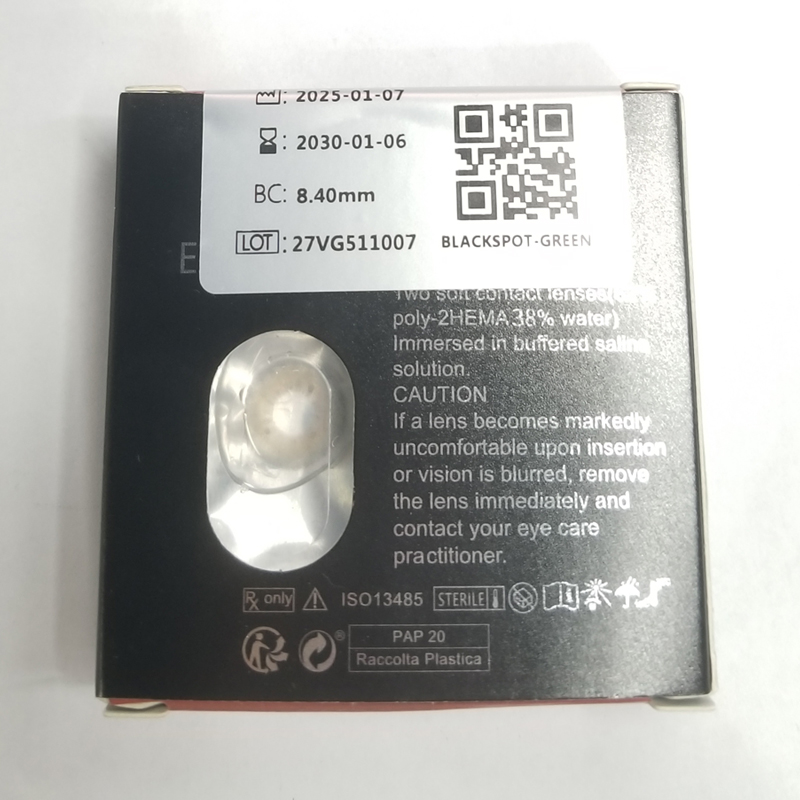
Personal Brand Lentes De Contacto Packaging Box

Optical Retail Display Shelf & Prosthetic Model Showcase
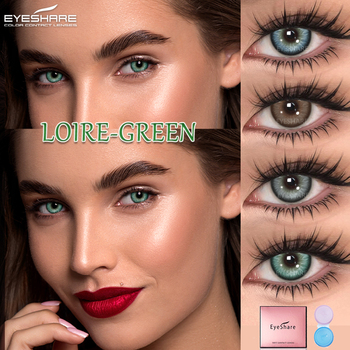
European Style Natural Blue-Grey Circle Lenses
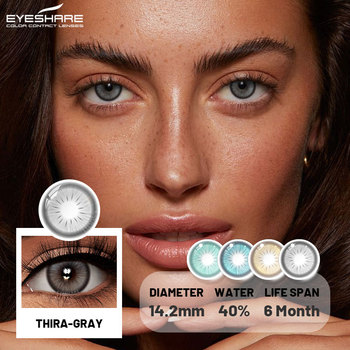
Three-Tone Soft Circle Lenses (Plano to -8.00D)
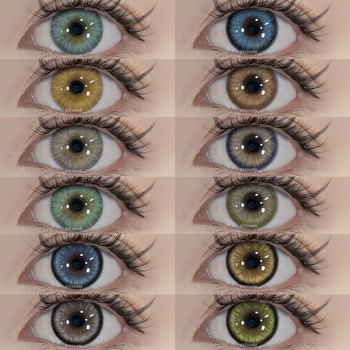
CE Certified Natural Three-Tone HEMA Circle Lenses
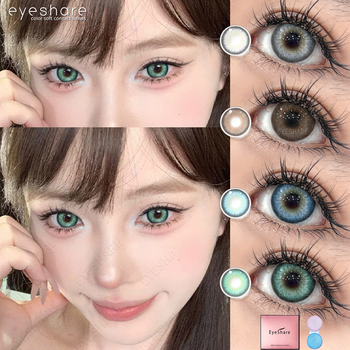
High-Oxygen Limbal Ring Circle Lenses 14.5mm
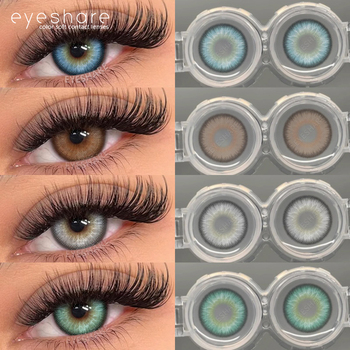
Fashion Aqua-Blue Semi-Annual Circle Lenses
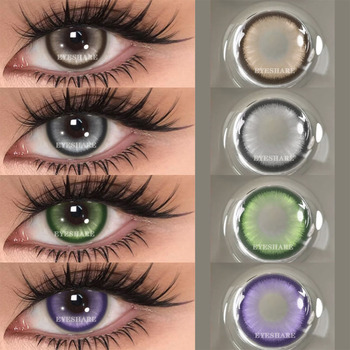
Deep Violet & Emerald Dual-Tone Circle Lenses
Why Global Optical Importers Select Our Medical Lens Facilities
Shenzhen Eyesharelenses Co., Ltd operates with complete regulatory oversight, certified quality management systems, and proprietary polymerization technologies designed specifically for export excellence.
SGS Onsite Audited Facility
Our complete operational apparatus—including sterile cleanrooms, semi-automatic blister sealing lines, and clean hydrogel hydration tanks—undergoes annual onsite verification by SGS Group. Inspection reports and chain of custody documentation are available for downstream MHRA and EU notified body audits.
Sandwich Pigment Encapsulation
Unlike lower-tier decorative lenses with surface-printed dyes, our circle lenses incorporate a tri-layer sandwich encapsulation process. Bio-inert colorants are molecularly locked within medical-grade poly-HEMA hydrogel, preventing direct cellular contact with the corneal epithelium and eliminating leaching hazards.
Turnkey OEM / ODM Solutions
From design-based and sample-based pattern creation to compliant multilingual packaging design, we offer complete private-label support. This encompasses sterile foil blister packs, glass vials with tamper-evident seals, GS1-compliant barcoding, and destination-specific patient instruction leaflets (IFUs).
Medical Grade Circle Lenses vs. Generic Market Products
Understand the critical material chemistry, oxygen permeability metrics, and regulatory baselines required to maintain ocular safety and customs clearance across the UK, EU, and North America.
| Evaluation Parameter | Eyeshare CE Medical Circle Lenses | Generic / Uncertified Decorative Contacts | Procurement Impact & Clinical Safety |
|---|---|---|---|
| Pigment Isolation | ✓ 3-Layer Embedded Sandwich | ✗ Surface Print / Pad Stamping | Prevents epithelial abrasions, toxic keratopathy, and color degradation during enzymatic cleaning. |
| Base Polymer Material | ✓ Poly-HEMA + NVP Copolymer | ✗ Low-grade Industrial Acrylics | Ensures high tensile modulus, optimal tear-film stability, and superior resistance to microbial adhesion. |
| Water Content Equilibrium | ✓ 38% – 40% Optimized | ✗ Unstable (Excessive 58%+) | Prevents lens dehydration on the cornea; low-water formulations reduce tear-film evaporation in daily wear. |
| Oxygen Permeability (Dk/t) | ✓ 18 – 25 × 10-9 Fatt units | ✗ < 8 × 10⁻⁹ Fatt units | Mitigates corneal hypoxia, limbal vascularization, and nocturnal corneal swelling in multi-hour wear scenarios. |
| Sterilization Method | ✓ Moist Heat Autoclave (121°C) | ✗ Chemical Rinse or Incomplete Cycle | Achieves a Sterility Assurance Level (SAL) of 10-6; zero chemical residues inside the storage blister. |
| Regulatory Documentation | ✓ Full CE, ISO 13485 & Test Reports | ✗ No Certs / Forged Compliance Files | Enables seamless commercial clearance through UK MHRA, EU Customs, and international border authorities. |
Cast-Molding Edge Profile
Our automated high-precision cast molding produces an ultra-thin bevel edge (0.04mm to 0.08mm) that minimizes mechanical eyelid friction during natural blinking cycles, drastically improving immediate on-eye tolerance.
Corneal Centration Optics
Incorporating optimized peripheral curves (8.5mm to 8.6mm Base Curve) designed to match the sagittal depth of typical European and Pan-Asian corneas, mitigating lens slippage and keeping the optical zone clear.
Batch Traceability Code
Every individual blister foil and master outer carton carries a laser-etched UDI barcode and lot number corresponding directly to raw material monomer batches, autoclave sterilization logs, and QC sign-offs.
Future Procurement Trends in the Global Circle Lens Industry
Emerging regulatory shifts, material breakthroughs, and consumer aesthetic preferences shaping volume wholesale contracts through 2026 and beyond.
Transition to Silicone Hydrogel (SiHy)
While poly-HEMA remains the global volume leader due to low manufacturing costs and superior pigment binding stability, Tier-1 brands are transitioning to hybrid Silicone Hydrogel matrices. Offering Dk/t values exceeding 80 Fatt units, SiHy circle lenses prevent end-of-day dryness symptoms and attract premium consumers seeking daily disposable luxury options.
Hyper-Realistic Multi-Tone Limbal Rings
The historical demand for opaque, harsh black limbal borders (doll-eye look) is rapidly fragmenting. High-value markets in the UK, Germany, and North America favor micro-dot gradient rings with 3-in-1 multi-tone hues. These designs simulate natural iris depth, creating subtle enlargement while allowing natural eye pigment to radiate through the pattern.
Tightening EU MDR & UKCA Surveillance
Under EU MDR 2017/745 (Annex XVI), cosmetic contact lenses with zero refractive power are classified as Class IIa medical devices, mandating equivalent clinical evaluation dossiers to prescription optics. B2B buyers must partner exclusively with manufacturers possessing authenticated Technical Files to avoid shipment impoundment at EU/UK ports.
Daily Disposable (1-Day) Volume Growth
Annual replacement circle lenses remain staple products in specialty retail and cost-sensitive regions; however, 1-Day disposable circle lenses exhibit an annual CAGR of over 14.8%. Retailers benefit from continuous reorder cycles, zero compliance friction regarding cleaning solutions, and minimized consumer ocular irritation risks.
Sustainable Medical Packaging Innovation
With stringent global EPR (Extended Producer Responsibility) taxes and packaging directives, brands are shifting away from excessive plastic secondary packaging. Leading suppliers now offer biodegradable outer paper sleeves, lightweight blister cups, and reduced polypropylene foil seals without compromising sterile barrier integrity.
Prescription + Cosmetic Hybrid Integration
Over 40% of cosmetic lens wearers require vision correction. Modern wholesale catalogues must deliver broad prescription coverage (from -0.50D to -8.00D, with emerging demand for astigmatic toric color lenses). Suppliers maintaining ready stock in corrective powers enable retailers to capture optical health and beauty buyers simultaneously.
Frequently Asked Questions for Wholesale Buyers
Everything procurement directors, retail category managers, and e-commerce founders need to know regarding MOQ parameters, documentation, customs handling, and private labeling.
What specific CE certification is required for circle lenses in the European Union?
Under the EU Medical Device Regulation (MDR 2017/745), contact lenses without refractive power fall under Annex XVI. They must carry a valid CE mark with a four-digit Notified Body number (Class IIa medical device). Sourcing uncertified lenses exposes distributors to immediate border seizures, regulatory prosecution, and distributor liability.
How do you guarantee that color pigments will not leach onto the cornea?
We employ a precision sandwich casting method. The inorganic cosmetic pigments (such as iron oxides, phthalocyanine blue, and titanium dioxide) are polymerized and physically enclosed between two clear layers of poly-HEMA hydrogel. Standard rub-off and cytotoxicity testing according to ISO 10993-5 confirms zero surface migration.
What is the minimum order quantity (MOQ) for stock wholesale vs. private label?
For in-stock catalog designs under the Eyeshare brand, MOQs are as low as 10 to 20 pairs per design/color, allowing rapid SKU sampling. For custom OEM private label projects (including custom blister packaging, brand boxes, and dedicated colorways), MOQs start at 500 to 1,000 pairs depending on printing specifications.
What documentation do you provide for customs clearance in the UK and EU?
We supply a complete regulatory packet: Certificate of Conformity (CoC), ISO 13485:2016 factory audit documentation, terminal sterilization validation reports, Material Safety Data Sheets (MSDS), commercial invoices, packing lists with UDI-compliant lot numbers, and localized English IFU leaflets for patient dispensing.
What are the differences between 14.0mm, 14.2mm, and 14.5mm diameters?
The overall lens diameter (DIA) determines physical fit and coverage, while the Graphic Diameter (G.DIA) dictates the actual cosmetic enlargement. A 14.0mm DIA provides natural enhancement with subtle color shifting. A 14.5mm DIA (with a 13.8mm+ G.DIA) provides the pronounced "circle lens" doll-eye enlarging effect favored in modern beauty communities.
What is the standard shelf life and packaging format for export orders?
All lenses are hermetically sealed in buffered isotonic saline with a verified shelf life of 5 years from the terminal autoclave sterilization date. Buyers can select either tamper-evident glass vials with tear-off aluminum caps or modern thermoformed polypropylene blister packs packed in pairs or six-packs.
Can you provide custom corrective powers for circle lenses?
Yes. We maintain a large inventory of stock powers from -1.00D to -5.00D in 0.25D increments, and from -5.00D to -8.00D in 0.50D increments on our most popular three-tone and natural circle series. Custom higher sphere powers or custom cylinder options can be produced under contract manufacturing runs.
What is the turnaround lead time for repeat wholesale shipments?
Stock catalogue SKUs are dispatched within 48 to 72 hours via expedited express (DHL/FedEx/Air Freight). Customized OEM private label runs involving custom printed boxes and tailored blister foils typically complete production within 20 to 30 calendar days from formal artwork sign-off and deposit confirmation.
Establish Your Certified Circle Lens Supply Chain Today
Whether expanding an existing optical chain, introducing a private-label beauty brand, or securing inventory for seasonal demand spikes, our Shenzhen engineering and export team provides complete compliance files, fast sampling, and factory-direct pricing.