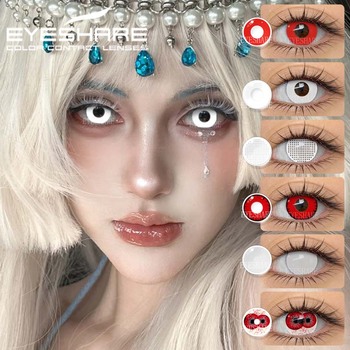
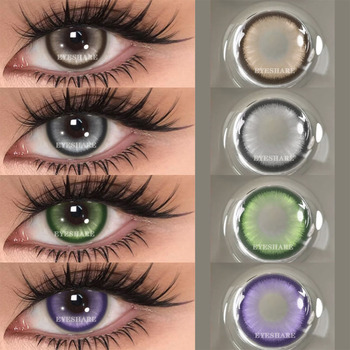
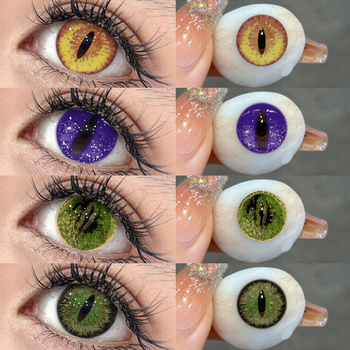
China Best Contact Lens OEM Manufacturer Factories & Supplier
A B2B Industry Whitepaper & Strategic Sourcing Guide on High-Precision Hydrogel Formulation, Global Regulatory Compliance, and Scalable Private-Label Architecture
Pre-validated clinical base curves, micro-encapsulated color layering, and fully customized blister or secondary packaging options optimized for international brand rollouts.
The Anatomy of Modern Contact Lens Manufacturing in China
Strategic Procurement, Hydrogel Formulation Economics, and Regulatory Risk Mitigation
Strategic Sourcing Overview: Soft contact lenses represent one of the highest-margin, yet most tightly audited sectors within the global medical device supply chain. As downstream retail competition shifts from generic commodity lenses to micro-differentiated cosmetic, toric, and high-Dk silicone hydrogel formulations, procurement executives must look beyond superficial quote sheets. Selecting an original equipment manufacturer (OEM) or original design manufacturer (ODM) in China demands evaluating raw polymer synthesis, sandwich micro-encapsulation precision, cleanroom sterilization integrity, and cross-border regulatory architecture.
6+
Years Export Mastery
4.8 / 5
Verified Buyer Score
32+
Audited Cleanroom Staff
100%
Batch Finished QC
1. Advanced Manufacturing Methodologies: Cast Molding vs. Lathe Cutting
Within premier Chinese contact lens factories, the transition from traditional mechanical lathe cutting to high-precision double-sided cast molding represents the foundational leap toward scalable quality. Cast molding employs optical-grade master steel dies combined with single-use injection molds. Liquid poly-HEMA or silicone-hydrogel monomers are metered via computer-controlled robotics into the female mold cavity, followed by precision male mold clamping, ultraviolet photopolymerization, and thermal curing cycles.
This automated sequence eliminates microscopic tooling striations on the anterior and posterior lens surfaces, guaranteeing consistent sagittal depth, apex center thickness, and peripheral edge taper across millions of units. For private-label brands, this ensures batch-to-batch repeatability that minimizes customer adaptation friction and eliminates localized corneal chafing.
2. The Bio-Sandwich Color Printing Standard: Corneal Safety Imperatives
A paramount audit checkpoint for cosmetic contact lenses is the color pigment embedding technique. Substandard legacy factories apply pigment layers directly on the posterior or anterior lens surface via single-stage pad printing. When lenses interact with human tears, lipids, and eyelid friction, exposed pigment particles can leach, leading to chemical conjunctivitis, giant papillary conjunctivitis (GPC), and epithelial abrasion.
Elite Chinese OEM suppliers utilize a proprietary "Sandwich Enclosure Architecture" (Micro-Encapsulation Technology). Under this protocol, pharmaceutical-grade inorganic iron oxide and copper phthalocyanine colorants are pad-printed onto a partially polymerised base layer, then hermetically sealed under an ultra-thin hydrogel cover polymer. The pigment remains trapped entirely within the matrix. Direct chemical wipe testing with isopropyl alcohol confirms zero pigment migration, providing unassailable clinical defense files for international health authorities.
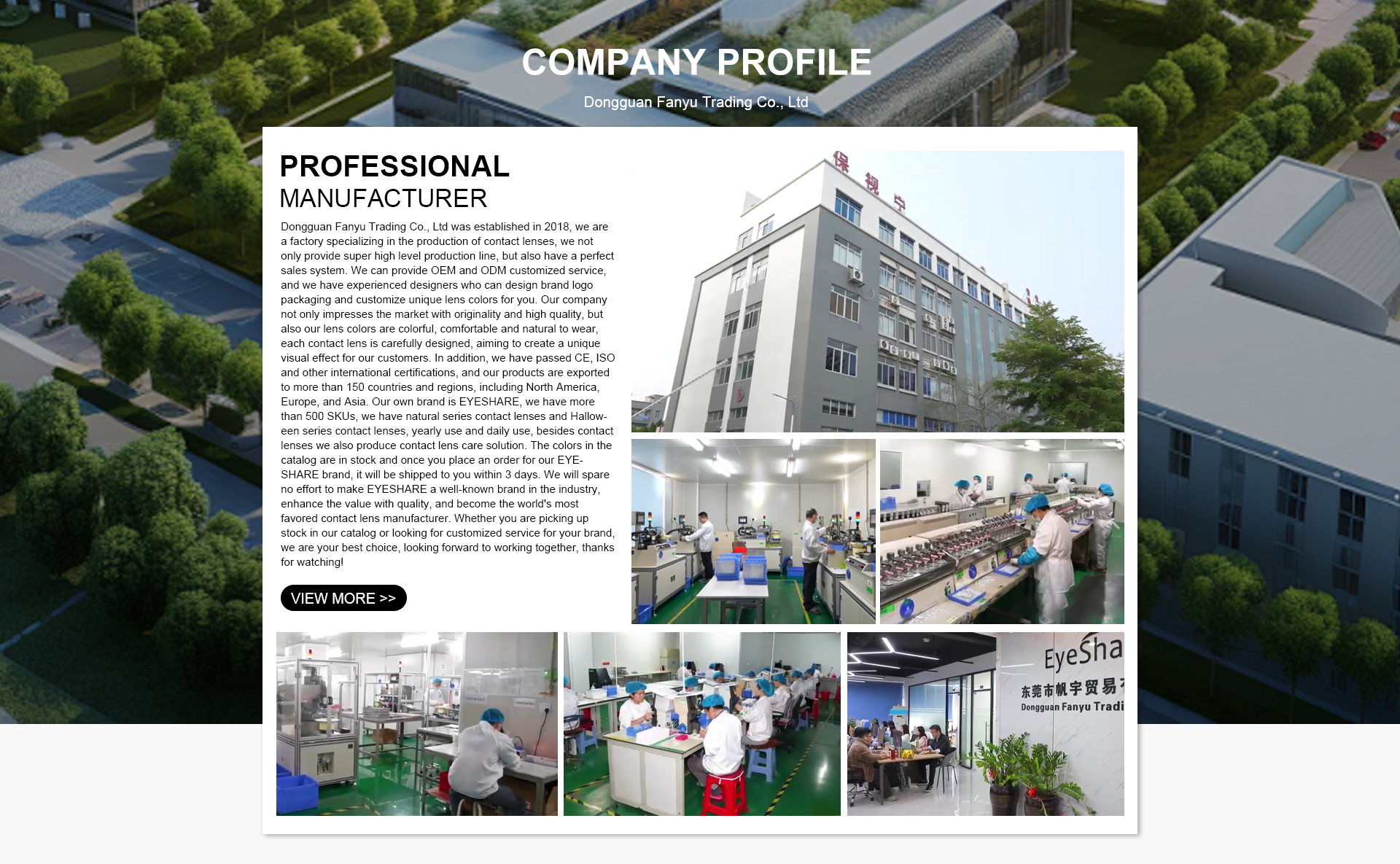
Class 100,000 ISO Cleanroom Environment
Optometric Hydration & QC
Sterile Automated Blister Line
3. Compliance Frameworks: Navigating UK MHRA, EU MDR, and US FDA
Procurement teams frequently misunderstand that cosmetic zero-powered plano lenses are legally categorized as Class IIa or Class IIb medical devices across Tier-1 regulatory bodies. Sourcing from China requires complete documentation of:
• Technical Documentation Files (TDF): Full biocompatibility profiles under ISO 10993 (cytotoxicity, systemic toxicity, and ocular irritation evaluations).
• Stability & Expiry Profiling: Real-time and accelerated shelf-life stability tests confirming blister seal burst integrity and maintenance of solution pH (7.0–7.4) and osmolality over 3-to-5-year periods.
• UK & EU Market Access: In Great Britain, adherence to the Opticians Act 1989 and registration with the MHRA via an appointed UK Responsible Person (UKRP) is required. In Europe, alignment with EU MDR (Regulation 2017/745) Annex VIII Class IIa pathway is mandatory. Reputable manufacturers provide ready-to-file Dossiers that dramatically reduce market authorization timelines.
Strategic Intelligence
Future Procurement & Product Development Trends (2025–2030)
Anticipating structural shifts in polymer science, consumer wear modalities, and omni-channel regulatory scrutiny.
While yearly and half-yearly HEMA lenses remain dominant for Halloween, costume, and budget-oriented private labels, the higher-margin cosmetic space is rapidly tilting toward single-use daily disposables. Daily modalities eliminate compliance liabilities regarding lens storage case hygiene, patient non-compliance with disinfecting solutions, and long-term protein biofilm deposition. Brand owners are actively shifting initial OEM purchase orders toward 10-piece and 30-piece blister packs.
2. Silicone Hydrogel (SiHy) Cosmetic Integration
The next frontier in cosmetic contact lens contract manufacturing is solving the surface wettability paradox of silicone hydrogel. Standard SiHy provides exceptional oxygen transmissibility (Dk/t > 100), yet naturally hydrophobic silicone surfaces attract lipid binding. Emerging factory technologies in China incorporate internal wetting agents (PVP) and reactive plasma-coating layers to achieve both high oxygen delivery and ultra-smooth, wettable cosmetic patterns.
3. Automated Micro-Batching & Agility
Legacy contact lens OEM models demanded exorbitant MOQs (often 5,000+ pairs per color SKU), handcuffing indie beauty brands to severe inventory overhang. Future-ready Chinese suppliers are reorganizing floor layouts around modular pad-printing stations that support rapid plate changeovers. This enables brands to sample 10 to 50 pairs for social proof campaigns before scaling to full automated runs.
4. UV-Blocking & Blue-Light Filtering Co-Polymers
Eye protection functionality is transitioning from an optional upcharge to a baseline expectation. Monomer synthesis now integrates Class 1 UV filters (blocking >90% UVA and >99% UVB) and photoprotective tint technologies directly into the bulk monomer without disrupting iris color authenticity or light transmission clarity.
5. Sustainable Packaging & Foil Innovations
Traditional polypropylene blister packs and secondary cartons represent massive plastic burdens. Leading factories are engineering peelable foils with optimized tensile properties that eliminate micro-perforation failures during autoclave sterilization, paired with FSC-certified post-consumer recycled (PCR) paper packaging.
6. Smart Traceability & Anti-Counterfeiting
With stringent counterfeit crackdowns by Amazon, TikTok Shop, and global customs, OEMs are embedding serialization and 2D GS1 DataMatrix barcodes directly into foil lidding. This gives brand partners real-time verification of batch sterilisation lot numbers, manufacturing timestamps, and authenticity proofs.
Factory Pedigree & Authority
Why Tier-1 Brands Partner with Shenzhen Eyesharelenses
Combining onsite SGS-verified manufacturing standards with six years of deep export engineering and turnkey private-label delivery.
SGS Onsite Audited Facility
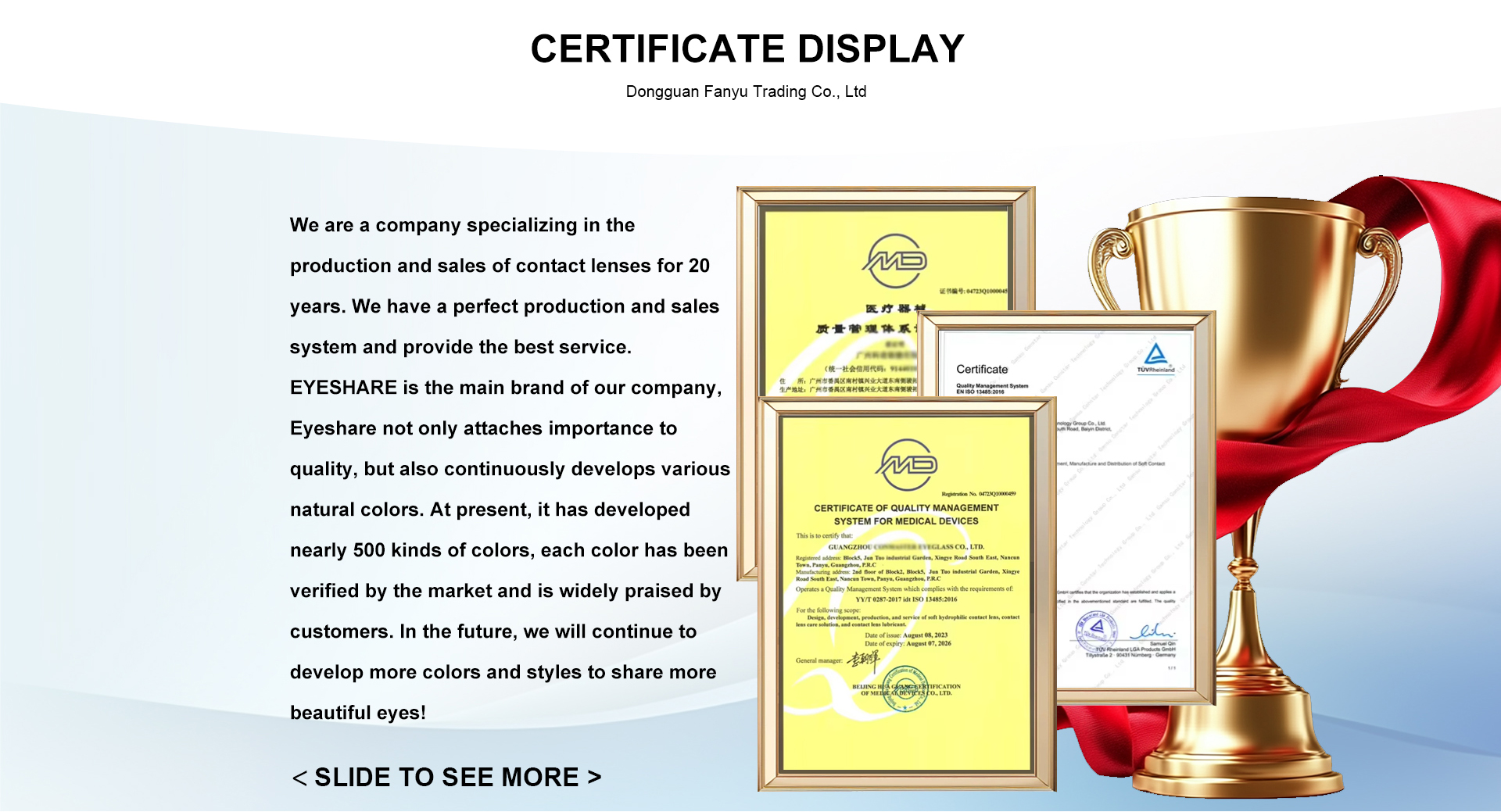
Unlike trading intermediaries, our manufacturing infrastructure undergoes comprehensive onsite facility verification by SGS Group. Legal corporate status, physical plant integrity, cleanroom protocols, and automated packaging lines are rigorously verified.
Senior Certified Engineering Team
Our research and quality oversight team features 5+ certified optical and polymer engineers, each possessing over 5 years of specialized contact lens cast-molding and spectrophotometric color testing experience.
Comprehensive OEM / ODM Integration
We provide sample-based matching, original pattern CAD rasterization, sterile blister foil sealing, and custom secondary packaging box design (including multi-lingual Instructions for Use leaflets).
Rigorous 100% Finished Inspection
Every single production batch undergoes projection optometric verification for base curve (8.5–8.6 mm), total diameter (14.0–14.5 mm), edge smoothness, center thickness, and sterile solution clarity.
Dedicated International Trade Specialists
Supported by a responsive 24-person cross-border trade operations department providing seamless English communication, customs export paperwork, dangerous goods (MSDS) saline clearance, and forwarder logistics.
Flexible Scale: Low MOQ to Million Units
We respect fast-growth startup brands and retail powerhouses alike. We offer entry sample testing orders from 2 to 10 pairs on in-stock lines, with the infrastructure to scale to high-volume multi-container monthly fulfillment.
Procurement Due Diligence
Frequently Asked Questions for Contact Lens Wholesale & OEM
Direct answers addressing regulatory compliance, production schedules, formulation parameters, and private-label execution.
Can cosmetic or zero-powered colored contact lenses be imported and sold without prescription compliance?
No. In major global jurisdictions—including the United Kingdom (under the Opticians Act 1989), the European Union (EU MDR Class IIa), and the United States (US FDA 510(k) Class II)—all contact lenses, including cosmetic plano (zero-powered) and theatrical Halloween lenses, are legally regulated as medical devices. Importers and brand owners must ensure that product labeling, packaging instructions, and distribution channels strictly comply with local optometric oversight and medical device registration protocols. We provide the full batch test reports, CE technical documentation, and safety data sheets (MSDS) required for your local compliance file.
What is the standard Minimum Order Quantity (MOQ) for custom private-label vs. wholesale stock?
For stock designs carrying factory packaging, our MOQs are among the most accessible in the industry, ranging from 10 to 20 pairs per design, with selective models available from 2 pairs for sampling. For custom OEM private-label branding (including bespoke branded boxes, custom foil printing, and specialized IFU leaflets), typical production MOQs start from 500 to 1,000 sets. Fully proprietary iris pattern mold creation and unique color printing runs are quoted individually based on annual volume commitments.
What technical specifications and material hydrogel formulations are used?
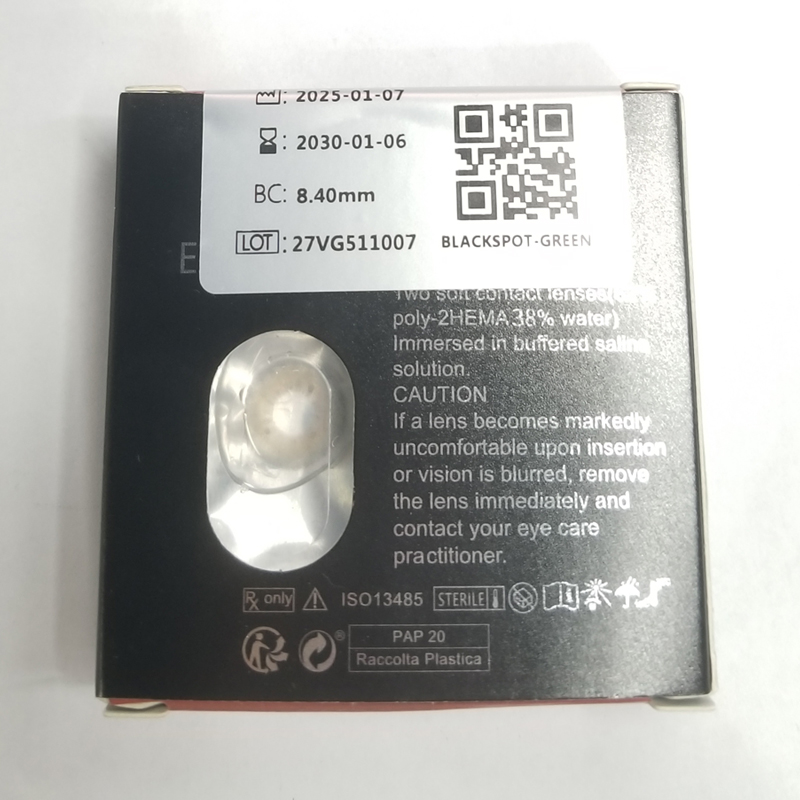
Our standard cosmetic product lines utilize soft poly-HEMA hydrogel with an optimized ~38% water content. This hydration equilibrium prevents the lens from dehydrating the ocular pre-corneal tear film, making it ideal for extended 8-to-12 hour daily wear in air-conditioned environments. Standard base curves (BC) are precisely cast at 8.5 mm or 8.6 mm with total diameters (DIA) of 14.0 mm, 14.2 mm, or 14.5 mm. Products are offered across daily, half-yearly, and yearly replacement wear schedules. Corrective myopia powers from -1.00 to -8.00D are available on core natural models.
How does your factory ensure the safety of color pigments inside the lens?
We employ an advanced sandwich encapsulation (micro-embedding) process. Medical-grade colorants are deposited in a structured layer and fully locked between two pristine layers of transparent hydrogel polymer. The pigments never touch corneal or conjunctival tissues directly, nor are they exposed to tear fluids. This ensures complete color retention without pigment shedding, chemical leeching, or surface roughness changes.
What is the recommended production and shipping timeline for seasonal demand like Halloween?
Seasonal costume and Halloween retail demand accounts for significant annual cosmetic lens turnover. Because October retail trade starts surging in late September, international buyers must place firm wholesale and private-label orders by mid-August at the latest. This 6-to-8 week window accommodates precision batch casting, autoclave sterilization, secondary custom packaging assembly, finished QC release, and international air/sea freight clearing through customs.
How do you verify batch quality and regulatory documentation before dispatch?
Our facilities have undergone rigorous onsite supplier assessment by SGS Group. In-house quality control includes optical projection comparator testing for dimensional parameters (diameter, base curve, and edge geometry), automated optical inspection for surface anomalies, spectrophotometric color consistency analysis, and bioburden testing. Each batch is accompanied by Certificates of Analysis (COA) and sterilization validation reports upon request.
Initiate Your Contact Lens OEM / Wholesale Project
Partner directly with China's leading certified contact lens manufacturer. Request our comprehensive commercial catalog, evaluate on-eye samples, and receive a dedicated technical quotation for your brand.