Engineering Excellence & Flagship Product Solutions
Precision-cast ophthalmic lenses engineered for comfort, optical fidelity, and distinctive pigmentation, tailored specifically for international clinical and cosmetic retail distribution networks.

Display Shelf & Ocular Prosthesis Kit
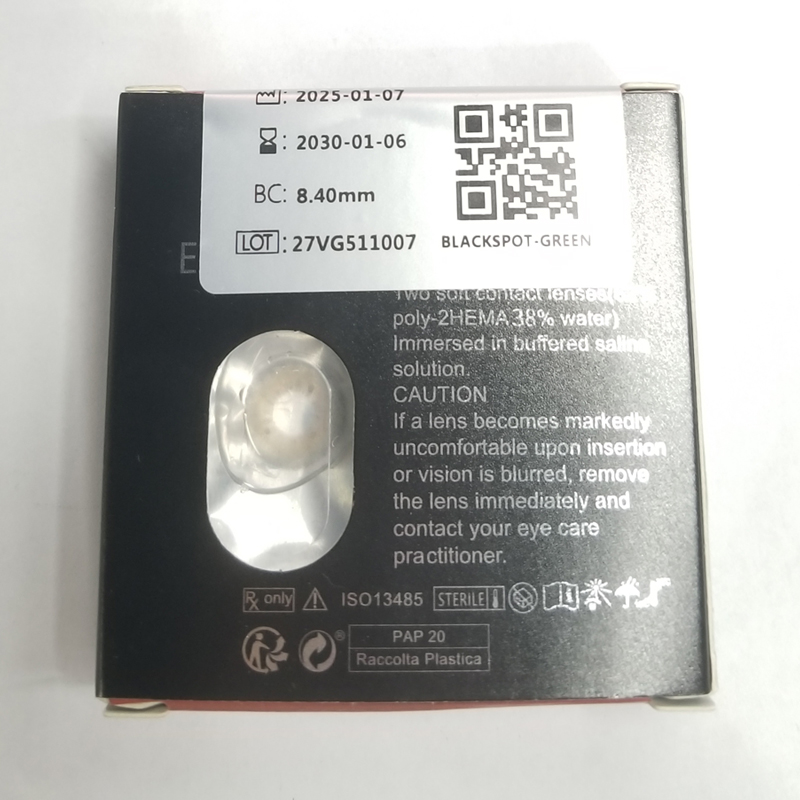
Custom Private Label Packaging Box
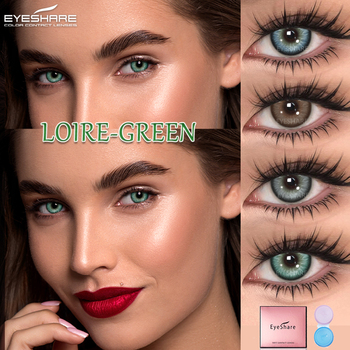
European Natural Blue-Grey Series
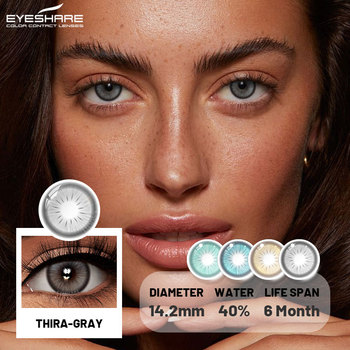
Three-Tone Multifocal & Myopia Lenses
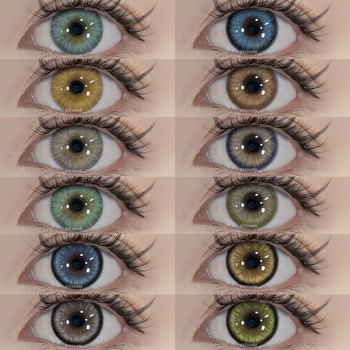
Natural 3-Tone CE Certified HEMA Lens
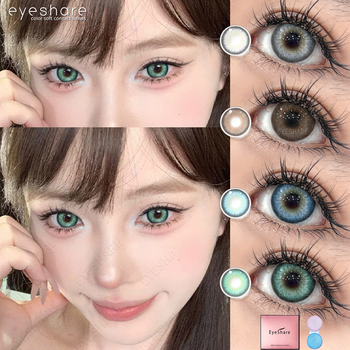
High-Oxygen Flow 14.5mm Iris Matrix
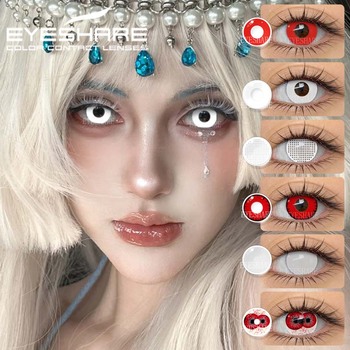
Opaque FX Crazy Anime & Cosplay Series
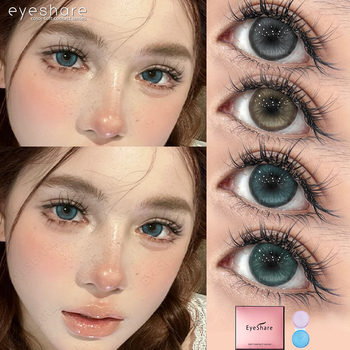
14.2mm Ultra-Thin Precision Edge Lens
White Paper: Sourcing Ophthalmic Contact Lenses via China ODM Ecosystems
The global soft contact lens industry has undergone a systemic paradigm shift over the past decade. Previously dominated by legacy western optical monopolies, the convergence of high-precision nanometer-level cast-molding technologies, automated cleanroom systems, and bio-compatible hydrogel synthesis has established China as the premier engineering epicenter for contact lens ODM (Original Design Manufacturing) and OEM operations. Shenzhen Eyesharelenses Co., Ltd. sits at the leading edge of this industrial evolution, bridging medical-grade manufacturing excellence with dynamic international regulatory alignment.
Technical Authority: The Mechanics of Modern Contact Lens ODM
At Shenzhen Eyesharelenses, our production philosophy is founded on micro-engineering precision. Soft contact lenses fabricated from Poly-HEMA (2-Hydroxyethyl Methacrylate) and advanced hydrophilic silicone macromolecules demand rigorous adherence to optical tolerances. A variance of even 0.02mm in the Base Curve (BC) or 0.05mm in the Overall Diameter (DIA) will alter tear fluid turnover, induce corneal hypoxia, or cause mechanical displacement. Consequently, our ISO-controlled cleanrooms employ fully closed automated polymer dispensing systems that achieve sub-micron mold injection accuracy.
A critical technical benchmark separating tier-one Chinese contract manufacturers from inferior workshops is colorant stabilization. Eyeshare incorporates proprietary Micro-Color Sandwich Technology. Instead of conventional superficial tampon printing—which risks exposing corneal epithelial tissues to synthetic dyes—our process encapsulates cosmetic pigmentation layers entirely between two micro-thin sheets of unpigmented hydrogel polymer. This ensures zero direct pigment contact with ocular tissue, eliminates cytotoxicity risks, and delivers all-day hydration retention without surface friction degradation.
SGS Assessed & ISO Calibrated
Verified on-site by SGS Group. Full supply chain auditability from raw monomer synthesis to sterile vial crimping.
Sandwich Pigment Isolation
Complete cellular protection. Pigment particles are permanently locked within biocompatible hydrogel layers, eliminating mechanical abrasion.
Global Compliance Ready
Formulated to support UK MDR / CE Class IIa files, complete with biocompatibility profiles, aging reports, and multilingual IFUs.
Future Procurement Trends: Where the Optical Market is Heading
Enterprise procurement professionals and optical brand managers must navigate rapidly evolving consumer expectations and stringent medical statutory frameworks. Over the 2025–2030 cycle, procurement intelligence highlights three definitive vector shifts:
1. Shorter Replacement Modalities Dominating Cosmetic Channels: While half-yearly and yearly disposable models maintain dominant market share across cost-sensitive cosmetic distributors, mature markets in North America, the UK, and Western Europe are demonstrating a decisive structural tilt toward daily and monthly disposable units. Procuring daily disposables minimizes lens care non-compliance, eliminates microbial biofilm accumulation, and lowers the incidence of contact lens-induced acute red eye (CLARE).
2. Silicone Hydrogel Migration for Aesthetic SKUs: Historically, cosmetic colored lenses were confined to standard HEMA polymers due to the biochemical challenge of binding pigments within high-oxygen silicone matrices. Next-generation ODM research at our production hubs leverages specialized plasma surface treating and copolymer engineering, enabling Dk/t ratings exceeding 80 while maintaining realistic multi-tone iris gradients. Buyers who position their brand portfolios around high-Dk colored lenses capture premium retail price elasticity.
3. Hyper-Customized Regional Aesthetics and Micro-Targeting: Gone are the days of single-pattern global distribution. Caucasian, East Asian, Middle Eastern, and Latin American irises possess vastly distinct limbal ring diameters and base pupil dimensions. Procurement strategies now leverage Eyeshare’s agile ODM modeling to rapidly roll out tailored visual depths: dense opacity for dark irises, subtle limbal enlargement for circle lens devotees, and vivid theatrical chromatic blends for cosplay ecosystems.
Industrial & Technological Trends: Advanced Automation & Sustainable Logistics
To retain cost competitiveness while satisfying rigorous pharmacopeial standards, Chinese contract manufacturers are accelerating investment in automation. Eyeshare’s manufacturing infrastructure utilizes high-speed vision inspection machines capable of scanning 100% of finished lenses for edge fissures, surface inclusions, and optical decentration at rates exceeding 60 units per minute. Manual visual inspection is relegated to secondary random batch audits, driving defect escape rates below 0.01%.
Simultaneously, environmental accountability is driving packaging redesigns. The industry is transitioning away from excessive PVC blister compounds toward eco-compatible polypropylene and lightweight paperboard cartons sourced from FSC-certified suppliers. These systemic reductions in dimensional weight lower air-freight carbon footprints and optimize volumetric shipping tariffs for international importers facing elevated maritime and air logistics costs.
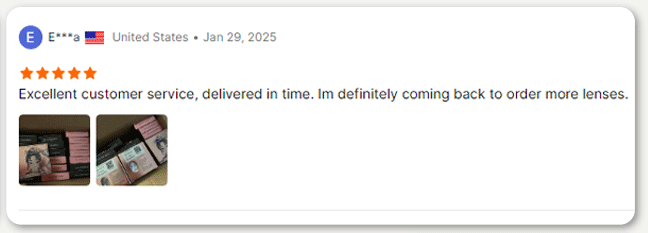
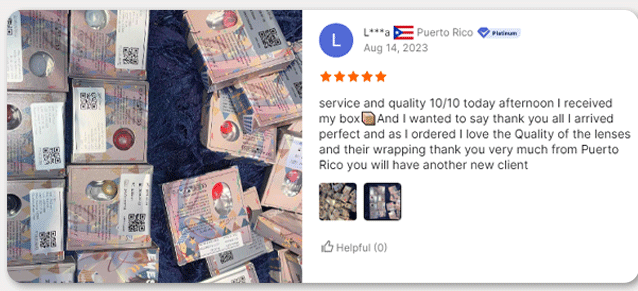
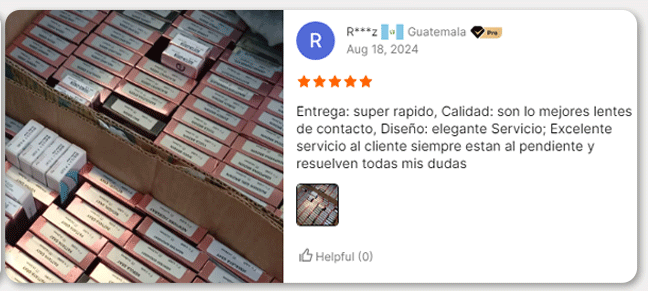
Factory Capabilities & Verification Gallery
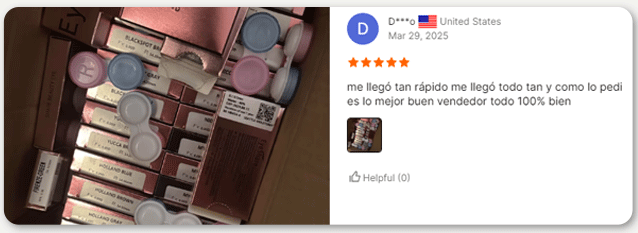
Why Partner with Shenzhen Eyesharelenses Co., Ltd.
Navigating cross-border medical device trade requires more than just low unit costs; it demands operational reliability, regulatory foresight, and proactive customer support. Shenzhen Eyesharelenses provides an integrated manufacturing architecture:
- Engineering Pedigree: A specialized R&D team featuring 5+ certified optical engineers, each boasting over half a decade of dedicated polymer and mold design experience.
- Agile Private Labeling: Flexible MOQs for proof-of-concept sampling (starting as low as 10-20 pairs for standard designs) coupled with dynamic scaling capabilities for multi-million unit private label rollouts.
- Turnkey Packaging: In-house graphic and regulatory documentation departments providing comprehensive carton layout, barcode allocation, blister foil sealing, and native-language patient information leaflets.
- Verified Trade Reliability: Onsite assessment verified by SGS Group, boasting a consistent 4.8/5 trade satisfaction index across six years of documented cross-border shipments to over 40 global territories.
Frequently Asked Procurement Questions (FAQ)
Comprehensive answers addressing regulatory, clinical, and logistics considerations for professional buyers.