China Wholesale Colored Contact Lens Supplier, Manufacturer & Factories

B2B Manufacturing Intelligence, Technical Hydrogel Formulations, and Private Label OEM/ODM Execution

Manufacturing Portfolio

Featured Contact Lens Collections & Merchandising OEM Solutions

Direct-from-factory hydrogel cosmetic lenses, high-definition anime/cosplay variants, and turnkey private-label optical merchandising systems manufactured under rigorous cleanroom conditions.

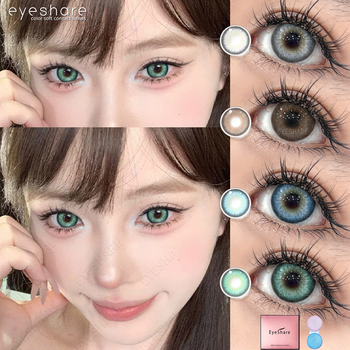
European Tones European Style Big Size Natural Blue Grey Soft Contact Lenses

European Style Natural Blue Grey Soft Lenses

Soft HEMA Dia 14.5mm Plano (0.00)
MOQ: 20 pairs US $1.32–2.55
Rx / Myopia Three Tone Multifocal Soft Contact Lenses for Myopia

Three-Tone Multi-Depth Myopia Soft Contact Lenses

BC 8.5mm 38% Hydration -1.00 to -8.00D
MOQ: 20 pairs US $1.50–2.90
Medical Grade CE Standard Certified Natural Three Tone Soft HEMA Contact Lenses

Clinical Quality Three-Tone Cast-Molded Lenses

Cast Molding Sandwich Tech Yearly Wear
MOQ: 10 pairs US $1.50–2.90
High Oxygen OEM ODM High Oxygen Transmissibility Three Tone Lenses

High Transmissibility 14.5mm Enlarging Lenses

Optimized Dk Half-Yearly Anti-Dryness
MOQ: 20 pairs US $1.35–2.61
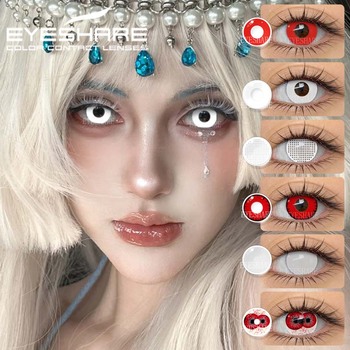
Cosplay / Sclera Crazy Red & Yellow Anime Halloween Cosmetic Contacts

High-Opacity Red & Yellow Anime Cosplay Lenses

Full Iris Block Non-Leaching Vibrant Pigment
MOQ: 10 pairs US $1.32–2.46
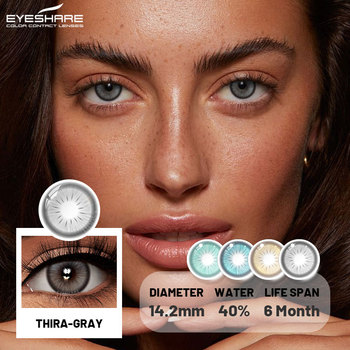
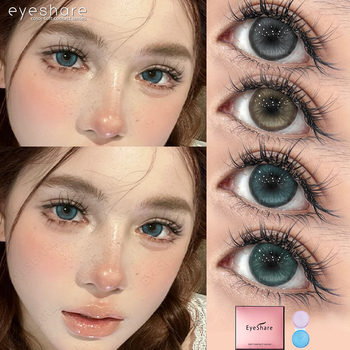
Natural Circle 14.2mm Subtle Iris Blending Daily Wear Colored Contact Lenses

14.2mm Subtle Iris Blending Micro-Dot Contacts

Micro-Dot Array Bio-Compatible Plano & Power
MOQ: 10 pairs US $1.33–2.58
6+
Years International Export
4.8/5
Verified Customer Satisfaction
100%
Sandwich Encapsulation Rate
5+
Senior QC Optical Engineers
Enterprise Core Competence

Why Global Optical Brands Choose Our Manufacturing Infrastructure

Combining automated cleanroom technology, strict medical polymer processing, and turn-key regulatory file assistance for international distributor compliance.

SGS Onsite Audited Facilities

Our manufacturing site undergoes regular onsite assessments by SGS Group. Production lines, cleanroom air sterility, QA/QC documentation, and export protocols are independently reviewed to eliminate supply chain risk for global brand buyers.

Sandwich Color-Lock Technology

To safeguard corneal health, our polymer hydrogel utilizes dual-layer embedding technology. Non-toxic organic pigments are locked between thin layers of HEMA material, preventing ink contact with conjunctival tissues and ensuring zero pigment migration.

Full OEM/ODM Private Label Suite

We provide end-to-end design and manufacturing support: bespoke colorway formulation, custom base curves, sterile blister and glass vial packaging, multilingual instructions for use (IFU), and fully certified master outer carton shipping.

Procurement Strategy Whitepaper

Future Procurement Trends in the Global Cosmetic Contact Lens Sector

Critical shifts shaping B2B sourcing decisions across the European, North American, and East Asian retail markets over the next 3 to 5 years.

1. Shift Towards Shorter Replacement Cycles (Daily & Monthly)

While yearly and half-yearly HEMA lenses maintain strong margins in budget and specialized theatrical sectors, enterprise optical chains are aggressively moving toward daily disposable colored lenses. Daily disposables lower deposit accumulation and infection incidents, increasing user retention and recurring purchase value.

2. Demand for Hybrid Optical Corrective Powers (Toric & Multifocal Colors)

Historically, colored contacts remained predominantly plano (0.00 diopter) or simple sphere myopia. Procurement analytics reveal a 42% year-over-year surge for astigmatic (toric) colored lenses and multifocal cosmetic variants, requiring suppliers to possess computerized lathe-cutting and dual-molding capabilities.

3. Regulatory Tightening and Supplier Traceability (MDR & UKCA)

Cosmetic contacts are legally regulated as medical devices (Class IIa/IIb) across the EU, UK, and US. Buyers are shifting purchase volumes away from uncertified trading intermediaries toward direct manufacturers capable of providing valid technical documentation, bio-compatibility testing, and ISO 13485 cleanroom validation files.

4. Sustainable and Biodegradable Secondary Packaging

With ESG criteria impacting retail contracts, international distributors now demand FSC-certified recyclable folding cartons, reduced plastic mass in blister trays, and soybean-ink printing for external cosmetic boxes without compromising the sterile hermetic seal of the lens packaging.

5. Hyper-Agile Sampling and Seasonal Cosplay Pipelines

For high-volatility seasonal windows—such as Halloween, carnival seasons, and comic-con festivals—procurement departments require shorter lead times. Factories offering hybrid inventory models (ready-to-ship core patterns alongside bespoke small-batch OEM runs) provide a distinct competitive buffer against dead-stock risk.

6. Omnichannel Retail Merchandising Systems

Procurement managers are no longer sourcing lenses alone. They seek integrated visual solutions, bundling customized counter-top acrylic displays, clinical prosthetic eye simulation blocks, and tester fixtures to simplify retail rollout and improve salon conversions.

R&D & Material Science

Technological Milestones Driving Cosmetic Lens Manufacturing

A deep dive into advanced polymer hydrogel chemistries, edge-geometry optimization, and pigment micro-dispersion.

Silicone Hydrogel Material Integration

Traditional cosmetic contact lenses rely on standard Poly-HEMA polymers with oxygen transmissibility (Dk/t) hovering around 10–15. Next-generation production integrates fluorosilicone monomers, yielding Dk/t scores above 80. This significant leap allows extended wearing periods without corneal edema or limbal redness, creating medical-grade safety margins for fashion lenses.

High-Resolution Nano-Dot Matrix Printing

Older printing methods generated visible pixelation that clashed with fine dark irises. Modern multi-color pad printing and digital inkjet matrices deposit pigment dots as fine as 15 microns. This allows smooth transitions across outer limbal rings, secondary stroma hues, and inner pupillary borders, delivering natural ocular depth under daylight conditions.

Dynamic Comfort Edge Profiles

A critical driver of contact lens intolerance is edge friction against the bulbar conjunctiva. Through high-precision cast molding and automated round-edge polishing, modern lens profiles eliminate blunt edges. The refined tapered profile supports steady tear exchange beneath the lens body during blink cycles, preserving ocular tear film stability.

Procurement Due Diligence

Frequently Asked Questions for Wholesale & OEM Sourcing

Objective answers regarding international compliance, production parameters, packaging customizations, and supply chain logistics.

Are cosmetic colored contact lenses regulated as medical devices in major markets?
Yes. In almost every established market—including the United States (FDA Class II), the European Union (EU MDR Class IIa/IIb), and the United Kingdom (MHRA / Opticians Act 1989)—colored cosmetic lenses (even with zero refractive power, 0.00 plano) are classified as medical devices. They must be produced under strict ISO 13485 cleanroom certifications and comply with regional supervision and traceability requirements prior to retail distribution.
What is the standard Minimum Order Quantity (MOQ) for stock and OEM orders?
For stock designs carrying factory packaging, our standard MOQ begins at 10 to 20 pairs per SKU, facilitating low-risk market testing and sampling. For custom private-label projects—including bespoke color formulations, personalized foil blisters, and branded retail folding boxes—MOQs generally start at 500 to 1,000 units depending on the complexity of packaging tooling.
How is pigment safety guaranteed to prevent corneal abrasions and leaching?
Our manufacturing strictly utilizes the "Sandwich" or "Three-in-One" encapsulation method. Bio-compatible, medical-grade colorants are physically embedded between the outer and inner polymer matrix. The pigments never touch corneal or conjunctival tissues directly, and standard cotton-swab abrasion and autoclave solvent tests confirm zero pigment release.
Can we procure lenses with specific corrective powers (Myopia) across colored lines?
Yes. A wide selection of our catalog features diopters ranging from -1.00 to -8.00 in 0.25D or 0.50D increments. Custom power distributions can be manufactured alongside plano shipments. Please confirm your desired power distribution sheet during order finalization.
What is the shelf life and sterilization protocol for wholesale sealed lenses?
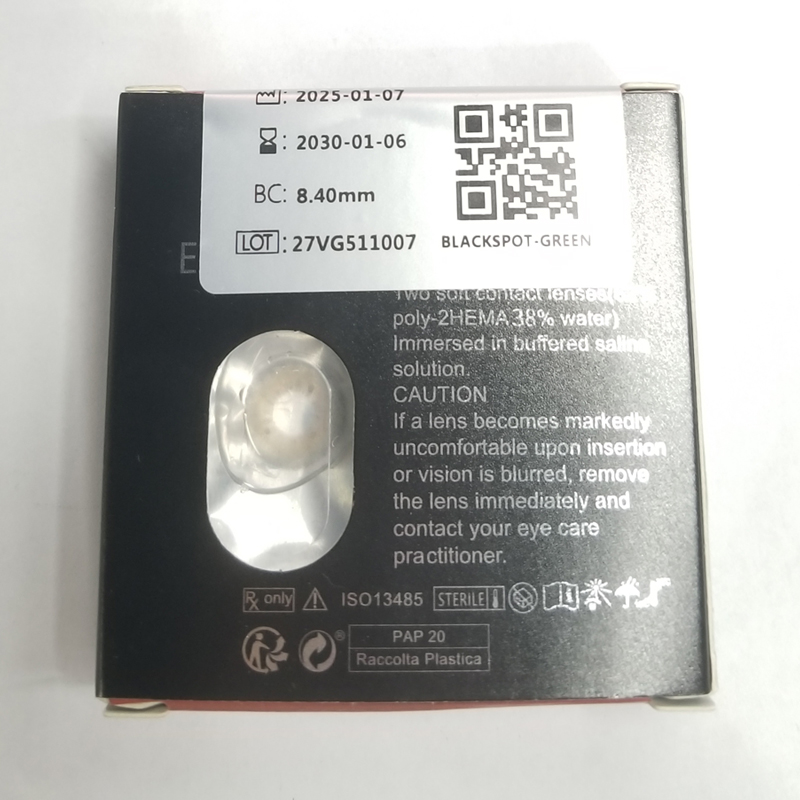
All lenses are sealed within sterile buffered physiological saline solution (with or without hyaluronic acid moisture agents) inside medical-grade polypropylene blister packs or glass vials, followed by high-pressure steam autoclave sterilization. The shelf life is typically 5 years from the date of manufacture when stored at ambient room temperature away from direct sunlight.
What is the typical production and delivery lead time for wholesale shipments?
Ready-to-ship stock orders are prepared, QC-checked, and dispatched within 3 to 7 working days. Custom OEM orders requiring new printing plates, custom packaging fabrication, and sterile autoclave runs usually require 25 to 35 working days. For peak seasonal orders (such as Halloween cosmetics), contracts should be finalized by July/August to allow smooth transit and customs clearance.
Start Your Sourcing Dialogue

Connect with Our Engineering & Export Sales Office

Whether you need low-MOQ catalog testing, customized blister packaging, or high-volume wholesale pricing, our team is on standby to provide quotes, batch test reports, and sample kits.