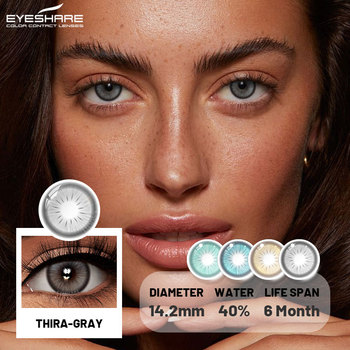
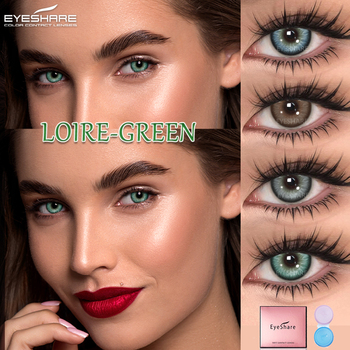
Operating as Shenzhen Eyesharelenses Co., Ltd, our cleanroom infrastructure, automated inspection bays, and optical engineers deliver certified consistency across worldwide private-label contracts.
6+
Years Export Experience
4.8/5
Verified Storefront Rating
100%
SGS Onsite Assessment
5+
Certified Optical Engineers
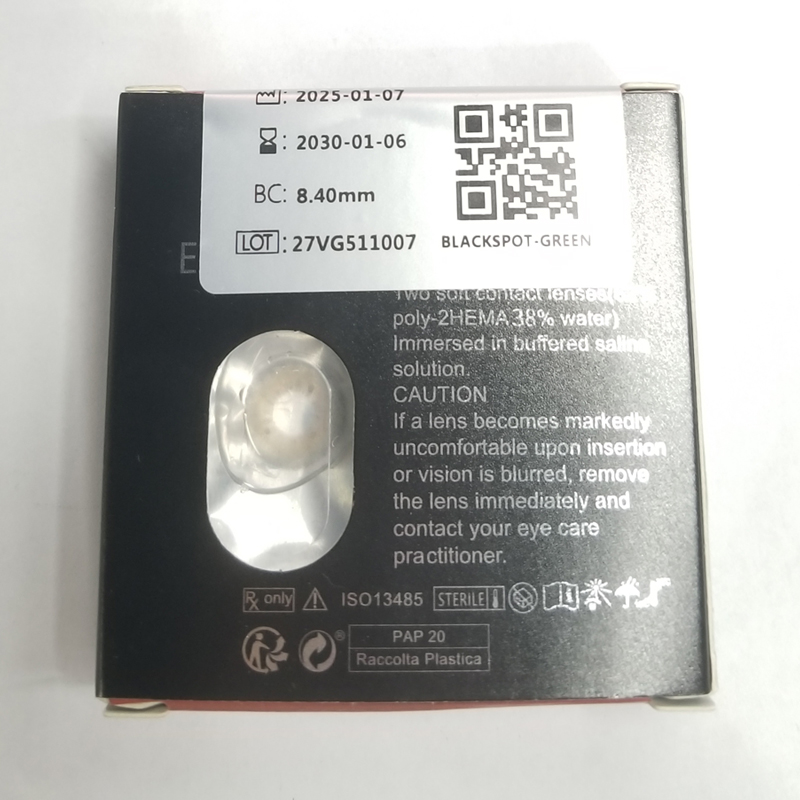
Manufacturing cosmetic hydrogel contact lenses requires strict medical device adherence under rigorous technical benchmarks. At our facility, the synthesis of 2-HEMA polymers is strictly regulated to prevent residual monomer migration, maintaining an optimized hydration curve of ~38% for long-lasting physiological tear exchange. By implementing cast molding alongside precision lathe cutting, each batch matches identical corneal contour curvature requirements (Base Curve: 8.5mm – 8.6mm).
Biological Safety Protocol: Our color-embedding methodology utilizes a three-layer "sandwich" entrapment architecture. Reactive pigment matrices are permanently sealed between clear, polymerized hydrogel layers, guaranteeing that organic dyes never come into direct contact with corneal epithelial tissues or the palpebral conjunctiva.
Third-party testing conducted via the SGS Group confirms our cleanroom air changes, autoclave thermal performance, and spectrophotometric opacity. Wholesale importers and optical dispensary groups can integrate our testing dossiers directly into their domestic technical files for CE, UKCA, or FDA compliance applications.
Industry Whitepaper Insights
Future Sourcing Trends in the Cosmetic Lens Sector
How progressive supply chains are adapting to micro-influencer brands, daily replacement preference shifts, and stringent international customs scrutiny.
Daily Silicone Hydrogel Penetration
B2B order volumes are shifting from traditional annual replacement cycles toward daily disposables. High oxygen permeability (Dk/t) silicone-hydrogel materials are driving premium market margins for D2C beauty brands across North America and Western Europe.
Hyper-Localized Packaging & UDI
Regulatory authorities mandate Unique Device Identification (UDI) barcodes and multi-lingual Instructions for Use (IFU). Brand owners now rely on flexible manufacturers capable of short-run custom printing to comply with regional language laws without excessive warehousing overhead.
Dynamic Seasonality Hedging
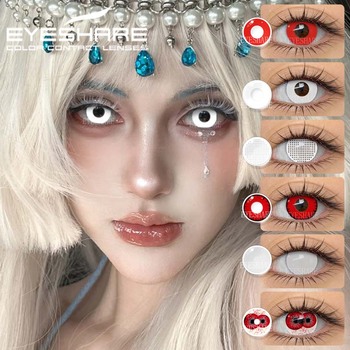
Theatrical, Halloween, and cosplay orders peak aggressively between June and August. Progressive distributors are utilizing dual-sourcing strategies: maintaining core natural collections throughout Q1-Q2 while scaling specialized anime and SFX inventory well before logistics congestion strikes in September.
Advanced Manufacturing Trajectories: Next-Gen Color Contact Lenses
The colored contact lens industry is evolving past simple cosmetic tinting into sophisticated biomedical engineering. Emerging technologies now merge advanced optics with physiological wellness, opening up new categories for forward-thinking brand partners.
1. Micro-Fluidic Wet-State Printing
Conventional pad-printing on dry raw molds often creates dot-pattern graininess. Our automated wet-state digital drop deposition deposits pigment droplets down to 15 microns. This allows for hyper-realistic multi-color blending that simulates natural human stromal fibers, giving dark eyes complete coverage without an artificial appearance.
Modern consumers spend over 8 hours a day in front of digital displays. Next-generation cosmetic lenses integrate light-filtering monomers directly into the polymer chain. This delivers Class II UV-blocking (protecting against UVA and UVB) alongside targeted 415-455nm blue-light attenuation without distorting base tint fidelity or compromising lens transparency.
3. Hyaluronic Acid Internal Hydration Reservoirs
To overcome dry-eye symptoms caused by cosmetic pigments, reactive polyethylene glycol (PEG) and hyaluronic acid components are chemically grafted onto the surface polymer matrix. This creates an enduring water-binding shield that resists protein build-up and maintains comfortable wear past 12 consecutive hours.
Clear, direct answers regarding global medical device compliance, custom prototyping parameters, minimum batch thresholds, and shipping customs clearance.
What are the mandatory regulatory qualifications for selling in the UK and EU?
Under the UK Opticians Act 1989 and EU Medical Device Regulation (MDR 2017/745), colored lenses—even zero-powered cosmetic units—are classified as Class IIa medical devices. Distribution requires an appointed UK Responsible Person (UKRP) or EU Authorized Representative (EC REP), compliant CE/UKCA marking, and verified Technical Documentation. We provide complete testing dossiers to support your regulatory registrations.
What is the baseline MOQ for custom OEM pattern prototyping and branded blister packaging?
For off-the-shelf catalog models, our initial testing MOQ starts from 10 to 20 pairs per SKU. For bespoke pattern development or custom foil-sealed blister packs and printed folding cartons, MOQ generally begins at 500 units per design. This enables independent beauty brands to launch distinct private collections without holding excess dead stock.
How do you ensure zero pigment migration across high-volume cast production?
We employ an automated bio-compatible cast-molding encapsulation sequence. The colored matrix is injected between an anterior mold and posterior mold filled with liquid monomer. The entire assembly undergoes thermal and UV polymerization simultaneously, locking pigments safely inside a continuous, smooth polymer network.
What are the standard lead times for custom private label production and shipping?
In-stock wholesale orders ship via express international air cargo within 3-5 business days. Bespoke OEM orders (including design approval, structural packaging printing, precision molding, sterilization, and final QA release) take roughly 20-30 calendar days. For Halloween season orders, we recommend confirming contracts no later than mid-August.
Can you manufacture prescription colored lenses for hyperopia, myopia, or astigmatism?
Yes. While non-corrective (0.00 plano) lenses make up the bulk of fashion demand, we regularly supply spherical powers ranging from -1.00D to -8.00D (in 0.25D and 0.50D increments). Toric cosmetic designs for astigmatism can also be produced on custom lathe lines subject to tooling review.
What documentation is included with wholesale shipments for customs clearance?
Shipments come complete with Commercial Invoices, detailed Packing Lists, Certificates of Analysis (CoA) per batch, Free Sale Certificates (FSC), Material Safety Data Sheets (MSDS), and biological compatibility documentation to support smooth customs clearance across European, British, American, and Middle Eastern ports.
Ready to Scale Your Contact Lens Brand?
Connect directly with our engineering and private-label trade teams. We will provide our complete 2025-2026 catalog, detailed sample kits, regulatory guidance, and transparent manufacturing quotes.