SGS-Assessed • Medical Device Manufacturing

China Wholesale Contact Lens Manufacturing Company: Certified Manufacturer & Factories Ecosystem

An authoritative engineering and sourcing whitepaper detailing Cast-Molding precision, sandwich encapsulated color micro-printing, and turnkey OEM/ODM scalability for global brand distributors.

Engineered Portfolio

Precision Optical Products & Retail Packaging Solutions

Explore our SGS-verified cast-molded contact lens formulations, proprietary pigmented lenses, and full private-label packaging frameworks engineered for high shelf appeal and strict ocular safety.

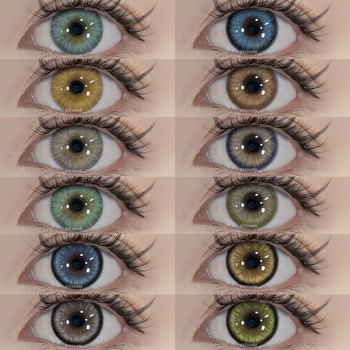
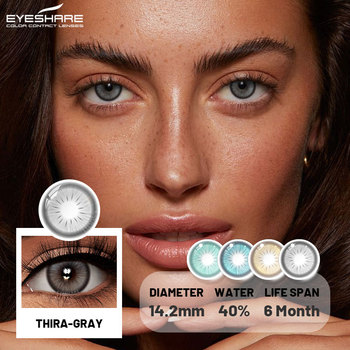
CE Certified Natural Three-Tone CE Certified HEMA Contact Lenses

Natural Three-Tone CE Certified Soft HEMA Hydrogel Lenses

38% Water Content BC 8.5mm 14.2mm DIA
MOQ: 10 pairs Get a Quote
Myopia / Plano Three Tone Soft Coloured Contact Lenses for Myopia

Precision Corrective Three-Tone Cosmetic Contact Lenses

Power 0.00 to -8.00D Sandwich Tech Yearly Wear
MOQ: 20 pairs Get a Quote
High Dk/t Flow High Oxygen Three Tone 14.5mm OEM Contact Lenses

High Oxygen Permeability 14.5mm Cosmetic Circle Lenses

Enhanced Dk/t Big Pupil 14.5mm Half-Yearly
MOQ: 20 pairs Get a Quote
European Tone European Style Natural Blue Grey Coloured Contact Lenses

European Iris Natural Gradient Multi-Tone Soft Lenses

Feathered Edge Zero-Limbus Ring Bio-Moist Surface
MOQ: 20 pairs Get a Quote
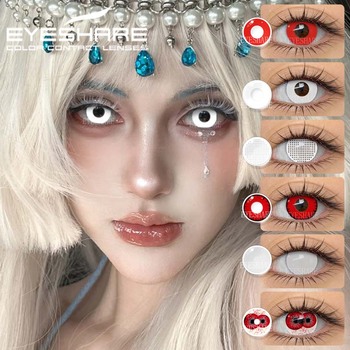
Cosplay Special Halloween Crazy Red and Yellow Theatrical Contact Lenses

High-Opacity Theatrical & Halloween Cosplay Effect Lenses

Solid Pigment Lock Zero Pupil Obscurity Sterile Blister
MOQ: 10 pairs Get a Quote
Anime SFX Series Red and White Anime Theatrical Cosplay Contact Lenses

Special FX Vivid Anime Graphic Patterned Soft Hydrogel Lenses

Bio-Compatible HEMA Dual Color Fusion Yearly Disposal
MOQ: 10 pairs Get a Quote
6+
Years Global Exporting
4.8/5
Verified Buyer Score
5+
Senior Optical Engineers
100%
Finished Lot Inspection

Whitepaper: Industrial Architecture & Manufacturing Engineering of Soft Contact Lenses

In the global ophthalmic medical device and cosmetic optics supply chain, China's modern contact lens manufacturing infrastructure has transitioned from labor-intensive assembly to automated, precision-polymerized cast molding. This paradigm shift enables high-volume output while adhering strictly to international standards, including ISO 13485, CE MDR (EU 2017/745), and the UK Medical Devices Regulations.

A critical technical differentiator among wholesale contract manufacturers is the method of monomer polymerization and pigment immobilization. Historically, spin-casting and lathe-cutting struggled with batch-to-batch repeatability and comfort along the peripheral bevel. Today, our advanced manufacturing ecosystem leverages sub-micron precision CNC mold fabrication paired with automated resin injection into closed cast-molding systems.

When engineering cosmetic and colored hydrogel lenses (HEMA: Poly-2-hydroxyethyl methacrylate and silicone-hydrogel copolymers), eye safety hinges entirely on color fixation. Poorly fabricated lenses print pigments directly on external surfaces, exposing corneal tissues to abrasive chemical pigments. Eyeshare Lenses implements proprietary Sandwich Color Embedding Technology. By encapsulating bio-compatible organic pigments between two inert, hydrogel monomer layers, the color matrix never contacts the cornea or palpebral conjunctiva, ensuring 100% ocular biocompatibility and tear-film stability.

Information Gain Highlight: Our production line utilizes automated machine-vision optical analyzers operating at 0.01mm resolution. Every blister pack undergoes dry-lens interferometry and wet-cell optical power mapping before terminal autoclave sterilization at 121°C for 30 minutes, preventing center thickness variation and perimeter edge burrs.
Market Intelligence

Next-Gen Contact Lens B2B Procurement Trends

Strategic analysis for brand directors, retail chain buyers, and healthcare group distributors navigating supply chain realignments, regulatory hurdles, and evolving consumer buying patterns.

Shift Toward Daily Disposables

While yearly and half-yearly lenses dominate developing markets due to per-wear cost economics, UK, EU, and North American retail procurement is aggressively pivoting toward daily disposable blister packs. Driven by hygiene awareness, daily units eliminate solution maintenance risks and fuel high recurring customer lifetime value (LTV).

  • Low-carbon, thin-gauge foil blister packs
  • High-speed multi-cavity daily molding lines
  • Sodium Hyaluronate (HA) lubricating blisters

Silicone Hydrogel Penetration

Conventional HEMA materials deliver oxygen transmissibility (Dk/t) in the 10-25 range via water saturation. Emerging cosmetic lines integrate fluoro-silicone macromers, elevating Dk/t above 80-100 without compromising pigment vibrancy or tensile flexibility. This unlocks full-day comfortable wear for dry-eye demographics.

  • Extended wear biocompatibility compliance
  • Plasma surface treatment against lipid deposition
  • Low modulus formulations avoiding corneal friction

Hyper-Customized Agile Private-Label

Generic catalog branding is no longer sufficient. Direct-to-Consumer (D2C) brands and influencer-led beauty retailers demand rapid prototyping, custom micro-dot print patterns that blend seamlessly over dark brown irises, and seasonal drops aligned with Halloween, comic conventions, and high-fashion calendar events.

  • Vector-to-molding sample cycles under 21 days
  • Turnkey multilingual IFU leaflets and carton artwork
  • Scalable MOQs from test sampling to 50k+ batches
Technical Benchmark

Material Comparison: Cast-Molded Hydrogel vs. Lathe-Cut Formulas

Evaluate exact physical parameters, hydration balance, and ocular safety tolerances across factory-grade contact lens production lines.

Parameter / Specification Eyeshare Cast-Molded HEMA Advanced Si-Hy Hybrid Traditional Lathe-Cut Form Industry Regulatory Standard
Water Content (%) 38% - 42% Stable Hydration 45% - 55% Bio-Equilibrium 38% Variable Evaporation ISO 18369-4 / ±2.0% Tolerance
Oxygen Permeability (Dk/t) 18 - 25 × 10-9 Fatt Units 85 - 110 × 10-9 Fatt Units 8 - 12 × 10-9 Fatt Units ≥ 24 Dk/t recommended for daily wear
Pigment Fixation Method Encapsulated 3-Layer Sandwich Embedded Matrix Polymerization Surface Silk-Screen Pad Print Zero Cytotoxicity (ISO 10993-5)
Center Thickness (CT @ -3.00D) 0.07mm - 0.08mm Ultra-Thin 0.06mm - 0.08mm Ergonomic 0.10mm - 0.14mm Bulky Strict Centration ±0.01mm
Base Curve / Diameter 8.5mm - 8.6mm / 14.0 - 14.5mm 8.6mm / 14.2mm Optimized Fixed Lathe Tooling Only Sagittal Depth Conformity
Microbiological Bioburden Sterile (SAL 10-6 Autoclaved) Sterile (SAL 10-6 Autoclaved) High Contamination Risk EN 556-1 Medical Device Directive
Factory Capabilities

Eyeshare Lenses: Precision Manufacturing Edge & OEM Credentials

Headquartered in China's prime manufacturing corridor, Shenzhen Eyesharelenses Co., Ltd combines technical rigor with customer-centric flexibility for global B2B partnerships.

SGS Onsite Audited Facility

Our operational premises, legal certifications, cleanroom environments, and export track records have undergone comprehensive on-site supplier verification by SGS Group. Buyers can inspect our comprehensive third-party audit reports directly for their vendor qualification registers.

  • Complete Class 100,000 cleanroom controls
  • Transparent commercial trade credentials
  • Verified export credit metrics

Dedicated In-House Engineering

With an engineering division staffed by certified polymer chemists and optical engineers boasting 5+ years of dedicated industry tenure, we consistently push color fidelity, edge bevel micro-finishing, and tear-exchange dynamics beyond generic factory molds.

  • High-definition micro-dot pattern engraving
  • Advanced refractive power precision checking
  • Comprehensive dimensional stability trials

Agile Global Supply Logistics

Leveraging direct corridors through Shenzhen and Hong Kong air hubs, we support wholesale buyers with agile fulfillment schedules. From stock designs dispatched within 48 hours to turnkey private-label productions delivered within 25 days, we mitigate stockout liabilities.

  • Pre-cleared air cargo freight channels
  • Full lot traceability and batch documentation
  • Customs-compliant commercial invoicing
Workflow Blueprint

Turnkey OEM / ODM Sourcing Roadmap

A systematic, audit-ready framework designed to transition your private-label concept from technical briefing to retail delivery seamlessly.

01

Design Specification

Select target iris patterns, base curves (8.5/8.6mm), water contents (38%-42%), diopter ranges (plano to -8.00D), and packaging forms (vial vs. blister pack).

02

Sampling & Trial

Rapid dispatch of sterile physical samples for on-eye chromatic saturation, limbal ring feathering, and physiological comfort verification.

03

Packaging OEM

Custom packaging layout with CMYK/Pantone printing, localized regulatory warnings, CE/UKCA marking layouts, and language-specific IFU patient leaflets.

04

Autoclave & QC

Cast molding, sandwich pigment sealing, hydration balancing, optical inspection, sealing in sterile packaging, and 121°C autoclave terminal sterilization.

05

Clearance & Delivery

Final batch certificate of analysis (COA) issuance, secure master-carton packing, and express air freight forwarding with full customs clearing paperwork.

Knowledge Base

Frequently Asked Procurement & Regulatory Questions

Authoritative guidance addressing regulatory classifications, international customs import checks, minimum order thresholds, and shelf-life stability.

Are cosmetic zero-powered lenses regulated as medical devices globally?

Yes. In almost every major jurisdiction—including the US FDA, European Union (under MDR 2017/745 Annex XVI), and the UK (Opticians Act 1989/MHRA)—plano (zero-power) cosmetic lenses are legally regulated as Class IIa or Class II medical devices. They must meet identical sterility, biocompatibility, and manufacturing quality controls as prescription corrective lenses.

What is the standard Minimum Order Quantity (MOQ) for OEM projects?

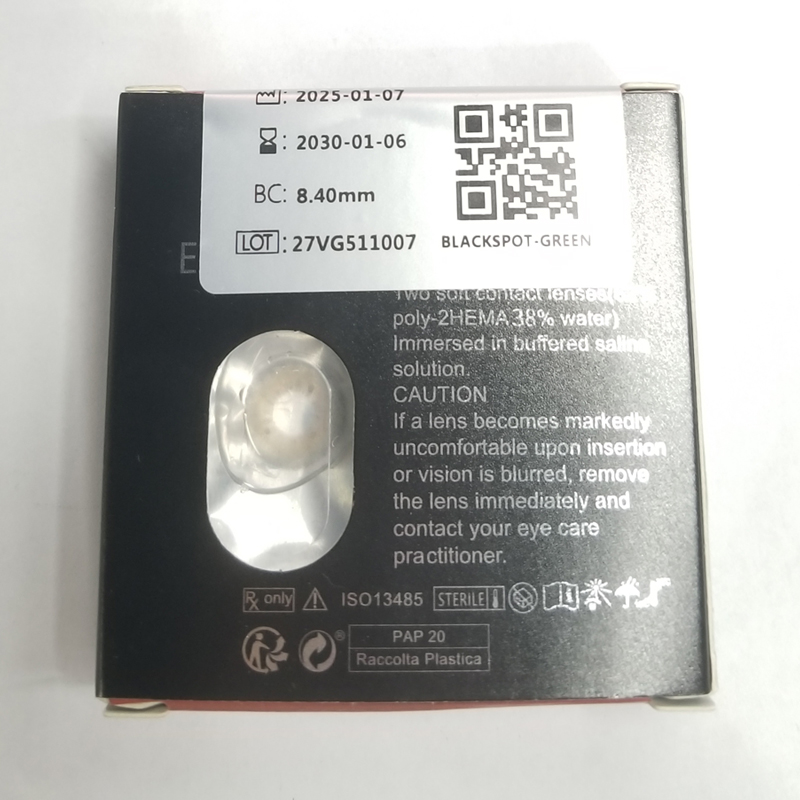
For in-stock catalog patterns shipped in Eyeshare factory packaging, MOQs start from as low as 10 to 20 pairs per SKU for market validation. For complete OEM private-label runs involving custom foil-stamped retail boxes, unique blister foil backing, and custom UPC barcodes, our typical threshold begins at 500 units per artwork variation.

How does the factory prevent pigment leaching and toxic keratopathy?

We strictly utilize our proprietary 3-layer Sandwich Encapsulation procedure. Unlike superficial pad printing, pigment formulations (using cosmetic-grade iron oxides, titanium dioxide, and phthalocyanine dyes) are sealed between monomer layers, followed by high-energy cross-linking polymerization. Complete pigment confinement is routinely verified via organic solvent extraction tests.

What is the shelf life and blister pack saline buffer composition?

Our lenses feature a certified 5-year sterile shelf life from the date of autoclave cycle completion. Blister packs and hermetic glass vials contain a buffered, isotonic sodium chloride saline solution balanced at physiological ocular pH (7.0 - 7.4) and osmolality (280 - 320 mOsm/kg), supplemented with hydrating polymers to maintain surface wettability.

Ready to Scale Your Contact Lens Brand with a Direct Manufacturer?

Connect with our technical trade engineering desk to request our comprehensive product master catalog, receive verified SGS supplier audit reports, or order custom-pattern production samples for clinical review.