China Wholesale Cosmetic Contact Lens Supplier & OEM Manufacturers

A Comprehensive Whitepaper & Procurement Benchmark for Global Opticians, B2B Beauty Distributors, and Private Labels

6+
Years Direct Export
4.8/5
SGS Assessed Rating
100%
Batch Sandwich Encapsulation
38%
Balanced HEMA Moisture
Commercial Lineup

Featured Wholesale & Custom Packaging Solutions

Factory-calibrated medical hydrogel lenses engineered for global visual comfort, certified ocular tolerances, and premium display readiness.

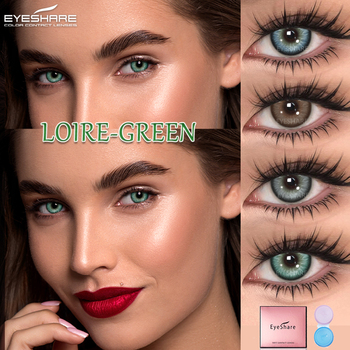
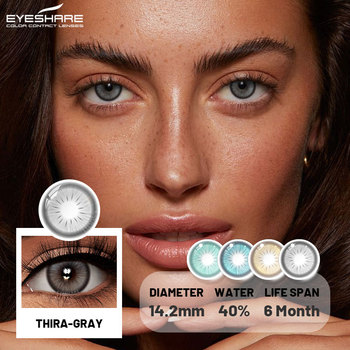
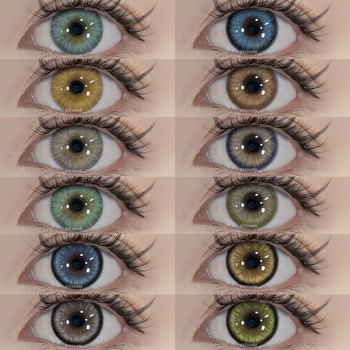
Natural Trio European Style Natural Blue Grey Contact Lenses

European Style Natural Blue-Grey Cosmetic Hydrogel Lenses

HEMA 38%BC 8.5mmPlano Wear
FOB$1.32 - $2.55
Get Catalog
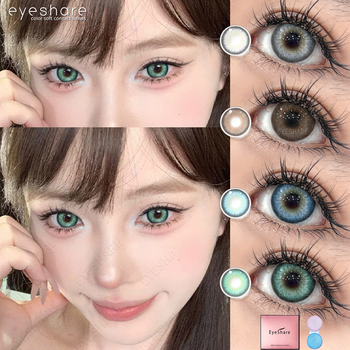
Corrective Three Tone Soft Coloured Contact Lenses with Power

Three-Tone Multi-Radial Soft Aesthetic Lenses for Myopia

PrescriptionHydrophilicDia 14.2mm
FOB$1.50 - $2.90
Get Catalog
Compliance CE Natural Three-Tone CE Soft Contact Lenses

CE Validated Natural Three-Tone Medical Hydrogel Contact Lenses

CE CertifiedCast MoldingYearly Disposable
FOB$1.50 - $2.90
Get Catalog
Enlarging Iris High Oxygen Permeability 14.5mm Three Tone Contact Lenses

High Dk Oxygen Transmissible 14.5mm Graphic Aesthetic Lenses

14.5 mmHalf-YearlySmooth Bevel
FOB$1.35 - $2.61
Get Catalog
Cosplay SFX Halloween Crazy Red Yellow Cosplay Contact Lenses

High-Opacity SFX Theatrical Red & Yellow Pigmented Lenses

Opaque PigmentZero PowerHigh Contrast
FOB$1.32 - $2.46
Get Catalog
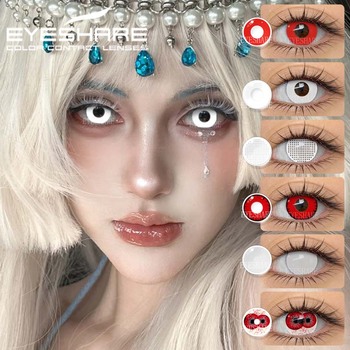
Dramatic Anime Anime Cosplay Contact Lenses Red White Pigmentation

Full-Occlusion Anime Graphic Cosplay Hydrogel Color Lenses

TheatricalSaline PreservedUV Blocking
FOB$1.32 - $2.46
Get Catalog
Technical Whitepaper

Engineering Integrity in Modern Cosmetic Lens Manufacturing

Navigating the intersection of color saturation, oxygen transmissibility (Dk/t), micro-encapsulation, and global regulatory frameworks.

Sandwich Micro-Encapsulation

The primary concern for regulatory compliance (FDA, CE, UKCA) and user safety in cosmetic contact lenses is pigment leaching. Our multi-layer casting locks reactive organic pigments between two inert layers of Poly-HEMA hydrogel, ensuring pigments never touch corneal tissues.

  • Zero chemical pigment exposure to ocular epithelium
  • Smooth outer optical surface minimizes lipid accretion
  • Consistent 0.08mm center thickness profile

Balanced Hydration Dynamics

While consumer marketing often equates higher water content with comfort, higher hydration hydrogels (>55%) can induce evaporative dehydration, drawing moisture out of the wearer's tear film. Our 38%–42% water formulations sustain hydration throughout 8–12 hours of active wear.

  • Low dehydration rate preserves tear film equilibrium
  • Optimal structural rigidity for frictionless insertion
  • High mechanical resistance against edge splitting

Automated Cast-Molding Geometry

Every lens is cured via precision computer-controlled cast molding. This eliminates aberration variance across bulk batches, guaranteeing that a Base Curve of 8.5mm or 8.6mm provides the exact calculated sagital depth for centering stability on diverse human corneas.

  • Sub-micron lathe-cut mold accuracy
  • Beveled edge design maximizes tear exchange dynamics
  • Optical clarity inspected through digital wavefront analyzers
Verified Manufacturing Excellence

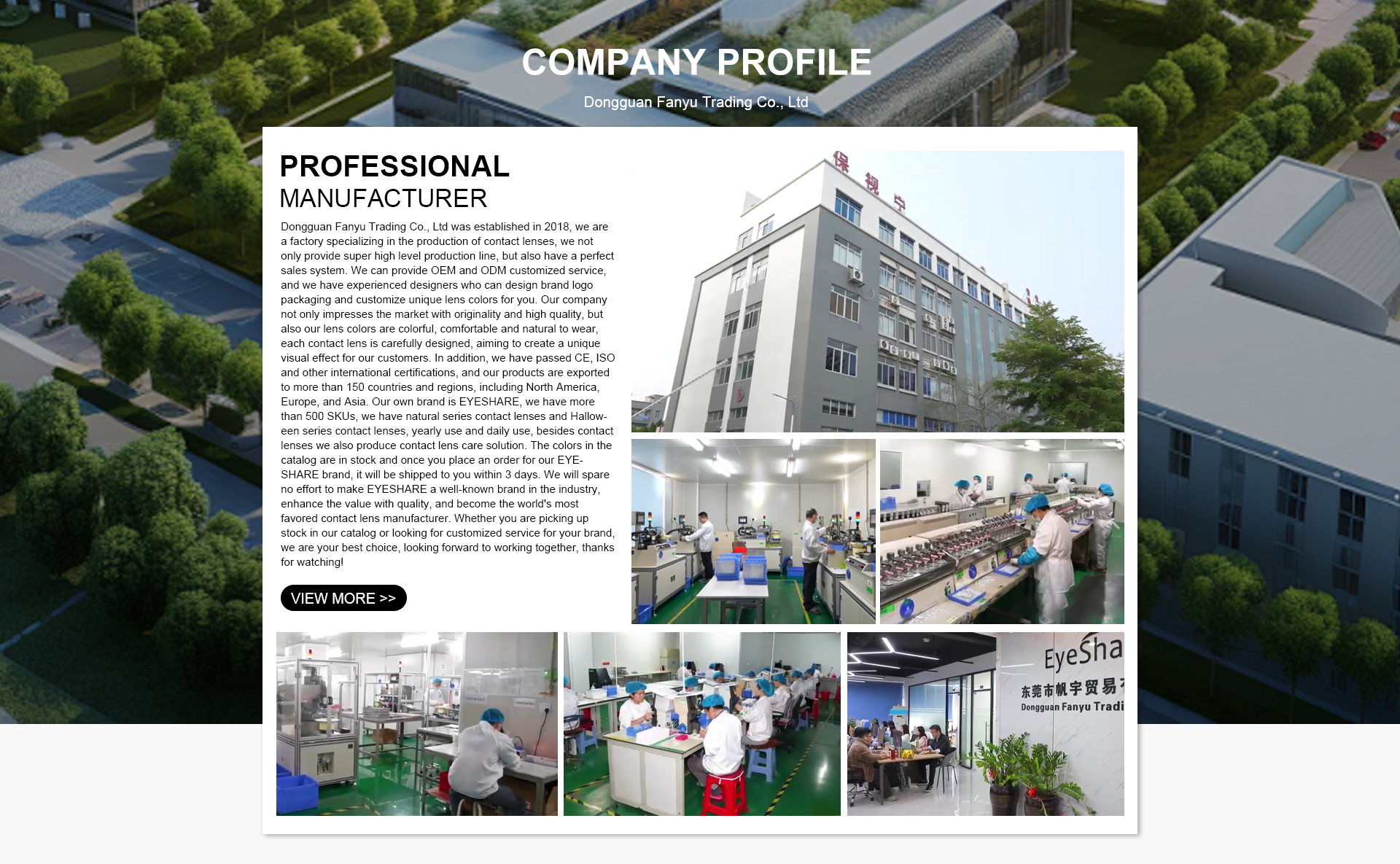
Shenzhen Eyesharelenses Co., Ltd

With more than six years of dedicated export operations in precision ophthalmology, our enterprise bridges state-of-the-art contact lens chemistry with international commercial compliance. Unlike unverified trading intermediaries, our production systems operate under rigorous on-site audit regimes evaluated by SGS Group.

We maintain an engineering staff where each senior specialist holds over 5 years of polymer chemistry tenure. From micro-inspection of edge profiles to autoclave thermal spore kill validation, every parameter is documented in full compliance files for export clearance in the UK, Europe, North America, and Southeast Asia.
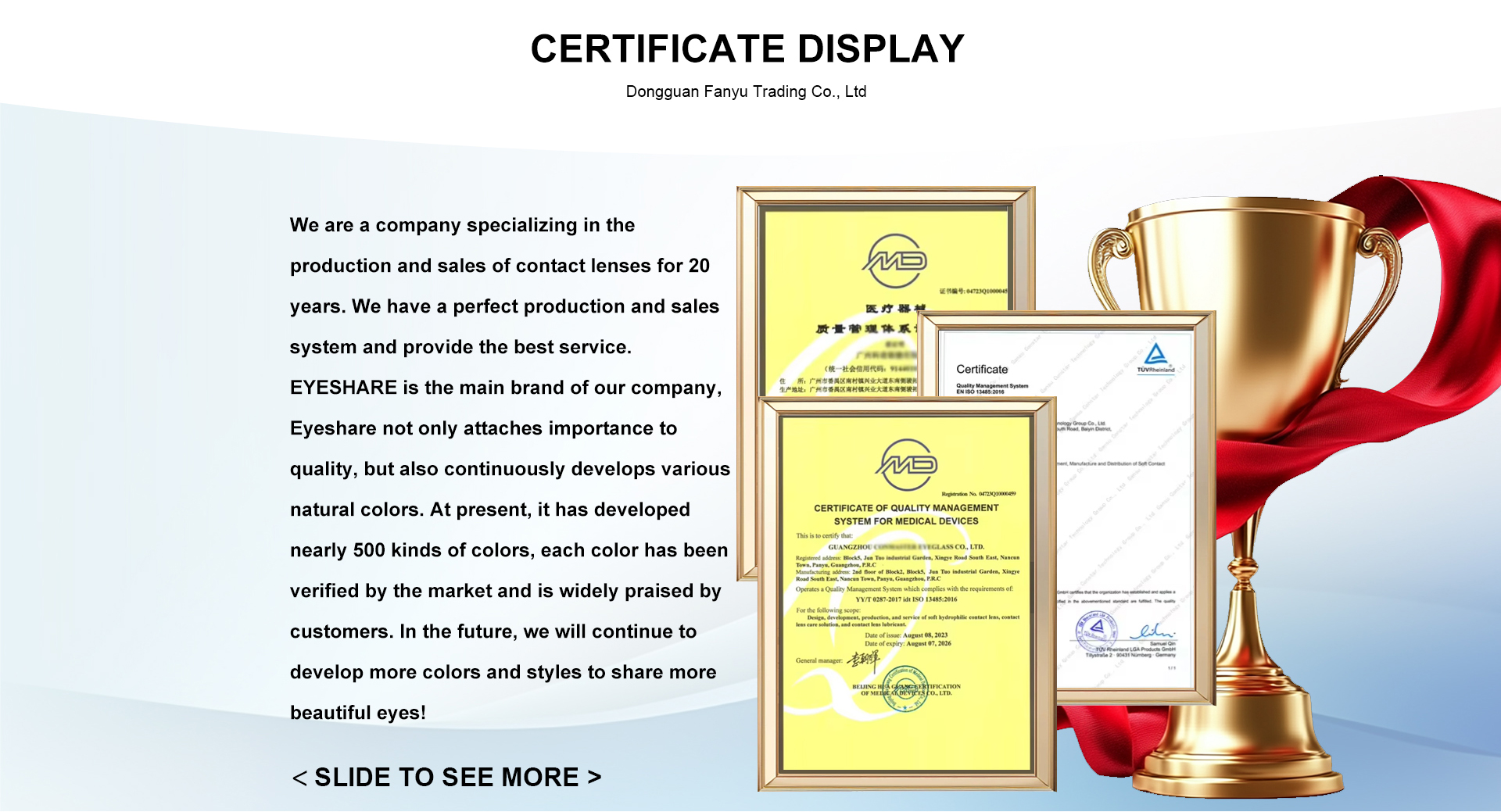
SGS Onsite Audited Facility
CE Medical Device Ready
Cleanroom Cured (Class 100k)
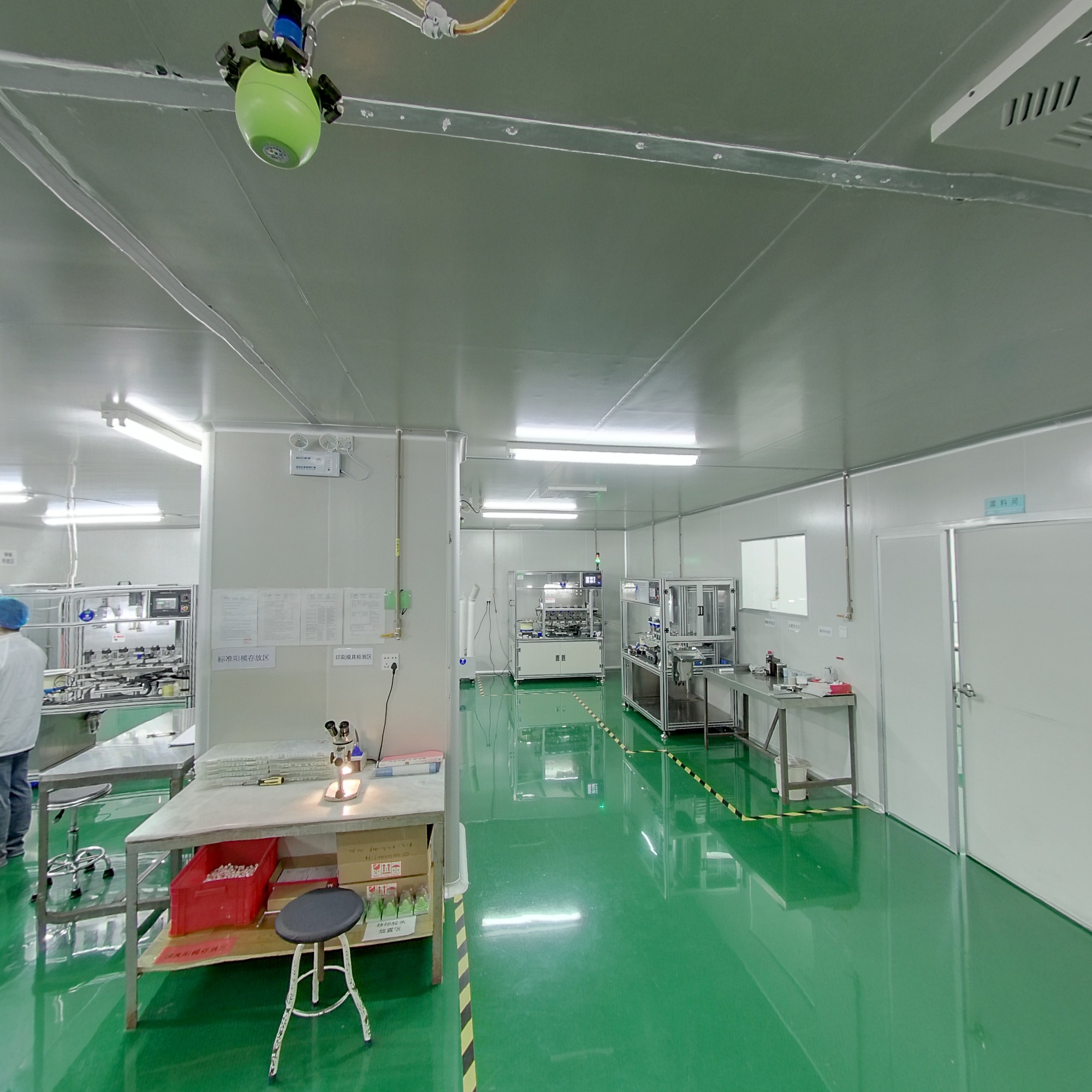
Production Facility Cleanroom
Contact Lens Automation Lines
Facility Infrastructure
Packaging and Sterilization Hall
Market Intelligence

Future Procurement Trends in the Cosmetic Lens Sector

Key market transitions institutional B2B buyers must account for in private label portfolio planning over the next decade.

1. Transition to Silicone Hydrogels

While Poly-HEMA retains wholesale cost supremacy for fast-turnaround aesthetic lenses, medical markets increasingly require high-oxygen silicone hydrogel formulations (Dk/t > 80) for cosmetic daily disposables.

2. Strict Regulatory Border Controls

Customs authorities worldwide (UK MHRA, US FDA, EU MDR) are enforcing strict Medical Device classifications even on zero-power cosmetic lenses, requiring complete Technical Dossiers, UDI coding, and IFU translations.

3. Shorter Replacement Intervals

Global demand is rotating away from traditional yearly vials toward monthly, bi-weekly, and single-use daily blister packs. Brands must align their OEM suppliers with automated high-speed blister sealing lines.

4. Hyper-Realistic Multi-Tone Dot Matrices

Simple 1-tone solid rings have been replaced by bio-mimetic 3D iris arrays. Next-generation buyers demand digitally printed dot matrices with feather-edged limbal margins to blend with dark natural eye colors seamlessly.

Evolutionary Trajectory

From Costume Novelty to High-Precision Ophthalmic Beauty

The cosmetic contact lens vertical in China has transformed from decentralized small-batch lathe workshops into a multibillion-dollar high-tech ecosystem. Contemporary production combines automated centrifugal casting, robotic visual inspection, cleanroom micro-dosing, and real-time spectrophotometric quality controls.

For international brands, sourcing from China is no longer merely an arbitrage on raw production costs; it provides a comprehensive manufacturing infrastructure capable of translating viral beauty trends into retail-ready, sterile medical products in record lead times.

Get Catalog
Procurement Guide

Frequently Asked Technical & Sourcing Questions

Authoritative guidance on import regulations, material specifications, MOQ structures, and quality audits.

Are zero-power cosmetic contact lenses legally classified as medical devices? +
Yes. In almost every major jurisdiction—including the United Kingdom (under the Opticians Act 1989 and MHRA regulations), the European Union (EU MDR 2017/745), and the United States (FDA 21 CFR 886.5925)—all contact lenses, regardless of whether they correct refractive vision errors or serve strictly aesthetic/cosplay purposes, are legally categorized as Class IIa or Class II medical devices. They must be manufactured under ISO 13485 quality systems and sold with traceable technical documentation.
What is the standard Minimum Order Quantity (MOQ) for OEM private label orders? +
For stock patterns already cured and preserved in sterile bulk inventory, minimum order quantities can start as low as 10 to 50 pairs per color model. For fully customized private label programs—including custom logo carton printing, unique blister foil lamination, and bespoke pattern dot matrices—MOQs typically range from 500 to 2,000 pairs depending on the complexity of packaging engineering and diopter ranges needed.
How does the sandwich printing method protect the ocular surface? +
The sandwich (or double-coating micro-encapsulation) method cures the graphic dye layer between two distinct strata of pure Poly-HEMA or silicone hydrogel polymer. This physical barrier ensures that pigment nanoparticles never interact directly with the corneal surface or the inner palpebral conjunctiva, completely preventing mechanical abrasion, pigment peeling, and chemical leaching into the ocular matrix.
What documentation is required to clear customs in destination markets? +
Wholesale importers must retain a compliant technical package including: Certificates of Free Sale (CFS), CE Certificates or UKCA Declarations of Conformity, ISO 13485 factory certifications, batch sterilization reports (biological indicator logs and autoclave validation), detailed Ingredient/Material Safety Data Sheets (MSDS), and destination-compliant Instructions for Use (IFU) leaflets printed in the local language with authorized representative information (e.g., UK Responsible Person or EC REP).
Why is 38% water content considered optimal for cosmetic Poly-HEMA lenses? +
A 38% equilibrium water content represents the optimal balance for non-ionic hydrogels. Lenses with water content exceeding 55% often act like sponges, extracting moisture from the pre-corneal tear film through ambient evaporation, causing dry eye symptoms during prolonged daily wear. A 38% formulation minimizes evaporative loss, maintains stable dimensional geometry (preventing on-eye de-centering), and provides the mechanical stiffness needed for easy insertion and removal by everyday consumers.
What seasonal lead times should buyers anticipate for peak cosplay & Halloween trading? +
Halloween and autumn retail accounts for up to 60% of theatrical lens turnover. Because autoclave cycle queues, batch microbiological clearance (which requires 10–14 days of incubation testing), and international sea/air freight experience intense congestion in Q3, purchase orders should be confirmed between June and mid-August. This guarantees arrival in destination retail hubs by September ahead of peak retail demand.
Get Catalog