Export-Grade Korean Colored Contact Lenses & Packaging Solutions
Engineered for all-day biocompatibility, stable corneal oxygen permeability, and pigment-safe sandwich casting. Review our eight high-velocity OEM SKU foundations below.
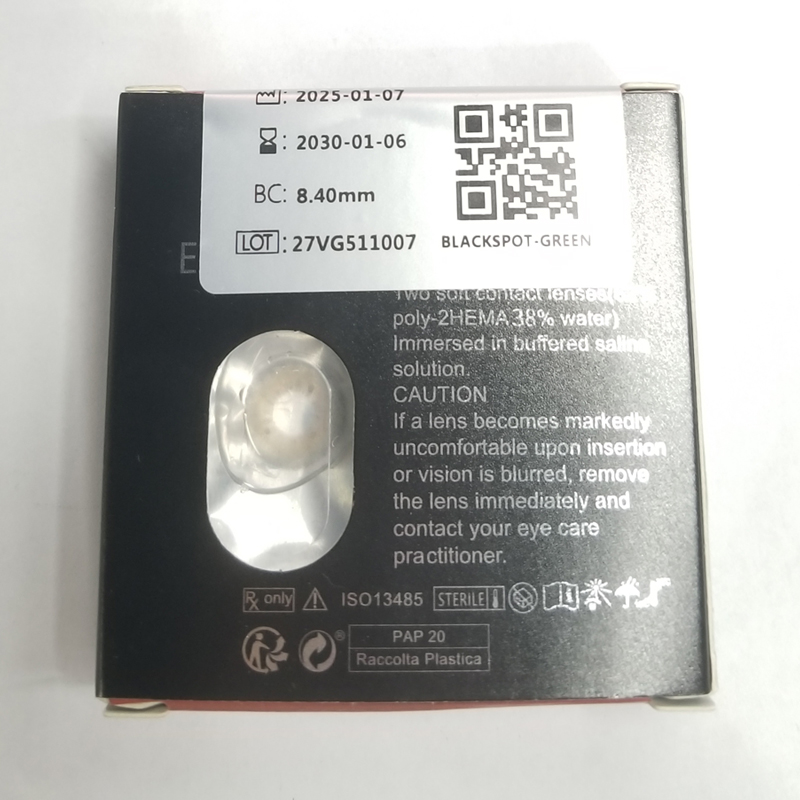
Eyeshare Wholesale Personal Brand Lentes De Contacto Paper Box Free Design Packaging

Contact Lenses Display Shelf Contact Lens Prosthetic Eyes Glass Eye Ocular Showcase
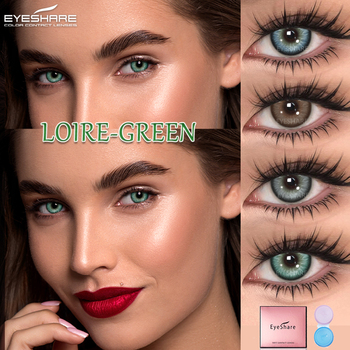
European Style Natural Blue-Grey Micro-Dot Contact Lenses
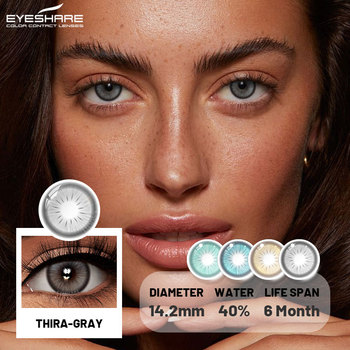
Three-Tone Soft Corrective Prescription Colored Lenses (Plano to -8.00D)
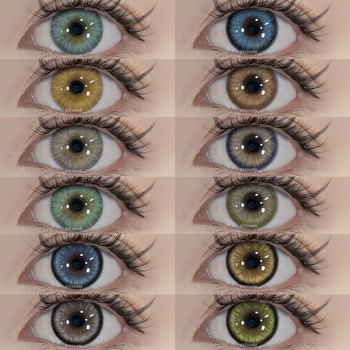
Natural Three-Tone European CE-Marked Biocompatible HEMA Lenses
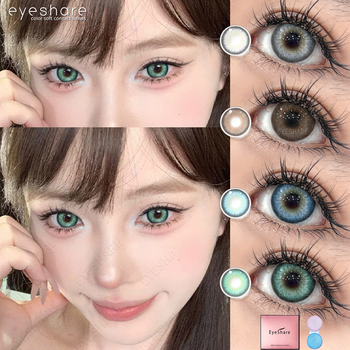
OEM High-Oxygen Permeability 14.5mm Aesthetic Doll-Eye Series
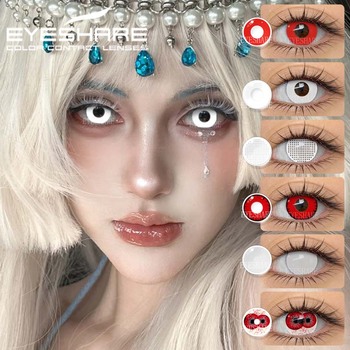
High-Opacity FX Special Effect Cosplay Lenses (Anime & Halloween)
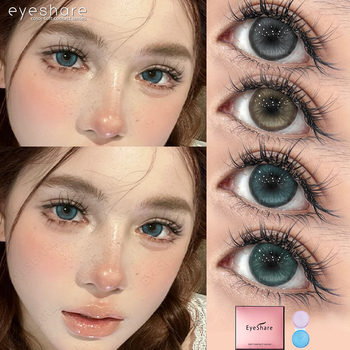
Subtle Iris-Embedding 14.2mm Three-Tone Soft Cosmetic Lenses
The Science of Korean Cast Molding & Micro-Sandwich Encapsulation
In cosmetic optometry, manufacturing integrity dictates patient safety and regulatory defensibility. Learn how our certified cleanroom production eliminates pigment shedding and corneal hypoxia.
1. Micro-Encapsulated Sandwich Casting (Double Coating Process)
A primary failure point in non-compliant cosmetic contact lenses is direct pigment-cornea contact. Conventional cheap printing methods print tinting inks on the external posterior or anterior lens surface. Under friction from blink dynamics (averaging 15,000 blinks per day), unsealed pigment particles flake off, triggering acute giant papillary conjunctivitis (GPC), corneal micro-abrasions, and severe toxic keratitis.
Our OEM manufacturing facility operates proprietary Korean full-cast molding systems. Using an automated high-precision pad printing protocol, color dyes extracted from medical-grade inorganic iron oxides and organic phthalocyanines are printed between the base curve matrix and front curve matrix. The lens monomer (Poly-HEMA or Phosphorylcholine-HEMA copolymer) is subsequently UV-photopolymerized under inert nitrogen blankets. The pigment becomes fully encapsulated inside the internal polymer layer. Optical profilometry tests verify zero exposed pigment roughness on both optical surfaces (Ra < 0.025 μm), delivering silky corneal sliding with zero chemical leaching.
2. Precision Wet Cast-Molding vs. Traditional Lathe Cutting
Traditional spin-cast or lathe-cut cosmetic lenses frequently exhibit peripheral optical aberrations and irregular edge geometries, causing edge-lift discomfort and rapid tear film dehydration. Our cast-molding utilizes optically polished quartz and CNC-milled copper molds. Each lens achieves radial symmetry down to sub-micron tolerances, maintaining a stable 8.5mm / 8.6mm base curve and an engineered round edge design that encourages active sub-lens tear exchange with every blink.
| Critical Quality Parameter | Eyeshare Korean Cast Mold OEM | Standard Lathe-Cut Cosmetic Lenses | Procurement Impact |
|---|---|---|---|
| Pigment Safety Method | ✓ Embedded Sandwich (Zero Leaching) | Surface Pad Stamped (Exposed Ink) | Prevents epithelial irritation; guarantees MDR/FDA compliance. |
| Oxygen Transmissibility (Dk/t) | 24.5 to 32.0 × 10⁻⁹ (HEMA/MPC) | 11.0 to 16.0 × 10⁻⁹ | Extended wear comfort (8-12 hours) without limbal hyperaemia. |
| Water Equilibrium Content | 38% - 42% Stable Hydrophilic State | Unstable 45% - 58% (Causes dehydration) | Low-water equilibrium maintains internal eye moisture in dry environments. |
| Edge Geometry Profile | Curved Smooth Rounded Profile | Chiseled / Sharp Beveled Edge | Zero foreign-body sensation; rapid consumer adaptation. |
| Batch Color Consistency (ΔE) | Spectrophotometer ΔE < 0.65 | Visual manual check (ΔE > 2.20) | Eliminates color variation between retail batches. |
3. Polymer Biocompatibility: From HEMA to Phosphorylcholine (MPC) & Silicone Hydrogel
As modern consumers demand longer daily wear intervals under prolonged digital screen exposure, traditional 2-HEMA polymers face boundary limits. Eyeshare OEM factories offer progressive macromolecular material engineering:
- Hydrophilic 2-HEMA Matrix (38% Water Content): The established industry standard for monthly, half-yearly, and yearly cosmetic wear. Low water content ensures the lens does not siphon natural tear fluid from the ocular surface, preserving tear-film lipid stability.
- MPC-HEMA Hybrid (Bionic Phosphorylcholine): Mimicking the lipid bilayer structure of cellular membranes, our MPC-blended lenses resist tear-protein and lysozyme fouling. Studies confirm an 88% reduction in protein deposition compared to pure ionic methacrylate lenses.
- High-Dk Silicone Hydrogel (SiHy): Engineered for forward-thinking private label brands preparing for next-generation regulatory shifts, balancing rich aesthetic limbal rings with a hyper-permeable oxygen matrix (Dk > 80 Barrers).
Why Tier-1 Importers Partner With Shenzhen Eyesharelenses Co., Ltd
Direct factory contract manufacturing built upon independent verification, rigorous analytical chemistry labs, and end-to-end regulatory support.
SGS Group Onsite Assessed
Our operational headquarters, cleanroom infrastructure, legal status, and QA/QC staffing have undergone comprehensive onsite audit by SGS Group, confirming genuine manufacturer authenticity.
Dedicated Engineering Bench
Staffed by 5+ certified optical and polymer formulation engineers, each possessing over 5 years of specialized contact lens manufacturing experience in casting, curing, and dimensional metrology.
Sub-Lot Metrology & QC
Every lot undergoes focal power verification via precision vertometers, center thickness micrometer measurement, base curve sagittal depth testing, and spectrophotometric chromaticity indexing.
Agile Low MOQ OEM Scaling
Launch customized retail brand packaging from flexible low-volume trial runs (10-20 pairs for stock tints, custom master cartons from low thresholds), scaling into 100,000+ unit containerized exports.
Global Sourcing Trends: The Future of Colored Contact Lens Procurement
Strategic purchasing insights for 2025–2028: How consumer preferences, regulatory tightenings, and material science are redefining distributor profitability.
Shift from Annual Vials to Monthly Blister Packaging
While annual glass vial lenses remain strong in developing markets, international beauty retailers in Europe, the UK, and North America are transitioning rapidly to 1-month and 1-day disposable foil blister packs. Monthly replacements increase lifetime customer reorder frequency by 3.8x while reducing protein buildup risks and customer complaint rates.
Hyper-Natural 3D Iris Mimicry Over Heavy Limbal Rings
Social media aesthetics and HD streaming have rendered harsh, cartoonish color dots obsolete. Procurement directors report surging consumer demand for "melting gradient" lenses—subtle asymmetric tones combining hazel-gold inner coronas with diffuse smoke-grey borders that enhance natural eye color without artificial starkness.
Stricter Medical Device Regulatory Scrutiny (MDR & UKCA)
Customs authorities worldwide are strictly enforcing medical device standards on cosmetic contact lenses (even zero-power plano lenses). Sourcing directors can no longer afford unverified grey-market suppliers. Reliable OEM contracts now mandate complete technical files: ISO 13485 QMS documentation, biocompatibility testing (ISO 10993), and valid CE / MHRA authorized representative files.
End-to-End Turnkey Private Label Manufacturing Workflow
From initial color pantone sampling to sterile blister sealing and compliant master retail carton packaging.
Pattern Briefing
Select from our library of 500+ commercial Korean iris designs or submit physical reference lenses or Pantone vector charts for tailor-made pattern synthesis.
Rapid Sampling
We output on-eye trial lenses within 7-14 working days, ensuring iris blending, pupil diameter opening, and peripheral coverage match your exact cosmetic target.
Packaging Design
Complete structural and graphic packaging engineering: medical foil blister sealing, glass vials with tamper-evident caps, outer folding cartons, and multi-lingual IFU leaflets.
Sterile Production
Cast molding, hydration equilibration, automated visual defect scanning, blister filling with physiological buffered saline, and moist-heat autoclave sterilization at 121°C.
Customs Clearance
Full commercial dossiers: Certificate of Analysis (CoA) per batch, Free Sale Certificates (FSC), packing lists, airway bills, and customs documentation for seamless global port clearance.
Frequently Asked Questions by Contact Lens B2B Importers
Essential technical, legal, and operational guidance addressing questions asked by opticians, chain retailers, and private label brand founders.
Are zero-powered (plano) cosmetic contact lenses regulated as medical devices?
Yes. Across major regulatory jurisdictions including the European Union (EU MDR 2017/745 Annex XVI), the United Kingdom (Opticians Act 1989 & MHRA), the US (FDA 21 CFR Part 886), and ASEAN regulatory frameworks, all contact lenses applied to the cornea—regardless of corrective diopter—are classified as Class IIa or Class II medical devices. They must be produced under audited cleanroom conditions, hold sterile barrier certification, and be traceable by individual manufacturing batch lots.
What is the standard MOQ for custom private label packaging versus catalog stock?
For catalog wholesale models with stock sterile packaging, minimum orders are as accessible as 10 to 20 pairs per SKU for market testing. For full OEM private labeling (custom brand box, bespoke printed foil blister lids, customer logo, and tailored IFU user manuals), typical production runs start at 500 to 1,000 units per packaging format, with customized pattern molding quoted project-by-project.
How does your factory guarantee pigment encapsulation without toxic leaking?
We employ an automated double-cast sandwich encapsulation protocol. The pigment layers are completely sealed inside the core hydrogel polymer matrix during UV thermal curing. Prior to lot release, sample lenses undergo destructive organic solvent extraction testing and mechanical friction abrasion simulations under 100x magnification to certify that no colorant contacts epithelial corneal tissues.
What is the shelf life and sterilization method of your exported lenses?
All lenses are sealed in medical-grade polypropylene blisters or borosilicate neutral glass vials immersed in sterile buffered isotonic saline (pH 7.0–7.4, 290–320 mOsm/kg). Each batch undergoes moist terminal steam autoclaving at 121°C for over 20 minutes under validated lethality cycles (F0 > 15). Sealed product integrity supports a certified 5-year sterile shelf life.
Can you provide prescription powers (myopia) for cosmetic and Halloween designs?
Yes. We offer both plano (0.00D) and corrective diopter powers ranging from -0.50D to -8.00D (-0.25D increments up to -6.00D; -0.50D increments from -6.00D to -8.00D) across our primary natural iris lines and selected popular cosplay lenses. Custom power molds including astigmatic toric color lenses are available for long-term contract programs.
When should seasonal importers order for Halloween and festival peaks?
Due to intense global demand during Q3, Halloween and cosplay inventory orders should be locked in between June and mid-August. This window allows 15-25 days for factory batch casting, sterile QA release, and 10-20 days for international air/sea freight logistics and domestic import clearance prior to retail consumer rush periods.