Display & Hardware

Contact Lenses Display Shelf Prosthetic Showcase
Ocular Prosthesis
POS Display
Modular
Precision-cast hydrophilic contact lenses, prosthetics, bespoke retail merchandise, and automated clinical packaging ready for custom specification and rapid B2B deployment.
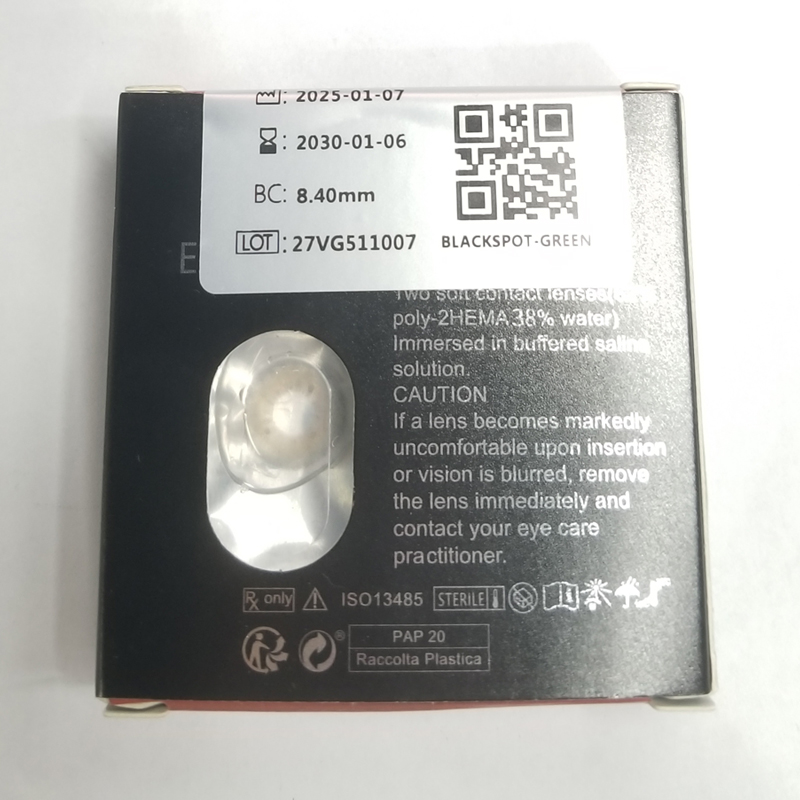
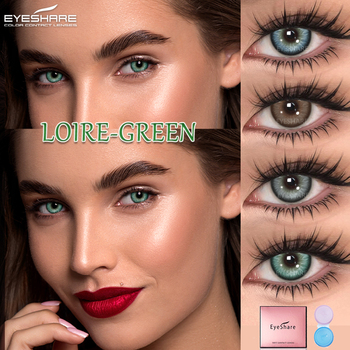
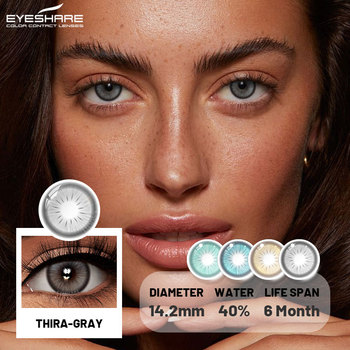
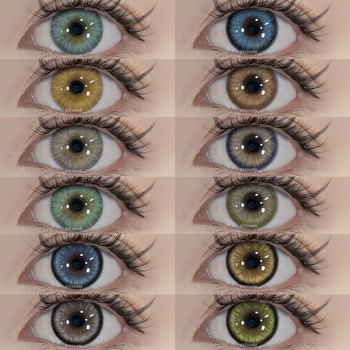
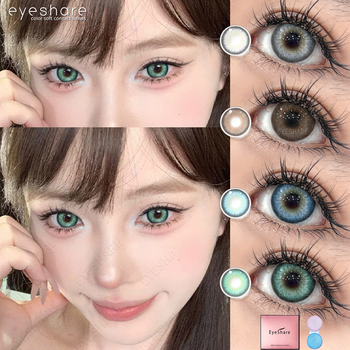
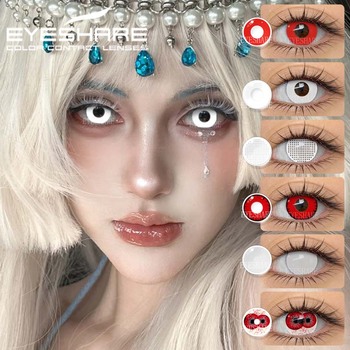

Six years of dedicated ophthalmic export mastery. Assessed onsite by SGS Group, running automated cleanrooms, precision molding, and multi-tier optical inspection protocols.
Our manufacturing site undergoes annual unannounced third-party facility audits conducted by SGS Group. Production operates under ISO Class 7 and Class 8 laminar flow cleanrooms with automated humidity, airborne particulate counts, and ambient pressure stabilization.
Moving beyond conventional lathe-cutting, our automated cast-molding lines utilize high-precision optical steel inserts. This delivers surface sub-micron smoothness, consistent base curve concentricity (BC 8.5 to 8.6 mm), and repeatable edge profiles that eliminate ocular friction.
Patient safety is our primary engineering metric. Our triple-layer printing embeds medical-grade inorganic color pigments safely between two inert hydrogel matrices. The pigment layer never contacts corneal epithelial cells, eliminating pigment rub-off, inflammation, and cellular erosion.
Contact lens contract manufacturing has transitioned from simple cosmetic pigment stamping to an advanced biomedical polymer engineering science. Procurement managers, optometrists, and distribution executives must scrutinize monomer formulations, water content kinetics, and oxygen transmissibility coefficients (Dk/t) to ensure clinical compliance, wear satisfaction, and legal defense in strict regulatory markets.
The standard workhorse of cosmetic contact lenses remains Poly-2-hydroxyethyl methacrylate (poly-HEMA), frequently co-polymerized with hydrophilic functional monomers such as N-Vinylpyrrolidone (NVP) and Methacrylic Acid (MAA). This formulation strikes an optimal balance for color reproduction: it achieves a consistent equilibrium water content (EWC) of approximately 38% to 42%, which preserves structural integrity, edge sharpness, and lens geometry throughout long manufacturing cycles.
However, the global market is witnessing an aggressive procurement shift toward hybrid silicone hydrogel matrices. By synthesizing fluoro-silicone macromers with hydrophilic hydrogels, oxygen permeability is dramatically decoupled from water content. In traditional HEMA, oxygen transport depends entirely on the aqueous phase (limiting Dk to roughly 8.5–10.5 × 10⁻¹¹ (cm²/s)[ml O₂/(ml · mmHg)]). In contrast, silicone domains form a direct interstitial gas-permeable network, yielding Dk/t values exceeding 80–120. This allows private label brands to offer true extended-wear colored contacts without inducing corneal hypoxia, limbal hyperemia, or neovascularization.
| Evaluation Parameter | Standard Poly-HEMA 38% | High-Hydration HEMA/NVP 55% | Silicone-Hydrogel (SiHy) OEM |
|---|---|---|---|
| Oxygen Permeability (Dk) | 8.5 – 10.5 | 18.0 – 22.0 | 85.0 – 125.0 |
| Modulus of Elasticity (MPa) | 0.30 – 0.45 (Ultra-soft) | 0.35 – 0.50 (Comfort fit) | 0.65 – 0.95 (Structured handling) |
| On-Eye Dehydration Rate | Extremely Low (<1.8% over 10h) | Moderate (High evaporation) | Low (Lipid layer affinity) |
| Pigment Print Resolution | Ultra-High Matrix Definition | High Definition | Requires Surface Plasma Treatment |
| Regulatory Risk Profile | Class IIa / 510(k) established | Class IIa established | High biocompatibility dossier |
Historically, low-cost contact lens manufacturers utilized pad printing onto the outer or inner surface of the cured contact lens. This primitive technique poses severe clinical hazards: prolonged blink friction causes mechanical shear against the palpebral conjunctiva, while enzyme-rich tear film gradually exposes underlying organic pigments to the corneal epithelium. Symptoms of pigment shedding range from localized toxic keratitis to giant papillary conjunctivitis (GPC).
Our facility enforces the Cast-Molding Double-Sandwich Method across all OEM production lines. In this automated process:
The resulting lens features a completely smooth optical exterior with a root-mean-square (RMS) surface roughness of under 8 nanometers, delivering unparalleled comfort and zero cellular toxicity.
Macro shifts in consumer behavior, tightening international health regulations, and omnichannel distribution models are redefining contact lens OEM contracts.
While monthly and yearly replacement modalities remain dominant in developing markets due to purchase unit cost, North American and European procurement is pivoting rapidly toward 1-Day Daily Disposable sterile blister packs. Daily packs eliminate cleaning compliance liabilities, virtually erase microbial keratitis risks, and drive higher customer lifetime re-order rates for retail brands.
Procurement is converging around multi-functional ocular products. Brands are no longer ordering simple plano cosmetic colors. Inquiries have surged for toric color lenses that correct regular astigmatism, photoprotective filters incorporating UV-A/UV-B blockers, and HEV high-energy blue-light absorbing pigments tailored for screen-fatigued consumers.
Importing contact lenses demands uncompromising regulatory compliance. The enforcement of EU MDR 2017/745, UK MHRA (following the Opticians Act 1989), and US FDA 510(k) requires supply chains to provide validated Technical Files, Clinical Evaluation Reports (CER), and Unique Device Identification (UDI) barcoding directly from the factory floor.
Influencer-driven beauty labels are demanding agile supply chains. Instead of massive 100,000-pair single SKU commitments, forward-thinking B2B procurement leverages low-MOQ rapid iteration models (10 to 50 pairs per stock SKU, or 500 pairs for custom packaging), enabling brands to test iris tint palettes seasonally without warehouse inventory obsolescence.
From initial iris design conception to global regulatory customs release, our collaborative manufacturing pipeline delivers seamless scalability.
Clients define product scope: base curves, lens diameters (14.0 mm for natural enhancement up to 14.5 mm for circle eyes), hydration index, and power range (Plano to -10.00D). Our in-house ophthalmic designers draft dot-matrix pattern films simulating real iris stroma, limbal rings, and pupil blending zones.
Rapid physical sampling runs in our cleanroom. Lenses undergo physical-chemical stability testing, slit-lamp on-eye cosmetic color validation across multiple iris tones (dark brown to light blue backgrounds), and spectrophotometric light transmission profiling to confirm clarity and non-obscured vision.
We provide complete primary and secondary packaging engineering: sterile PP blister cups with peelable medical foil or sealed glass vials. Secondary outer carton design includes UV spot varnishing, embossing, multi-language Instructions for Use (IFU) leaflets, and country-compliant ingredient labeling.
Finished packages undergo pressurized steam sterilization in validated industrial autoclaves at 121°C for 20 minutes, guaranteeing a Sterility Assurance Level (SAL) of 10⁻⁶. Dedicated optical engineers test each lot with automated projection verifiers for diopter accuracy, center thickness, and edge defects.
Every shipment includes Certificates of Analysis (COA), sterile batch release records, and MSDS documentation. For British buyers, we align packaging to the Opticians Act 1989 requirements and facilitate custom declarations for direct delivery to regional distribution centers.
Our 24-member international trade engineering group reviews proprietary pattern formulations, custom packaging dimensions, and multi-market regulatory submissions daily.
Direct answers to the questions hospital procurement teams, e-commerce brand founders, and optical chain buyers ask before signing contract manufacturing agreements.
Partner with an SGS-assessed, ISO-certified contact lens manufacturer. Request your comprehensive B2B product catalog, wholesale price schedule, or submit your custom OEM design brief for immediate engineering evaluation.