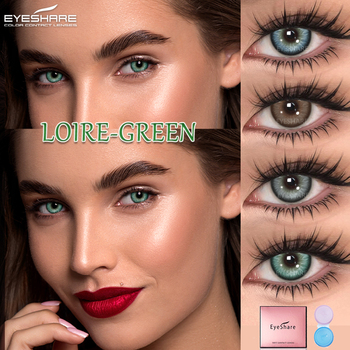
Engineered Lens Architectures & Procurement Recommendations
Precision-cast contact lenses manufactured to European CE and ISO clinical metrics. Featuring proprietary sandwich printing technologies that eliminate corneal dye exposure.
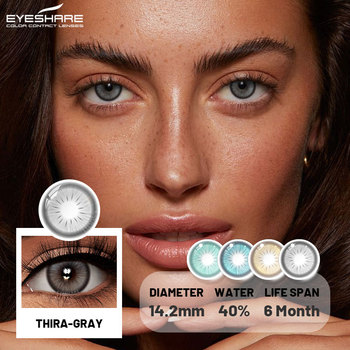
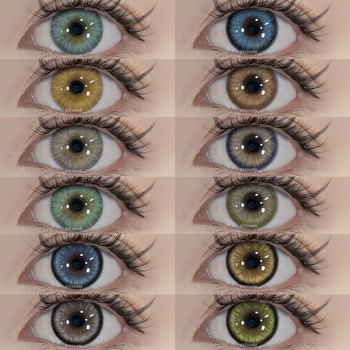
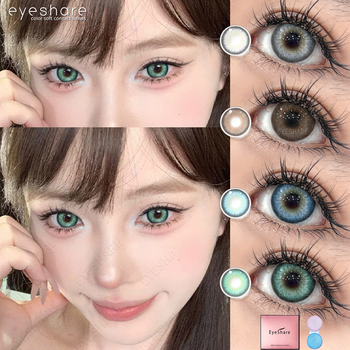
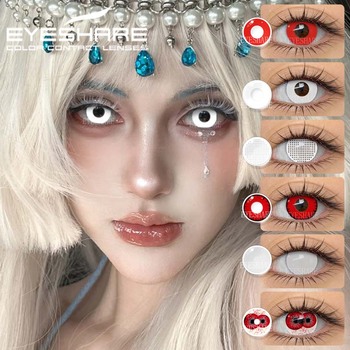
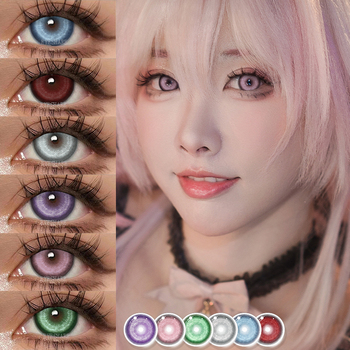
OEM/ODM High-Oxygen Three-Tone 14.5mm Cosmetic Lens
14.5mm Big Eye
OEM Custom
Half-Yearly
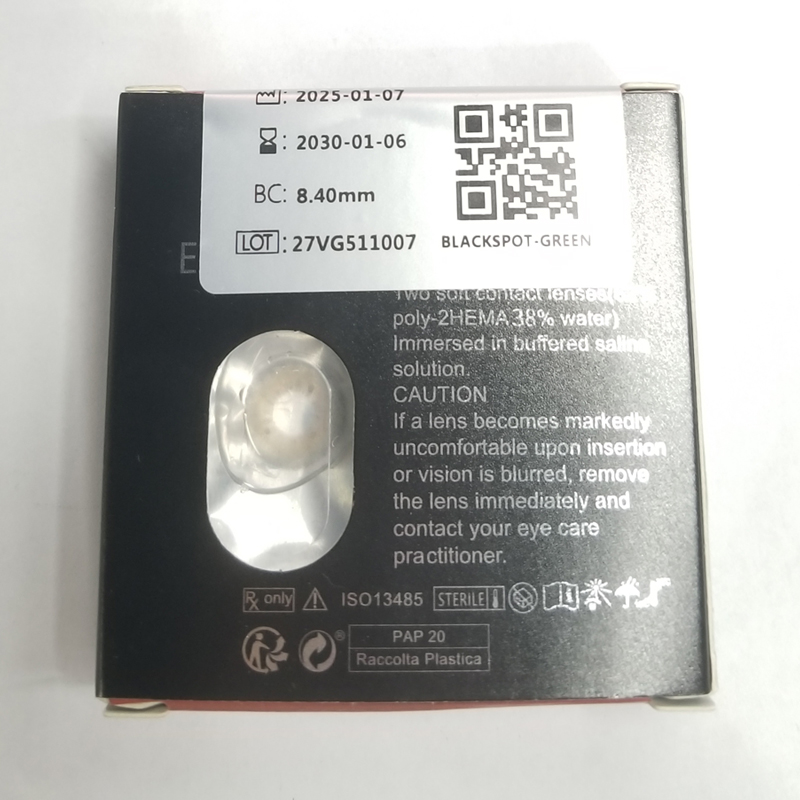
Turnkey Private-Label Contact Lens Packaging Box Series
Free Design
FSC Paperboard
Custom Foil

Modular Retail Display Rack & Ocular Prosthesis Showcase
Retail Ready
Acrylic/Metal
Custom Branding
Strategic Manufacturing & Global Sourcing Paradigms
A technical assessment of ophthalmic hydrogel compounding, cast-moulding micro-tooling, and regulatory compliance frameworks for international distributors.
The cosmetic and coloured contact lens manufacturing sector has evolved from simple novelty accessories into high-precision, clinically monitored Class II and Class III medical devices. When procuring OEM/ODM contact lenses from China, brand operators and optical buying groups must evaluate supply chain partners based on rigorous biochemical standards rather than surface aesthetics alone. As a market-leading Chinese contract manufacturer and exporter, Shenzhen Eyesharelenses Co., Ltd. operates at the intersection of ophthalmological ergonomics and rapid consumer aesthetic innovation.
Central to modern hydrophilic contact lens manufacturing is the precise manipulation of poly-2-hydroxyethyl methacrylate (pHEMA) cross-linked polymers. Our formulations maintain an exact 38% water equilibrium, delivering an optimal balance between mechanical tear resistance and sufficient dissolved oxygen permeability (Dk/t flux). By preventing excessive dehydration commonly found in hyper-hydrated materials within dry retail or air-conditioned environments, our matrices stabilize tear-film osmolarity, ensuring uninterrupted wear times of up to eight to ten hours without epithelial irritation.
Crucially, our automated cleanroom operations employ advanced pigment sandwich encapsulation technology. Through this proprietary method, bio-compatible micronized colorants—primarily FDA-approved iron oxides and titanium dioxides—are permanently sealed between two ultra-smooth optical layers of uncoloured hydrogel. The coloured micro-dot pattern never comes into physical contact with the bulbar conjunctiva or the corneal epithelium, nor is it exposed to chemical degradation from multipurpose cleansing solutions. This eliminates risks of microbial biofilm colonization and toxic leaching, offering our overseas partners full regulatory defensibility under MHRA, FDA 510(k), and EU MDR frameworks.
Future Procurement Trends in Cosmetic Contact Lenses
Data-driven forecasts for distributors navigating shorter replacement schedules, digital SKU velocity, and sustainable supply loops.
Transition Toward Daily Disposables
While yearly and half-yearly lenses retain massive volume in emerging markets, North American and Western European retailers are shifting aggressive procurement capital toward 1-Day (daily disposable) colored modalities. Buyers are balancing unit-economics through automated high-cavity cast-moulding to capture higher lifetime consumer values without hygiene non-compliance risks.
Compressed Lead Times & Micro-Drops
Influenced by dynamic cosmetic trend rotations on social channels, brands can no longer afford 6-month product release lead times. Sourcing strategies now leverage agile Chinese manufacturers offering low minimum order quantities (MOQs down to 10-20 pairs for stock colors) combined with high-volume fast-track runs to test trending tints before mass scaling.
Eco-Compliant Secondary Packaging
Global regulatory bodies are increasing pressure on post-consumer plastic footprint. Future-forward importers are adopting FSC-certified recyclable boxboards, reduced-gauge aluminum foil seals on sterile polypropylene blisters, and water-based nontoxic inks for all external literature, satisfying eco-conscious Gen-Z target demographics without compromising barrier integrity.
Technological Evolutions: Next-Gen Optical Engineering
The convergence of silicone hydrogel matrices, multi-curve edge geometries, and bio-photonic iris micro-structures.
The cosmetic lens landscape is undergoing radical technical modernization. Historically, coloured lenses were constrained by structural rigidity, leading to peripheral edge standoff, insufficient oxygen diffusion, and accelerated wearer fatigue. Modern manufacturing facilities are overcoming these constraints through breakthroughs in computational lens design and polymeric formulation.
The integration of Silicone Hydrogel (SiHy) platforms represents the paramount technological milestone for high-performance cosmetic wear. By constructing polymer backbones with co-polymerized siloxane macromers, the oxygen transmissibility jumps from 20-30 Dk/t to upwards of 100+ Dk/t. This ensures unhindered corneal aerobic respiration even when high-density theatrical pigments are embedded within the peripheral zones. Shenzhen Eyesharelenses Co., Ltd. continues to commit engineering resources toward perfecting SiHy colour casting, balancing the material's naturally hydrophobic nature through integrated internal wetting agents like polyvinylpyrrolidone (PVP), completely neutralizing surface lipids and protein deposition.
Simultaneously, micro-fluidic edge shaping has rendered thick bevelled borders obsolete. Our ultra-thin rounded edge geometry allows natural tear exchange beneath the lens body with every blink cycle, actively preventing limbal redness and physical sensation. Combined with multi-aspheric optical zone geometries that correct mild corneal astigmatism and spherical aberrations, modern cosmetic contact lenses deliver 4K-grade visual acuity indistinguishable from premium medical corrective lenses.
Technical Enterprise Advantages & Cleanroom Infrastructure
Shenzhen Eyesharelenses Co., Ltd.: Your verified manufacturing anchor in mainland China.
SGS Group Onsite Validated
Our operational infrastructure, chemical assay records, cleanroom bio-burden controls, and corporate documentation have been fully inspected onsite by the world-leading testing organization SGS Group, providing genuine due-diligence data for your audit portfolio.
Senior Optical Engineering Staff
Our manufacturing floor is supported by 5+ specialized optical engineers, each possessing over five years of dedicated experience in monomer cross-linking kinetics, photolithographic color masking, and automated lens demoulding systems, maintaining tight batch-to-batch visual fidelity.
End-to-End Turnkey Localization
We do not merely supply vials. Our dedicated 24-member international trade matrix manages full design-based and sample-based customizations, including blister packaging, medical foil sealing, barcode generation, multi-language IFU pamphlets, and UKCA/CE compliance dossiers.
Procurement Intelligence: Frequently Asked Questions
Direct technical and commercial clarifications addressing import hurdles, minimums, and testing protocols.
What parameters define your baseline soft HEMA cosmetic lenses?
Standard production runs exhibit a refractive index calibrated for high light transparency, a baseline water content of 38%, back optical zone base curves (BC) machined to 8.5mm - 8.6mm, and overall diameters (DIA) calibrated at 14.0mm, 14.2mm, or 14.5mm to match European and international limbal rings.
How do you ensure zero pigment migration or chemical shedding?
Every cosmetic lens is synthesized using cast-moulded sandwich encapsulation. Color pigments are isolated inside hydrophobic polymer channels. Finished production units undergo severe extraction testing in boiling saline and organic solvents to verify zero particulate leaching under spectrophotometric analysis.
What are the standard MOQs for private label OEM runs versus wholesale?
For ready-to-ship stock models in blister or vial packaging, MOQs start as low as 10 to 20 pairs per SKU, facilitating sampling. For complete custom OEM/ODM packaging featuring bespoke box art, customized blister foils, and targeted brand designs, custom project minimums are tailored to client scale.
What documentation is provided to clear customs in regulated zones?
We supply verified Certificate of Analysis (CoA) per batch, mechanical dimension variance sheets, sterilizer validation reports (autoclave saturation at 121°C), SGS onsite verification summaries, and CE conformity documentation. Importers are supported in assembling their local Medical Device files.