Flagship OEM/ODM Private Label Product Series
Engineered for high-volume retail, optical dispensary networks, and emerging private label e-commerce cosmetic brands with full batch traceability and clinical biocompatibility.
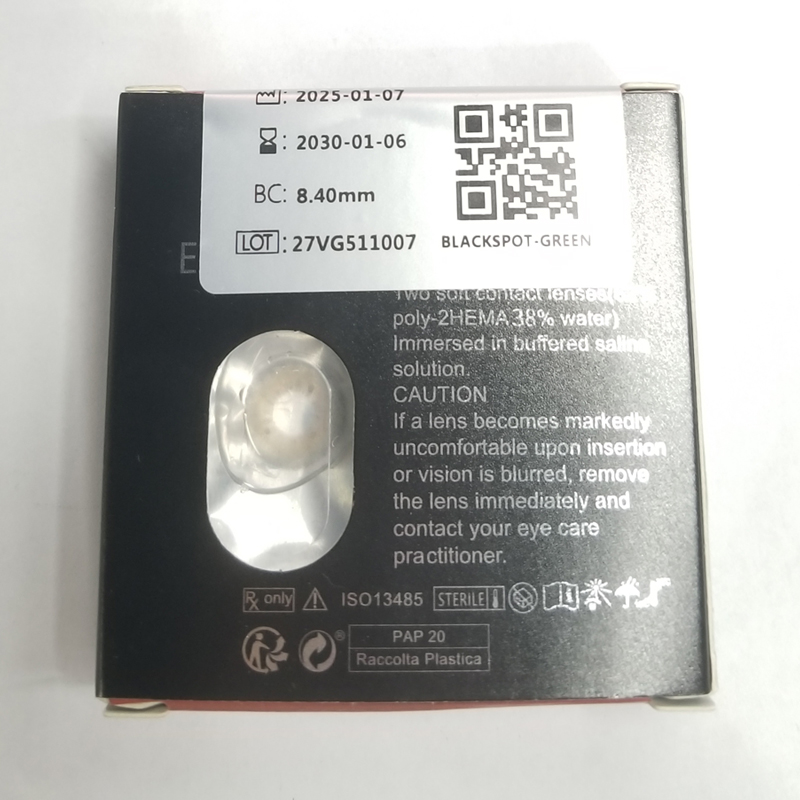
Eyeshare Wholesale Personal Brand Lentes De Contacto Paper Box Custom Eye Lens Packing Box

Contact Lenses Display Shelf Prosthetic Glass Eyes Retail Showcase Counter Stand
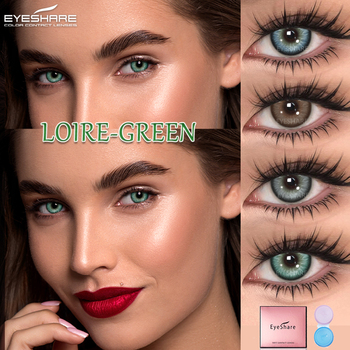
European Style Natural Blue Grey Soft Cosmetic Contact Lenses
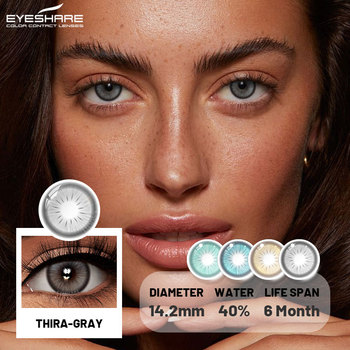
Three-Tone Hydrogel Cosmetic Contact Lenses for Myopia Correction
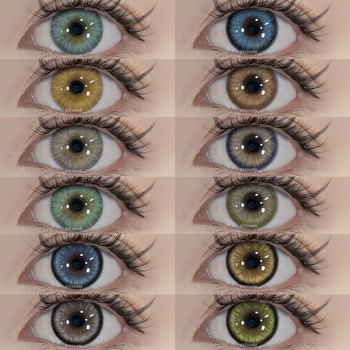
CE Class IIa Natural Three-Tone Medical Grade Soft Hydrogel Lenses
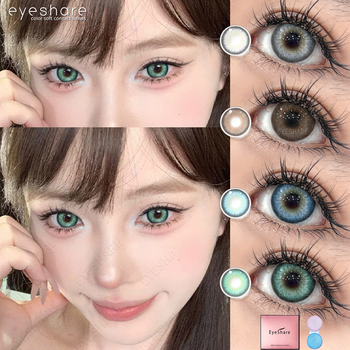
High-Oxygen Breathable Three-Tone Yearly Replacement Cosmetic Lenses
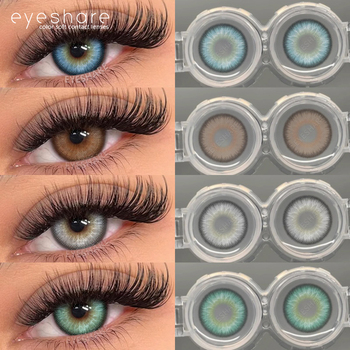
Fashion Color Half-Yearly Cosmetic Contact Lenses Ultra Thin Matrix
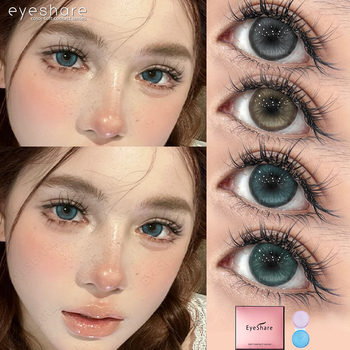
Precision Cast 14.2mm Natural Three-Tone Blended Iris Contact Lenses
Enterprise Engineering & High-Precision Production Infrastructure
As premier soft contact lens contract manufacturing facilities in China, our operations integrate medical-grade optical polymer chemistry with high-speed automated production architecture. Operating within verified Class 100,000 (ISO Class 8 equivalent) cleanroom environments, our facility adheres to stringent microbiological biocontainment standards, ensuring that particulates, airborne bioburden, and pyrogenic vectors are maintained far below international regulatory thresholds.
Contract manufacturing of cosmetic and prescription contact lenses requires micron-level engineering. Unlike generic consumer goods, a contact lens is an active Class II / Class IIa medical device in direct continuous contact with the human cornea. Every phase of our production—from monomer mixing, cast-molding polymerization, precision demolding, and multi-stage extraction, to physiological saline hydration, automated vision inspection, and steam sterilization at 121°C for 20 minutes (SAL 10⁻⁶)—is strictly governed by certified ISO 13485:2016 Quality Management Systems.
SGS Onsite Audited Facility
Verified physical premises, commercial standing, cleanroom classification, and quality control systems audited by independent international testing agency SGS Group.
Micro-Pigment Sandwich Tech
Colorants are molecularly locked inside the lens substrate. Cornea and palpebral conjunctiva touch only hydrated biocompatible polymer, never pigment layers.
Advanced Optical Metrology
Every lot undergoes 100% digital automated optical projection (AOI) checking for edge integrity, base curve conformity (±0.02mm), center thickness, and focal diopter accuracy.
B2B Technical Benchmarks: Polymer Formulation & Manufacturing Methods
Selecting the appropriate substrate chemistry and production modality is the most critical decision for optical distributors and private-label brand owners. Our factories accommodate both Cast-Molding (designed for high-volume, highly reproducible unit costs) and Precision CNC Lathe-Cutting (tailored for complex toric corrections, prosthetic optics, and small-batch custom designs).
| Evaluation Parameter | High-Volume Cast Molding (Standard) | Semi-Cast Molding (Hybrid) | Precision CNC Lathe-Cutting |
|---|---|---|---|
| Primary Polymer Base | p-HEMA Hydrogel / NVP Copolymer | High-Water p-HEMA / Silicone Hydrogel | Fluorosilicone Hydrogel / Rigid Gas Permeable |
| Hydration / Water Content | 38% – 42% (Optimal Tear Stability) | 45% – 55% (High Comfort Profile) | 38% – 60% (Bespoke Formulations) |
| Oxygen Permeability (Dk/t) | 12 – 18 × 10⁻⁹ (ISO Standard) | 25 – 45 × 10⁻⁹ (Extended Daily) | 80 – 120+ × 10⁻⁹ (Continuous Wear Ready) |
| Edge Profile Uniformity | Ultra-smooth, radius-tapered (±0.01mm) | Consistent rounded contour | Hand-polished or micro-machined bevel |
| Color Embedding Process | Pad Printed in-mold / Sandwich Lock | Rotary gravure / Encapsulated | Sub-surface micro-dot injection / Hand tinting |
| Tooling Cost & Amortization | High upfront mold, negligible unit cost | Balanced tooling and unit scalability | Zero mold charge, higher single-unit labor |
| Minimum Order Quantity (MOQ) | Low: 10–20 pairs stock | Moderate: 100–500 pairs | Flexible: 1–50 pairs (Custom) |
Strategic Sourcing & Procurement Trends (2025–2030 Forecast)
The global contact lens manufacturing supply chain is undergoing profound structural transformations driven by international regulatory harmonization, shift towards daily disposable cycles, and demands for hyper-individualized aesthetic designs. Global optical buyers who anticipate these market transitions secure a distinct commercial edge over competitors relying on outdated sourcing frameworks.
1. Regulatory Tightening & Global Traceability
With the transition from MDD to EU MDR (Regulation (EU) 2017/745), Annex XVI mandates that even non-corrective cosmetic lenses adhere to strict clinical evaluation, Unique Device Identification (UDI), and post-market clinical follow-up (PMCF). Procurement strategies are consolidating toward verified Chinese manufacturing hubs possessing ready Technical Documentation Dossiers, ISO 13485 certification, and clear supply-chain traceability.
2. Transition toward Daily Disposable (1-Day) Formats
While yearly and half-yearly lenses dominate cosmetic and costume segments due to affordability, high-margin brand procurement is shifting rapidly toward daily disposable blister packaging. Daily modalities eliminate customer cleaning compliance issues, dramatically reduce corneal hypoxia risks, and build higher recurring Lifetime Value (LTV) through monthly replenishment subscriptions.
3. AI-Driven Iris Chromatic Replication & Micro-Patterns
Standard flat opaque dots are being superseded by multi-layered, variable-opacity digital micro-patterns generated through generative optical simulation algorithms. Modern consumers expect contact lenses to blend imperceptibly with darker Asian/African irises as well as lighter Caucasian irises, driving contract R&D towards radial gradient blending and natural limbal ring definition.
4. Lean Agile Inventory & Hybrid Fast-Turn Manufacturing
To hedge against volatile supply chains and inventory holding overheads, brand owners demand hybrid procurement models: ultra-low minimum order quantities (10 to 50 pairs) on catalog items for rapid real-market A/B testing on TikTok/Instagram, coupled with immediate capacity ramps to 100,000+ units upon viral demand validation.
The 5-Stage Turnkey OEM/ODM Private Label Architecture
From initial optical concept to customs-cleared container delivery, our Shenzhen engineering facility provides comprehensive contract manufacturing. With over 24 specialized trade personnel and 5+ senior optical engineers boasting over five years of sterile formulation experience, we ensure your brand launches smoothly.
Optical Specification
Define material substrate (HEMA vs. Si-Hy), water content, base curve (8.5–8.6mm), diameter (14.0–14.5mm), and targeted diopter range (Plano to -10.00D).
Chromatic Prototyping
Design raster artwork, limbal ring density, and color tone layers. Receive on-eye testing samples within 7–12 working days for aesthetic and optical sign-off.
Medical Packaging Design
Bespoke blister foils, multi-language IFU (Instructions for Use) leaflets, barcode serialization, tamper-evident carton folding, and display showcase engineering.
Cleanroom Batch Run
Automated cast molding, curing, hydration, saline filling, high-pressure steam terminal sterilization, and 100% automated optical verification testing.
Compliance & Export
Complete batch release documentation, Certificate of Analysis (CoA), sterile barrier integrity verification, and DDP air/ocean logistics to worldwide ports.
B2B Contact Lens Sourcing & Compliance FAQ
Key regulatory, technical, and commercial answers for corporate buyers, licensed opticians, and private-label brand incubators evaluating Chinese manufacturing capabilities.
Are cosmetic (zero-powered / Plano) contact lenses regulated as medical devices?
What is the minimum order quantity (MOQ) for custom private-label branding?
How does your factory ensure pigment safety and prevent corneal irritation?
What documentation do you provide for destination market customs clearance?
What is the standard production lead time for OEM bulk orders?
Can you manufacture prescription colored contact lenses with high diopter ranges?
Accelerate Your Private Label Contact Lens Brand
Partner with an SGS-assessed China manufacturing leader. Access low sampling MOQs, complete regulatory technical dossiers, certified cleanroom manufacturing, and full turnkey packaging customization.