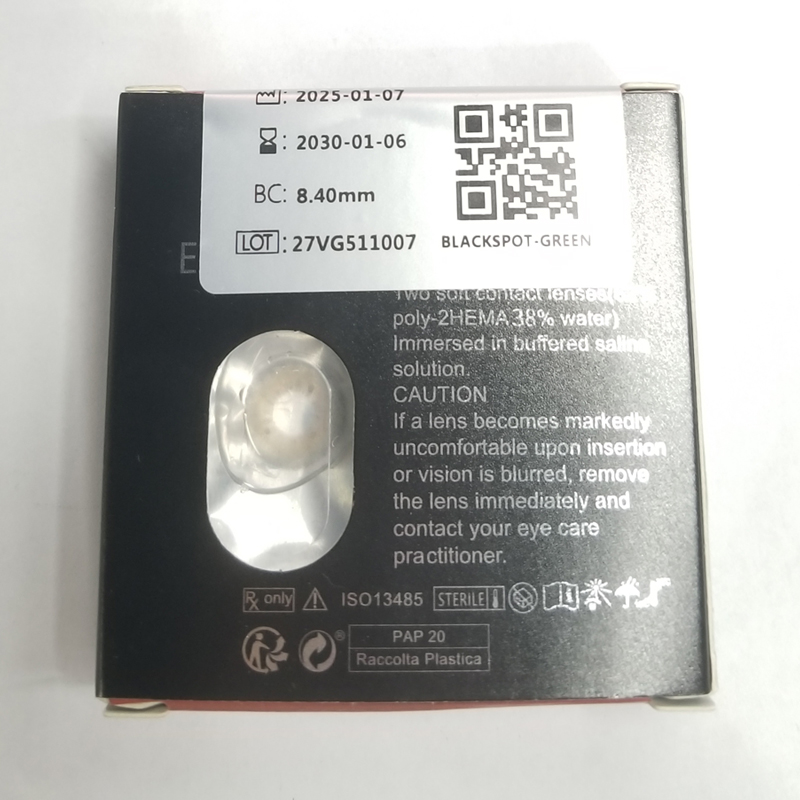
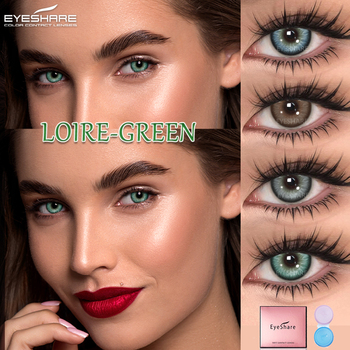
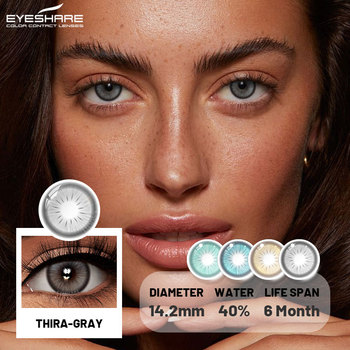
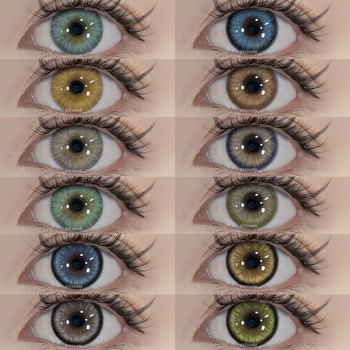
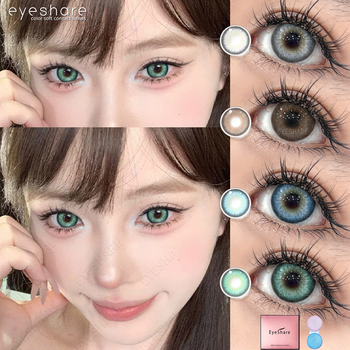
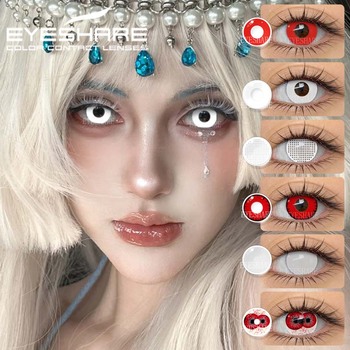
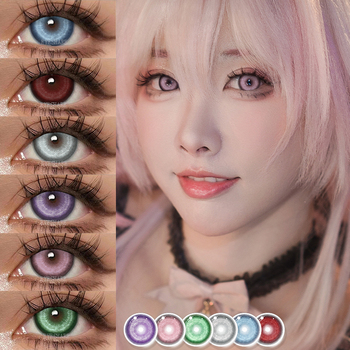
Top China Contact Lens OEM Manufacturers & Supplier
Precision Cast-Molding Systems, Medical-Grade Poly-HEMA & Silicone Hydrogel Matrix Formulations, and Comprehensive Turnkey Regulatory Support for Global Optical Retailers.
Explore our validated product lines available for rapid custom branding, contract manufacturing, and international distribution. Fully compliant with international medical device directives.
Engineering Excellence in Chinese Contact Lens Contract Manufacturing
A technical evaluation of modern polymer chemistry, cast-molding fabrication methodologies, and cross-linked color matrix safety for international optical brand executives.
The contract manufacturing ecosystem for ocular medical devices in China has undergone a transformative technological evolution over the past decade. Previously dominated by conventional lathe-cutting and semi-manual spin-casting operations, premier Chinese original equipment manufacturers (OEMs) such as Shenzhen Eyesharelenses Co., Ltd have transitioned completely to fully automated, cleanroom-enclosed precision cast-molding platforms. This paradigm shift ensures microscopic dimensional stability across massive production runs, achieving consistent edge profiles and spherical aberrations that rival legacy Western manufacturing hubs while maintaining superior commercial scalability.
In the specialized arena of cosmetic and corrective soft contact lenses, product safety is directly governed by polymer biomaterials and pigment encapsulation integrity. Hydrogel formulations based on 2-hydroxyethyl methacrylate (Poly-HEMA) remain the gold standard for annual and semi-annual decorative wear, offering robust tear-film wettability, dimensional stability, and an optimal equilibrium water content (EWC) of approximately 38% to 42%. By maintaining this balanced hydration level, the lens avoids rapid dehydration under low-humidity conditions, mitigating the classic "dry-eye" symptomology associated with excessively high-water materials that deplete ocular mucin layers throughout continuous wear.
Cast-Molding 3D Polymerization
Optical monomers are precisely dosed into diamond-turned CNC optical molds. Closed-loop UV light and thermal polymerization lock optical power (-0.50D to -10.00D) and concentric curvature without residual mechanical stress.
Sandwich Color Encapsulation
FDA-approved non-ionic cosmetic colorants are embedded hermetically between two clear outer monomer layers. The color matrix never contacts the corneal epithelium or palpebral conjunctiva, preventing micro-abrasions.
Mitigate supply chain liability with a manufacturing partner operating under validated cleanroom standards, certified instrumentation, and rigorous quality management frameworks.
Shenzhen Eyesharelenses Co., Ltd Infrastructure
Our complete manufacturing footprint has undergone thorough onsite assessment by the SGS Group—the world's benchmark for inspection, verification, and certification. Our clients include certified optometrists, licensed retail pharmacy chains, and high-growth e-commerce beauty labels who demand unyielding batch-to-batch repeatability and transparent technical dossiers.
Class 100,000 Cleanroom Enclosures
Finished Product Inspection Protocols
Dedicated Optical Center & Curvature Labs
Full European CE & UKCA Technical Files
Onsite Verification Completed
Production capacity, cleanroom sanitation, legal status, and QA/QC management independently validated by SGS Group auditors.
Anticipate channel dynamics, material innovations, and regulatory evolutions to secure commercial margin and supply continuity over the next five years.
While poly-HEMA continues to dominate conventional annual cosmetic lenses due to tensile resilience and tint brilliance, procurement volumes for daily and monthly disposables are surging toward Silicone Hydrogel (SiHy). Delivering oxygen transmissibility rates exceeding 80 Dk/t, SiHy materials meet escalating clinical recommendations from European and American optometric boards aiming to eliminate corneal hypoxia.
Global cosmetic brands are abandoning monolithic annual purchase commitments. Instead, procurement strategies favor contract suppliers offering low Minimum Order Quantities (MOQs from 10–50 pairs for stock palettes, and 500 units for fully branded blister packs). This agility enables brands to align product launches with rapid viral beauty cycles and seasonal anime/theatrical trends without excessive working capital lockup.
Trend 03
Hyper-Natural 3-Tone & Iris-Mimetic Dot Matrices
Consumer preferences have decisively shifted from archaic, high-opacity flat color rings to photorealistic, multi-layered gradient patterns. Advanced OEM manufacturers utilize high-density sub-micron dot matrix printing that blends three distinct pigment hues—a dark limbal definition ring, a vibrant intermediate iris field, and a warm hazelnut pupillary transition zone—yielding depth that seamlessly integrates with dark natural eyes.
Regulatory scrutiny over contact lenses has intensified globally. Under EU MDR (2017/745) and the UK Opticians Act 1989, even plano (zero-powered) cosmetic lenses are classified as Class IIa medical devices requiring audited technical documentation, designated Authorized Representatives (EAR / UKRP), and standardized sterile packaging compliance. OEMs that furnish turnkey regulatory dossiers represent the only viable procurement route.
Trend 05
Sustainable Sterilization & Eco-Blister Packaging
Corporate ESG mandates are reshaping secondary packaging requirements. International optical buyers now demand recyclable polypropylene blister shells, reduced foil aluminum seals, and FSC-certified unbleached outer cartons printed with non-toxic vegetable inks. In response, modern Chinese contract plants are implementing continuous autoclaving systems that optimize thermal energy efficiency by over 30% per sterile cycle.
Turnkey Private Label Workflow
From Formulation to Fulfillment: The OEM Engineering Lifecycle
A structured, quality-controlled methodology engineered to bring proprietary optical collections from technical ideation to market-ready global retail inventory.
01
Technical Brief
Definition of polymer target (HEMA/SiHy), water content, base curves, diameter envelopes, power matrices, and retail packaging specs.
02
Tooling & Sampling
Color matrix alignment, pad printing plate engraving, prototype cast-molding, and delivery of physical on-eye evaluation samples.
Frequently Asked Questions for Optical Wholesalers & Brands
Authoritative technical, legal, and operational guidance addressing the complexities of global contact lens procurement and supply chain execution.
What are the legal compliance prerequisites for retailing cosmetic contact lenses in the UK and European Union?
Under both the European Medical Device Regulation (EU MDR 2017/745 Annex XVI) and the UK Opticians Act 1989, all contact lenses—including non-corrective (zero-power plano) aesthetic lenses, Halloween designs, and cosplay effects—are legally categorized as Class IIa medical devices. In the United Kingdom, sales must take place under the general supervision of a registered optometrist, dispensing optician, or medical practitioner. For brands importing into Great Britain, a UK Responsible Person (UKRP) must be appointed to register products with the Medicines and Healthcare products Regulatory Agency (MHRA). Devices must bear valid UKCA or CE markings under current transitional frameworks. Shenzhen Eyesharelenses Co., Ltd supplies verified technical files, declaration of conformity (DoC) certificates, and compliant English-language Instructions for Use (IFU) leaflets to ensure comprehensive audit protection for importing entities.
How does the "Sandwich Technology" color printing method protect wearer corneal health?
Inferior cosmetic lenses frequently utilize surface pad-printing methods where pigment particles are applied directly to the exterior or posterior surfaces of the lens. Over continuous blinking cycles, these exposed pigments can leach into tear film, induce papillary conjunctivitis, or generate micro-scratches across the sensitive corneal epithelium. Our plant utilizes a sophisticated double-sided cast-molding sandwich encapsulation technique. Color pigments are printed onto an ultra-thin monomer substrate and completely sealed between two enveloping layers of pure medical-grade hydrogel. As a result, the optical surface contacting both the eye tissue and the palpebral eyelid remains perfectly smooth, biocompatible, and free of exposed pigment particulate matter.
What is the standard Minimum Order Quantity (MOQ) structure for custom OEM vs. catalog inventory?
To support both emerging direct-to-consumer (D2C) brands and large retail conglomerates, we offer tiered MOQ schedules. For our in-stock catalog collections (comprising over 300 natural, cosplay, and visual effect patterns), MOQs begin at an accessible 10 to 20 pairs per SKU, with sample testing orders starting from just 2 pairs. For full custom private-label branding—including tailored FSC packaging boxes, custom blister foil sealing, and bilingual user leaflets—the typical entry threshold is 500 units. For completely bespoke lens pattern engineering (creating proprietary iris dot-matrices or exclusive chromatic curves from buyer design briefs), MOQ requirements typically start at 1,000 to 2,000 pairs per design, accompanied by dedicated mold engineering support.
What physical and optical parameter tolerances are enforced during batch quality inspections?
Our manufacturing operations adhere strictly to ISO 13485:2016 quality management standards and ISO 18369 optical testing guidelines. Each production lot is inspected by five certified optical engineers with over five years of specialized experience. Critical tolerances include: Total Diameter (DIA) maintained within ±0.15 mm (typically 14.0 mm, 14.2 mm, or 14.5 mm); Base Curve (BC) within ±0.10 mm (standardized at 8.5 mm to 8.6 mm for optimal universal anatomical fit); Optical Back Vertex Power within ±0.12D for sphere values up to -6.00D; and Center Thickness verified via high-magnification optical micrometers. Furthermore, 100% of finished lots undergo automated visual surface inspection using spectrophotometric and edge-projection instruments to eliminate tears, edge burrs, particulate inclusions, and pigment misalignments.
What is the optimal annual procurement schedule for Halloween and seasonal theatrical cosplay lenses?
The Halloween and festive costume sector represents a highly concentrated sales velocity window, with over 75% of consumer retail transactions occurring between October 1st and October 31st. Because global air cargo capacity tightens substantially in Q3, we recommend that European and North American buyers initiate design selection, sampling approvals, and regulatory documentation audits during June and July. Bulk production purchase orders should be finalized and scheduled no later than mid-August. This guarantees completion of production, batch biological incubation testing (sterility validation), master carton packing, and arrival at regional customs clearing facilities before mid-September, eliminating stock-outs during peak commercial demand.
Can you provide custom corrective optical power ranges across cosmetic and fantasy lens lines?
Yes. While theatrical and costume lenses are commonly stocked in plano (0.00 diopter) power configurations, our high-precision cast molds allow us to manufacture cosmetic collections across a comprehensive corrective myopia spectrum. Standard corrective ranges span from -1.00D to -5.00D in precise 0.25D increments, and from -5.00D to -8.00D in 0.50D increments. Custom tooling can also accommodate hyperopia (+) requirements or high-myopia requirements up to -10.00D upon request for specialized optical distribution partners.
What primary packaging configurations are available: Glass Vials vs. Polypropylene Blisters?
We offer both industry standard primary containment options: 1) Medical-grade borosilicate glass vials sealed with aluminum crimp caps and medical rubber stoppers—the traditional choice for semi-annual and annual replacement lenses, providing exceptional long-term hermetic seal integrity; and 2) Thermoformed polypropylene (PP) blister packs heat-sealed with multi-layer printed aluminum foil laminates. Blister packaging has become the dominant preference for modern daily, monthly, and retail shelf display applications due to its lightweight profile, reduced international shipping freight costs, superior shatter resistance, and sleek consumer opening experience. Both formats undergo automated validation testing for seal integrity, burst pressure, and autoclaving thermal resistance.
How does Shenzhen Eyesharelenses handle shipping logistics, customs declarations, and documentation?
Our trade operations team possesses six years of specialized optical export experience. We coordinate international logistics via major express couriers (DHL, FedEx, UPS) for fast-turnaround sampling and mid-tier orders (3–5 business days transit), as well as bonded air freight and consolidated sea freight for high-volume container shipments. Every outbound consignment is accompanied by a standardized export documentation packet: Commercial Invoice with precise Harmonized System (HS) codes (HS 9001.30: Contact Lenses), Packing Lists with batch serialization, Certificate of Analysis (CoA) per lot, Certificate of Origin, and SGS onsite evaluation verification reports to ensure rapid customs processing without unnecessary port holds.
Partner with China’s Leading Contact Lens OEM Specialist
Whether you require rapid private-label packaging for established designs or end-to-end custom optical formulation and mold engineering, our technical trade team is ready to review your project brief.