Featured Soft Cosmetic & Cosplay Contact Lens Collections
Engineered for high oxygen permeability, bio-compatible color encapsulation, and complete optical compliance across European, UK, and American distribution channels.

Contact Lenses Display Shelf Prosthetic Eyes & Showcase
View Details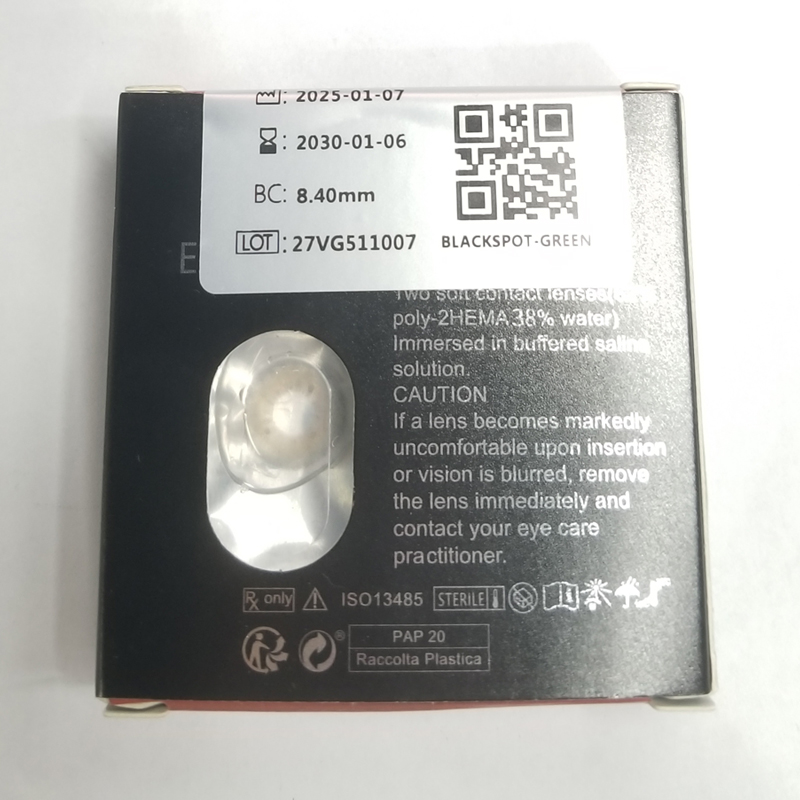
Custom Private Label Colored Lens Folding Carton Packaging
View Details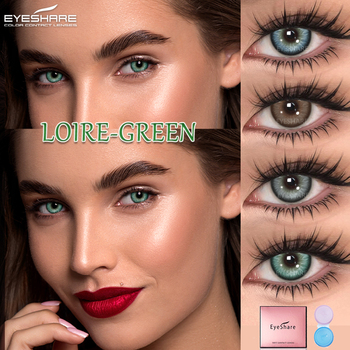
European Natural Blue-Grey Three-Tone Hydrogel Lenses
Send an Inquiry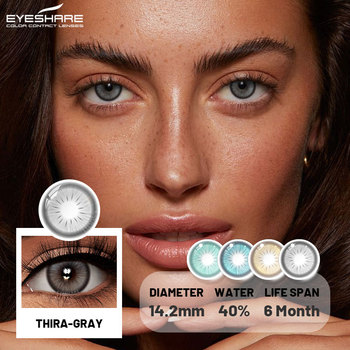
Prescription Three-Tone Color Lenses for Myopia
Send an Inquiry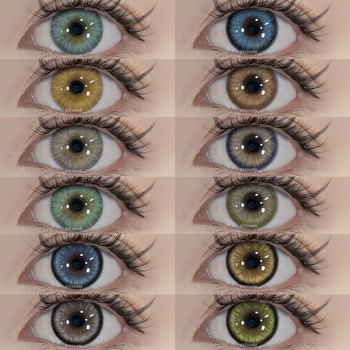
Natural Blend Soft Hydrogel Cosmetic Contact Lenses
Send an Inquiry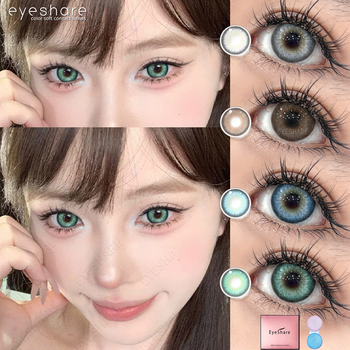
High-Oxygen Permeability 14.5 mm Dolly Enhancer Series
Send an Inquiry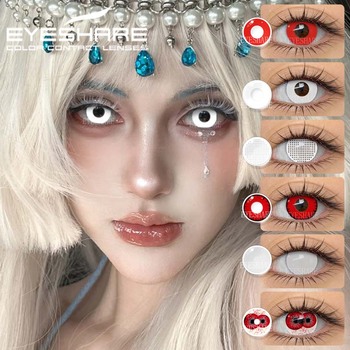
Crazy High-Pigment Anime & SFX Cosplay Lens Series
Send an Inquiry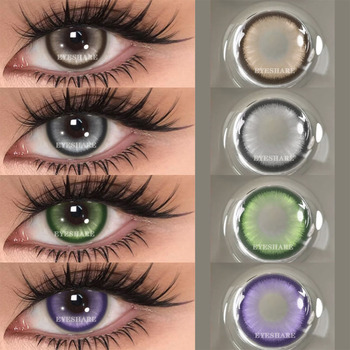
Dual-Tone Exotic Iris Shimmer Cosmetic Contact Lenses
Send an Inquiry
Independently Audited & SGS Group Verified Manufacturer
Shenzhen Eyesharelenses Co., Ltd. has undergone comprehensive onsite evaluation by SGS Group, covering manufacturing premises, quality assurance mechanisms, cleanroom sanitization, packaging verification, and foreign trade export qualifications. Comprehensive audit reports and transaction credit metrics are accessible upon request for corporate compliance dossiers.
Precision Optical Engineering & Factory Infrastructure
How our Shenzhen manufacturing base eliminates pigment migration, guarantees edge uniformity, and maintains compliance across international borders.
Micron-Scale Sandwich Encapsulation
Colorants are chemically embedded between dual layers of inert poly-HEMA hydrogel. By isolating bio-pigments inside the polymer matrix, our lenses ensure zero dye contact with corneal epithelium, eliminating toxic leaching, friction-induced keratitis, and uneven color degradation over prolonged wearing cycles.
Automated Cast Molding & Lathe-Cut Precision
Utilizing high-precision digital CNC optical molds, each lens achieves an ultra-smooth edge profile (peripheral tapering to 0.04 mm) and reproducible sagittal depth. The result is instant centration, rapid tear-exchange dynamics, and minimized foreign-body sensation for first-time cosmetic wearers.
100% Finished-Product Optical Inspection
Our dedicated engineering team of 5+ certified optical professionals tests every production batch against rigid optical metrology standards: focal power deviation, base curve radii (8.5–8.6 mm), center thickness (0.08 mm), and microbiological sterility under ISO cleanroom parameters.
Future Procurement Trends in Colored Contact Lenses (2025–2030)
Critical shifts in global regulatory compliance, material engineering, and consumer demographics that B2B brand owners must navigate to preserve margins.
The Transition to High-Dk Silicone Hydrogel
While traditional 38% water content HEMA remains the cost-effective leader for seasonal and Halloween lines, tier-one western cosmetic brands are aggressively migrating daily-wear colored lines toward silicone hydrogel (SiHy) matrices. SiHy delivers Dk/t values exceeding 80–120, preventing corneal hypoxia and expanding the wearing window to 14+ hours daily.
Daily Disposables Dominating Shelf Space
Driven by clinical recommendations from the British Contact Lens Association (BCLA) and American Academy of Ophthalmology, procurement is skewing rapidly from traditional yearly vials toward daily disposable 10-pack and 30-pack blister formats. Dailies maximize user compliance, completely remove lens care maintenance, and drive recurring monthly replenishment subscriptions.
Regulatory Hardening: EU MDR, UKCA & US 510(k)
Global customs enforcement is shutting down gray-market importers. Even non-corrective (zero diopter) fashion and theatrical lenses are classified as Class IIa medical devices in Europe (EU MDR 2017/745) and the UK (UK Medical Devices Regulations 2002). Importers require an authorized representative (EC REP / UKRP) and full Technical Files.
Private-Label & Contract Manufacturing Workflow
From initial iris graphic rendering to sterilized container packaging and destination clearance support.
Design Specification
Define iris pattern (1-tone, 2-tone, 3-tone), limbal outer rings, pupil aperture clearance, base curve, and diameter.
Prototype Sampling
Rapid mold casting of optical prototypes for lab verification and on-eye photographic calibration against dark and light irises.
Packaging & Leaflets
Custom printed blister foil, medical glass vials, carton packaging, and statutory multi-language Instructions for Use (IFU).
Cleanroom Bulk Run
Automated monomer polymerization, ultrasonic hydration, saline buffer filling, sealing, and 121°C terminal autoclave sterilization.
Export & Release
Complete Certificate of Analysis (COA) generation, bio-burden testing validation, and express air freight dispatch.
Frequently Asked Questions on Importing Colored Contact Lenses
Clear, legally grounded answers addressing international logistics, quality assurance, minimum orders, and regulatory liabilities.
Are zero-power (plano) cosmetic contact lenses regulated as medical devices internationally?
What distinguishes high-grade sandwich printing technology from budget surface-printing?
What are the standard Minimum Order Quantities (MOQs) for stock vs. custom OEM private label?
How should B2B distributors schedule inventory ahead of Halloween and seasonal peaks?
What documentation is provided to satisfy customs clearance and medical device audits?
Accelerate Your Contact Lens Brand With a Direct China Factory
Partner with an SGS-verified manufacturer. Contact our Shenzhen optical export desk today for wholesale pricing tiers, technical compliance files, and free OEM packaging sample kits.
Send an Inquiry