Verified Colored Contact Lens Solutions Ready for Export
Direct-from-factory production runs featuring cast-molding precision, sandwich color-embedding technology, and medical-grade biocompatibility. Below are eight top-performing wholesale SKUs engineered for retail shelf performance and high reorder velocity.
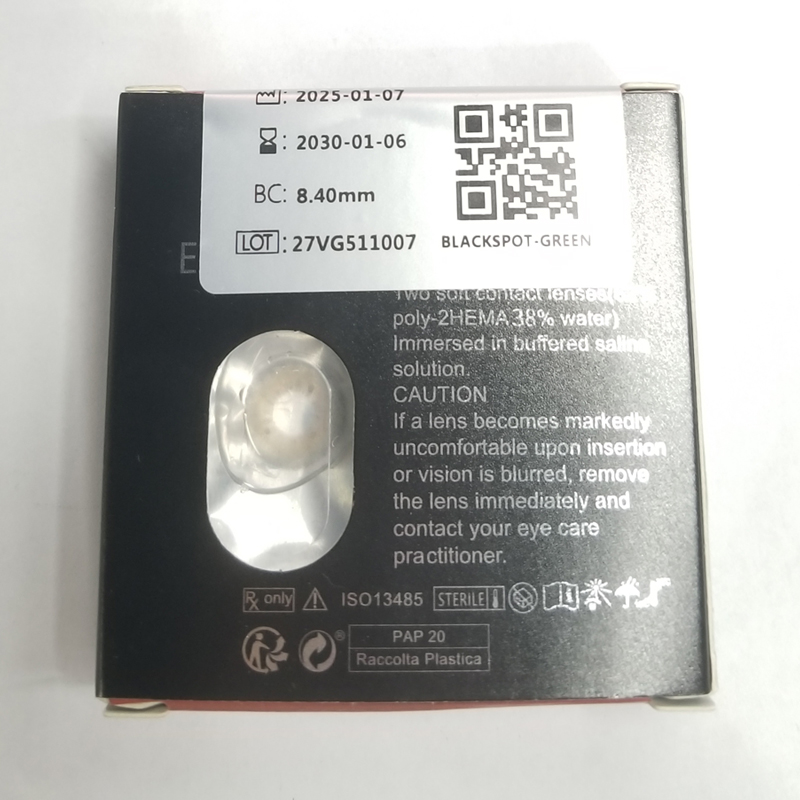
Eyeshare Personal Brand Lentes De Contacto Custom Packaging Box

Contact Lenses Showcase Display Shelf with Prosthetic Glass Eyes
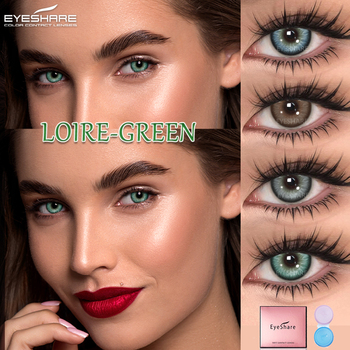
European Style Natural Iris Blue-Grey Hydrophilic Lenses
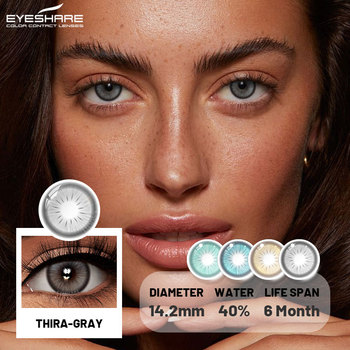
Three-Tone Multi-Radial Soft Corrective Lenses for Myopia
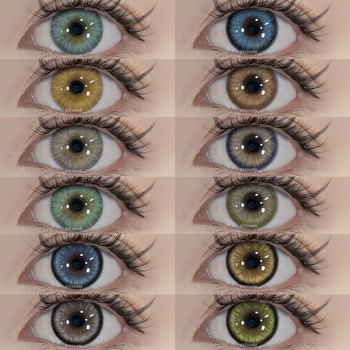
Clinical Grade Natural 3-Tone Amber & Hazel Soft Lenses
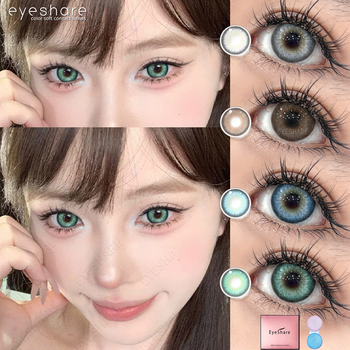
High Oxygen Transmissibility Three-Tone 14.5mm Cosmetic Lenses
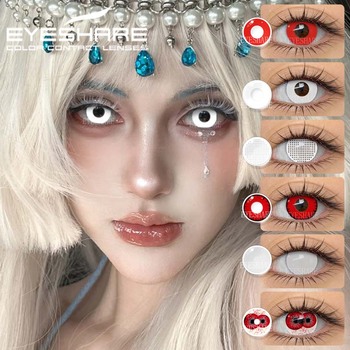
High-Pigment Opaque Crazy Red & Yellow Cosplay Lenses
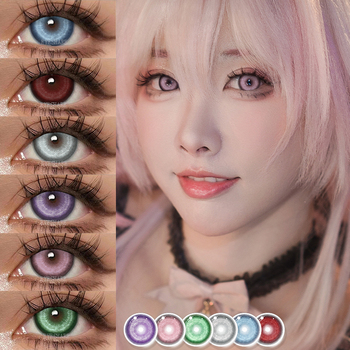
Deep Sclera-Blend Black-Out Theatrical Halloween Lenses
The Global Landscape of China Colored Contact Lens Manufacturing
Over the last decade, China has transitioned from an auxiliary production territory to the primary epicenter of global hydrogel and silicone-hydrogel cosmetic contact lens engineering. Driven by heavy investments in automated cast-molding systems, cleanroom environments certified to ISO Class 7 standards, and precision polymer chemistry, Chinese manufacturers now supply over 65% of the world's fast-fashion and prescription cosmetic contact lens markets.
For B2B procurement managers, sourcing colored contacts directly from accredited Chinese suppliers offers unprecedented unit-economic advantages. However, navigating this sourcing corridor requires an empirical understanding of raw material polymer properties, biocompatibility safety margins, medical device regulatory compliance, and supply chain timelines. Shenzhen Eyesharelenses Co., Ltd has stood at the intersection of quality assurance and commercial scalability, operating with complete transparency verified through third-party audits by SGS Group.
Key Takeaway for B2B Importers
Cosmetic lenses are classified universally as medical devices (Class IIa/IIb in Europe under MDR, Class II in the United States under FDA 510(k), and regulated under the Opticians Act 1989 in the UK). Wholesale purchasing decisions must never hinge solely on unit price; failure to verify physical embedding of color pigments or batch-level sterility certificates exposes importers to devastating regulatory border seizures and brand liability.
Technological Evolution: The Shift from Lathe Cutting to Automated Cast Molding
Early iterations of colored contact lenses were frequently produced via lathe-cutting techniques, which resulted in uneven edge geometries and variable thickness profiles that compromised corneal oxygenation. Modern Chinese tier-one facilities utilize automated, closed-loop cast-molding processes. Molten poly-HEMA or silicone-hydrogel monomers are injected into ultra-precise optical dies, polymerized via ultraviolet photopolymerization, and hydrated in physiological saline within unbroken cleanroom perimeters.
Crucially, high-tier Chinese manufacturers employ proprietary Sandwich Printing Technology (Double-Coating Color Enveloping). In this architecture, the colored pigment layer is not printed onto the surface where it could abrade against corneal epithelium or palpebral conjunctiva. Instead, the colorant is hermetically sealed between two layers of clear, ultra-purified hydrophilic polymer. This guarantees absolute zero pigment migration, protects epithelial integrity, and preserves long-term tear-film hydration.
| Manufacturing Parameter | Legacy Lathe-Cut Colored Lenses | Advanced Double Cast-Molded Lenses (Eyeshare) |
|---|---|---|
| Pigment Enclosure | Surface pad-printed; potential dye leaching risk | Embedded Sandwich Technology; 100% enclosed within polymer matrix |
| Edge Design | Sharp, hand-polished profile; higher foreign body sensation | Continuous multi-curve radial edge; smooth tear-film exchange |
| Oxygen Permeability (Dk/t) | Often degraded by thick pigment layers (< 15 Dk/t) | Optimized polymer channel preservation (20–28+ Dk/t for daily wear) |
| Center Thickness | Variable, typically > 0.10 mm at 0.00D | Precision calibrated: 0.08 mm standard at plano (0.00D) |
| Water Content Ratio | Instability over 6-hour wear cycles | Stable 38%–42% HEMA-based equilibrium hydration |
Future Procurement Trends: Where the Cosmetic Lens Market is Moving (2025–2030)
B2B retail buyers and private label founders must align their product catalogues with shifting end-consumer demands. Our longitudinal analytics across wholesale shipments identify three monumental procurement trends:
1. Hyper-Natural Iris Mimicry
The era of artificial, single-tone block coloring has concluded. Modern buyers demand multi-tonal micro-dot arrays replicating the genuine morphology of the human iris—featuring deep limbal rings, feathered intermediate stroma, and golden-hazel pupillary highlights.
2. Hybrid Corrective Demands
Consumers are replacing standard clear prescription lenses with tinted alternatives. Over 42% of our wholesale orders now request prescription powers (-1.00D to -8.00D). Retailers stocking only plano (0.00) forfeit nearly half of their addressable total market.
3. Eco-Packaging & Low-Volume Blisters
Glass vials, while historically respected, are being superseded by space-saving, medical-grade polypropylene blister packs. Blister formats reduce international air-freight weight by up to 34%, drastically diminishing carbon footprints and customs inspection delays.
Why Partner with Eyeshare Lenses: Verified Corporate Competitive Advantages
As a seasoned supplier based in Shenzhen with 6+ continuous years of direct cross-border trade, Shenzhen Eyesharelenses Co., Ltd bridges the divide between Chinese industrial manufacturing efficiency and Western commercial standards. Our factory operational protocols provide distinct advantages that mitigate supply chain vulnerabilities:
SGS Onsite Audited
Our facilities, corporate governance, cleanrooms, and warehouse management undergo rigorous onsite physical assessment by SGS Group, verifying authentic operations.
In-House Engineering
Our dedicated team of 5+ optical engineers—each holding 5+ years of specialized macromolecular experience—conducts batch-by-batch diopter, edge profile, and optical clarity testing.
Agile OEM/ODM Moat
We empower boutique distributors and digital native brands with ultra-flexible MOQs. Stock designs ship rapidly from inventory; custom packaging begins from low thresholds with free CAD design.
Full Regulatory Dossiers
We supply verified Certificates of Free Sale (CFS), Declarations of Conformity, English IFUs, and micro-biological assay test reports required by customs authorities globally.
Step-by-Step OEM/ODM Private Label Incubation Workflow
Transitioning from an unbranded reseller to an authentic, defensible cosmetic eye lens brand requires systematic execution. Eyeshare provides a seamless end-to-end framework engineered to get private label collections onto your shelves within 25–40 operational days:
Range Definition
Collaboratively select color matrixes, diameters (14.0mm to 14.5mm), and replacement cycles (daily, monthly, yearly).
Sampling & Proofing
Physical sample sets dispatched via express courier for photographic, on-eye, and biocompatibility verification.
Packaging Engineering
Structural paper box crafting, blister foil UV-curing, English IFU layout, and regulatory barcode placement.
Mass Run & QC
Closed cleanroom cast-molding, automated visual inspection, and high-temperature steam sterilization.
DDP Delivery
Customs documentation clearance, HS Code classification support, and insured door-to-door global freight dispatch.
Frequently Asked Questions for B2B Importers
Authoritative answers resolving legal, technical, and operational inquiries faced by cosmetic contact lens wholesalers.
Q1: What international certifications are mandatory for importing colored contacts into the UK and EU?
In the UK and European Union, cosmetic contact lenses (even zero-powered plano lenses) are legally classified as medical devices under the Medical Device Regulation (EU MDR 2017/745) and the UK Medical Devices Regulations 2002. Under the UK Opticians Act 1989, contact lenses must be supplied by or under the supervision of a General Optical Council (GOC) registered practitioner. For importation, you require a Declaration of Conformity with valid CE marking (under active MDR or transition provisions), an appointed UK Responsible Person (UKRP) for Great Britain, English-language Instructions for Use (IFU), and comprehensive batch release documentation. Shenzhen Eyesharelenses Co., Ltd supports buyers with full documentation for compliance auditing.
Q2: How does your manufacturing facility prevent pigment migration and eye irritation?
We deploy Sandwich Micro-Encapsulation Technology. The color pigments—composed exclusively of non-toxic, cosmetic-grade iron oxides and titanium dioxides—are embedded within the central layer of the poly-HEMA hydrogel structure. A distinct, pure polymer barrier encapsulates the pigments on both anterior and posterior surfaces. This construction prevents any direct physical contact between the pigment particles and the cornea or conjunctiva, ensuring 0% dye leakage during vigorous rubbing or extended lens wear.
Q3: What are your minimum order quantities (MOQ) for wholesale stock vs. custom OEM private label?
For stock items carrying our established patterns and packaging, our MOQ starts as low as 10 to 20 pairs per design, with sampling options accessible from 2 pairs per SKU to facilitate market testing and content creation. For complete custom OEM/ODM projects (custom paper boxes, customized blister lidding foil, custom brand logos, and tailored English IFU booklets), our minimum run begins at 500 sets. Custom tint pattern tooling is quoted on a project-by-project basis.
Q4: What is the recommended seasonal purchasing timeline for Halloween and Cosplay lenses?
Halloween represents the largest seasonal demand spike for theatrical lenses (white-out, black-out, vampire red, cat-eye, and sclera). Consumer retail purchases begin surging by late September and peak aggressively in mid-October. Because maritime freight requires 30–45 days and international air cargo requires 7–12 days (excluding customs clearance), wholesale buyers should finalize sampling by late June, confirm production runs by mid-August, and ensure goods arrive at destination warehouses by early September to prevent stockouts.
Q5: What are the standard physical and optical parameters of your lenses?
Our flagship colored contact lenses are engineered with a base curve (BC) of 8.5 mm to 8.6 mm, matching approximately 92% of the international population's corneal topography. Diameters (DIA) range from natural-enhancement 14.0 mm, to balanced 14.2 mm, up to enlarging 14.5 mm big-eye dimensions. The equilibrium water content is balanced at 38% to 42%, which preserves long-term tear-film stability by preventing the lens from drawing excessive moisture from the eye in low-humidity environments.
Q6: How is product sterility and shelf-life guaranteed during international ocean transit?
Every individual lens package (whether glass vial or polypropylene blister) is filled with isotonic buffered physiological saline, sealed hermetically, and processed through high-pressure steam terminal sterilization at 121°C for 20 minutes. This cycle eradicates all bacterial, fungal, and viral spores, establishing a Sterility Assurance Level (SAL) of 10^-6. Our lenses have validated real-time aging shelf-life stability ratings of up to 5 full years from the date of manufacture when stored in cool, ambient conditions.
Q7: Can we mix and match powers and color patterns within a single wholesale order?
Yes. As a B2B partner supporting agile retail operations, we allow buyers to aggregate diverse color styles and prescription tiers (-1.00 to -8.00 in 0.25D or 0.50D increments) to satisfy total volumetric discount brackets. Our automated packing line verifies batch barcodes to guarantee zero SKU picking errors across multi-variant dispatches.
Accelerate Your Colored Lens Sourcing Today
Speak directly with our technical trade directors. Receive our complete wholesale catalogue, request regulatory compliance documentation, or initiate custom private-label box sampling within 24 operational hours.
Get a Quote