Recommended Wholesale Contact Lenses & Optical Formats
Source directly from audited manufacturing lines. Engineered with Sandwich Embedding Technology, ensuring biocompatibility, ocular safety, and flawless cosmetic reproducibility.
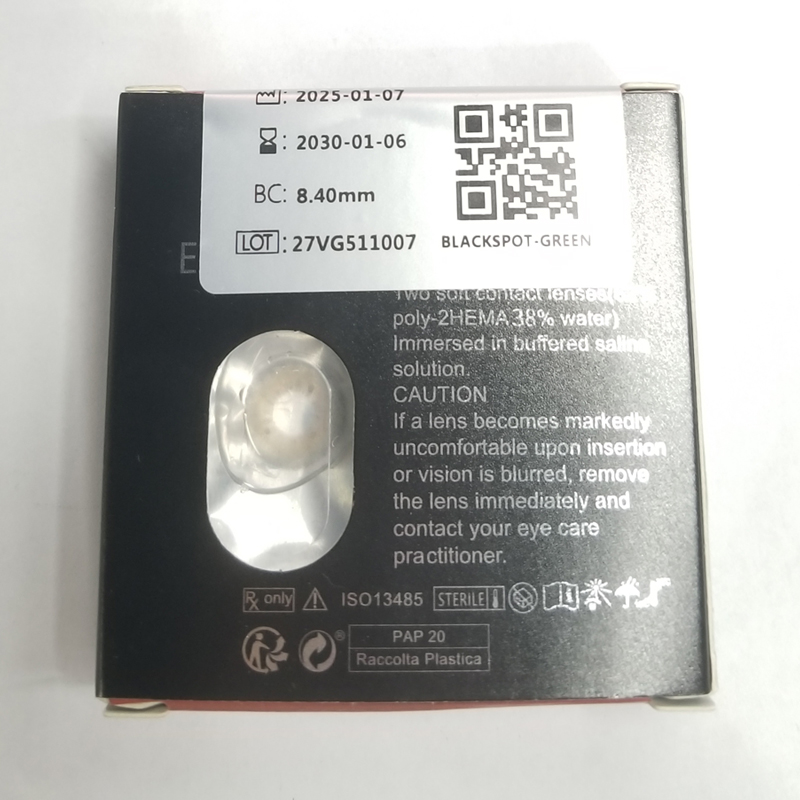
Custom OEM Personal Brand Packaging Box
Complete private-label custom printed boxes, blister foils, and compliant multi-language IFU leaflets.

Prosthetic Ocular Display Shelf & Unit
High-transparency acrylic optical display units tailored for retail clinics, salons, and trade exhibitions.
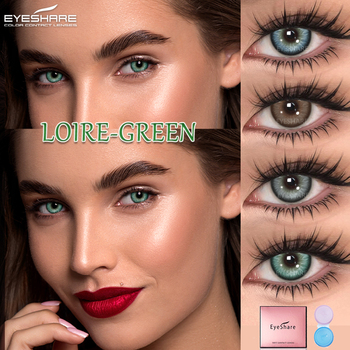
European Style Natural Blue Grey Lenses
Soft HEMA matrix offering realistic tonal transitions, optimized 14.2 mm diameter, and 8.5 mm base curve.
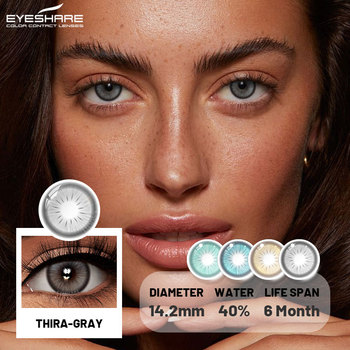
Three-Tone Corrective Soft Lenses
Dual aesthetic and corrective functionality covering myopia power spectra from 0.00 to -8.00D with smooth edges.
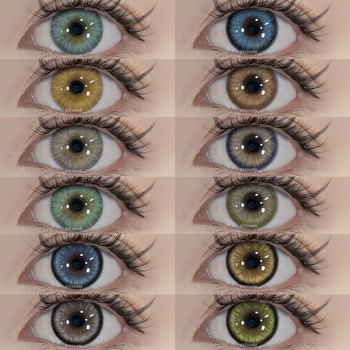
Natural Three-Tone CE Certified Lenses
Compliant for regulated markets, featuring anti-protein deposition treatment and high oxygen permeability.
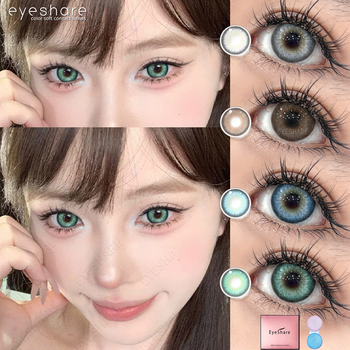
High-Oxygen Enlarging 14.5 mm Series
Engineered for vivid iris amplification while sustaining tear-film circulation and all-day corneal hydration.
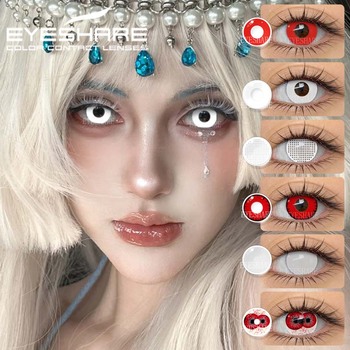
Crazy SFX Red & Yellow Theatrical Lenses
Opaque, high-pigment saturation contact lenses developed for theatrical production, cosplay, and Halloween surges.
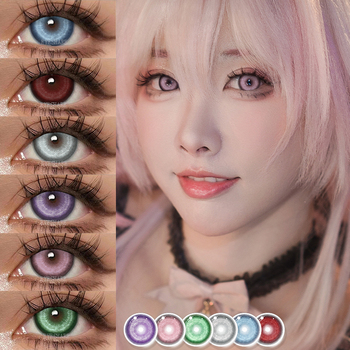
Black-Out Pure Opaque SFX Lenses
Complete pupil masking with clear visual aperture. Safe encapsulation ensures zero pigment contact with the cornea.
Strategic Procurement Analysis: The Contact Lens Wholesale Landscape
Procuring cosmetic and corrective soft contact lenses at scale requires a deep understanding of optical biophysics, polymer chemistry, and international regulatory compliance. As medical devices classified under strict regulatory frameworks worldwide (such as Class IIa under EU MDR and UK Medical Devices Regulations), contact lenses are governed by strict physiological parameters: oxygen transmissibility (Dk/t), surface wettability, modulus of elasticity, and edge profile geometry.
For B2B importers, chain optical stores, e-commerce direct-to-consumer (DTC) brands, and regional distributors, partnering with a dependable contact lens manufacturer is a balance between clinical safety, unit production cost, and lead-time agility. Shenzhen Eyesharelenses Co., Ltd. bridges this gap through engineering capability, transparent quality systems, and adaptable private label frameworks.
Future Sourcing Trends in the Contact Lens Wholesale Market
The global contact lens market is undergoing rapid evolution driven by shifting consumer preferences and stricter regulatory compliance. Distributors must align their procurement cycles with the following industry developments:
- Rise of Silicone Hydrogel Formulation: While standard 2-HEMA (Hydroxyethyl Methacrylate) remains the industry benchmark for colored cosmetic lenses due to its pigment binding stability and cost efficiency, international demand is expanding toward next-generation Silicone Hydrogel. This hybrid polymer delivers up to five times greater oxygen permeation to the cornea, supporting longer wear cycles and reducing hypoxia-induced ocular stress.
- Daily Disposable (1-Day) Dominance: Though half-yearly and yearly replacement lenses hold dominant sales shares in emerging and specialty retail segments, developed markets are shifting rapidly to single-use daily disposables. Driven by consumer prioritization of ocular hygiene and zero-maintenance convenience, wholesale purchasers are increasingly allocating budget reserves to automated daily-strip blister pack production.
- Multi-Dimensional Dot Matrix Printing: Traditional cosmetic lenses often appeared flat or artificial. Next-generation manufacturing incorporates ultra-fine multi-tone microscopic dot-matrix injection. This technique replicates the natural depth, crypts, and limbal rings of human irises, achieving seamless integration across both light and dark native eye shades.
- Stricter Traceability & EUDAMED / UDI Standards: Regulatory bodies worldwide now mandate comprehensive Unique Device Identification (UDI) down to primary blister packages. Importers must ensure their offshore manufacturing partners maintain validated Cleanroom Class 100,000 / ISO 13485 environments, digitized batch retention systems, and audited quality declarations.
| Evaluation Parameter | Standard Wholesale Commodity | Eyeshare Industrial Manufacturing Standard |
|---|---|---|
| Pigment Safety | Surface printing or single-layer deposition (risk of abrasion) | Sandwich Micro-Encapsulation Technology (zero corneal contact) |
| Quality Verification | Self-declared factory test sheet | Onsite SGS Verification, optical power mapping & lot testing |
| Ocular Edge Comfort | Standard straight cut profile | Multi-curve cast molding with rounded edge beveling |
| Private Label Agility | Rigid high MOQ (>5,000 units per color) | Modular low MOQ sampling (10-20 pairs stock, flexible OEM) |
Technological & Material Evolution of Soft Contact Lenses
Modern soft contact lens manufacturing has advanced from traditional lathe-cutting to Cast Molding and Full-Molding Automation. Fully automated cast-molding systems cure monomer matrices under ultraviolet and thermal stabilization, securing microscopic uniformity across every batch. This consistency maintains exact base curve curvatures (8.5 mm – 8.6 mm) and precise center thicknesses (typically 0.08 mm for plano lenses), minimizing fit discrepancies across diverse patient populations.
Additionally, modern pigmentation utilizes non-toxic, biocompatible bio-pigments locked securely between internal polymer layers. This prevents cellular toxicity and reduces surface roughness, ensuring stable tear-film breakup times (TBUT) and maintaining ocular comfort throughout full-day wear schedules.
Eyeshare Industrial Manufacturing & Wholesale Advantages
Backed by over six years of focused international export expertise, certified optical engineers, and strict testing protocols, we provide end-to-end support for your private label optical brand.
SGS Onsite Audited Facility
Our operational premises, legal certifications, cleanroom infrastructure, and trade credibility are independently verified onsite by SGS Group, giving you reliable supply chain verification.
Sandwich Embedded Pigmentation
Our bio-color pigments are sealed safely between hydrogel polymer sheets. Colorants never touch human conjunctiva or corneal epithelial tissue, ensuring clear clinical safety.
Engineered OEM & ODM Agility
We provide full-spectrum customization: custom lens patterns, packaging boxes, glass vials, sterile blister packs, and multi-language instructions to meet your market requirements.
Dedicated In-House QC Engineering
Supported by more than 5 senior certified engineers with over five years of dedicated optical experience, we run thorough optical power checks, center-thickness measurements, and edge-profile assessments on every batch.
Low Sampling MOQs
Avoid excessive initial capital outlays. We support fast-turnaround sampling programs starting from 2 to 10 pairs per design, enabling you to test consumer demand before committing to full production runs.
Streamlined Global Export Logistics
Our dedicated 24-person trade support group handles documentation, HS code categorization, and air-freight tracking for reliable customs clearance into Europe, the UK, North America, and Southeast Asia.
Frequently Asked Questions for Optical Wholesalers & Importers
Direct technical and commercial answers to help you navigate international procurement and regulatory requirements.
Are zero-powered (plano) cosmetic contact lenses classified as medical devices?
Yes. Across nearly all major regulatory jurisdictions—including the UK (MHRA), the European Union (EU MDR), the United States (US FDA), and Australia (TGA)—all contact lenses, including zero-powered cosmetic, theatrical, and Halloween lenses, are legally classified as medical devices. They must be manufactured under sterile conditions, conform to medical device directives, and be distributed in compliance with local optometric and healthcare regulations.
What are the standard Minimum Order Quantities (MOQs) for wholesale vs. private label?
For catalog stock designs featuring our proprietary brand packaging, MOQs generally start at 10 to 20 pairs per SKU, with express sampling available from 2 pairs. For full OEM/ODM private label projects (including custom box artwork, branded blister foil sealing, and tailored IFU printing), initial MOQs generally start around 500 to 1,000 units per run, depending on your custom packaging specifications.
How does Eyeshare ensure that lens color pigments do not leach or harm the cornea?
We use Sandwich Embedding Technology. In this process, the colored design is micro-encapsulated securely inside the internal layers of the HEMA polymer matrix. The pigments never sit on the exterior front or back surfaces of the lens, preventing direct contact with the ocular surface or inner eyelid tissue and eliminating the risk of dye leaching or surface friction.
What technical documents and test reports can you provide for import customs clearance?
We supply verified documentation packages including Certificates of Analysis (COA), sterile batch test records, ISO 13485 manufacturing declarations, CE compliance certificates for eligible models, packaging specifications, and Safety Data Sheets (SDS) for saline solution preservation, helping facilitate customs clearance through your destination port.
What is the recommended ordering timeline for seasonal Halloween and cosplay collections?
Seasonal demand peaks heavily between August and October. Because international ocean freight, air clearance, and local compliance checks take time, we advise distributors to finalize orders and approve artwork by mid-July to early August. This schedule ensures timely delivery to your regional distribution centers before seasonal consumer demand surges.
Partner with a Trusted Contact Lens Wholesale Manufacturer
Expand your product catalog with high-quality, biocompatible soft contact lenses. Request our product catalog, order an evaluation sample kit, or discuss private label production with our optical team today.
Inquire Now