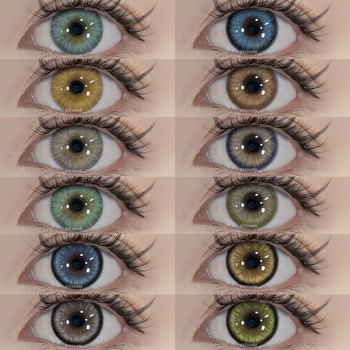
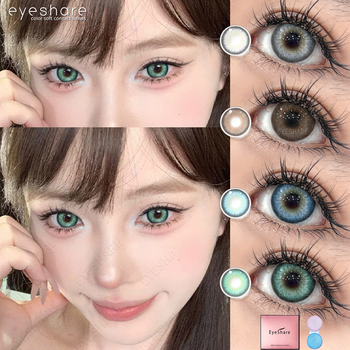
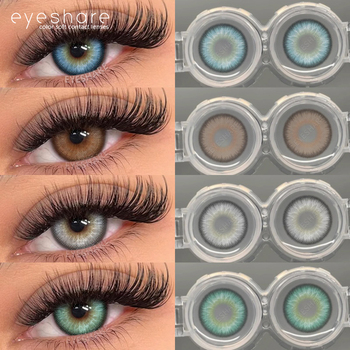
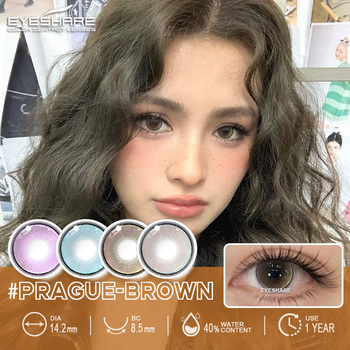
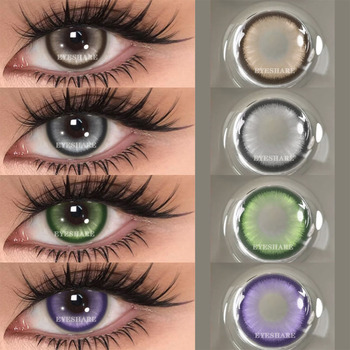
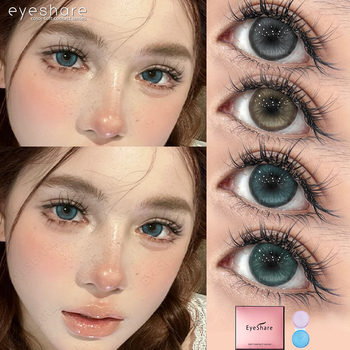
High-Precision Toric Cylinders-0.75 D to -2.75 D | Axis 10°–180°
Sandwich Color EncapsulationZero pigment leakage on cornea
4.8 / 5 Buyer Rating6+ years dedicated export excellence
Technical Insight & Intent Analysis
Engineering Precision: How Toric Cosmetic Contact Lenses Bridge Visual Acuity & Aesthetic Color Expression
Over 47% of optical contact lens wearers exhibit clinically significant astigmatism of 0.75 diopters or greater. Historically, cosmetic contact lens wearers with irregular corneal curvature were relegated to blurry plano or simple spherical prescriptions. Today, toric cosmetic contact lenses represent one of the fastest-growing niches in the global vision care market. At Shenzhen Eyesharelenses Co., Ltd, we combine micrometric cast molding, bio-compatible hydrogel polymers, and prism ballast stabilization to resolve the complex dilemma of visual acuity and cosmetic elegance.
Prism Ballast & Pericon Ballast Geometry
Our engineered bottom-heavy mass profile harnesses gravitational balance and dynamic upper-lid pressure during blinking, ensuring the cylinder axis remains settled within ±5° without shifting the visual color ring.
Sandwich Printing Technology
FDA-compliant bio-compatible colorants are encapsulated between two transparent HEMA polymer coats. This guarantees zero dye detachment and a glassy-smooth ocular surface that reduces lens-to-lid friction.
High Oxygen Dk/t Permeability
Optimized 38% to 42% water content ensures balanced corneal metabolic respiration, preventing neovascularization, hypoxic corneal edema, and chronic end-of-day dryness in extended wear periods.
Product Recommendations
High-Yield Toric Cosmetic Contact Lens Catalog
Curated for optical clinics, luxury cosmetic brands, and authorized B2B distributors requiring stringent stability and vibrant iris coverage.
Engineered for moderate to high astigmatic wearers. Subtle limbal ring structure accentuates natural depth while rotational markers facilitate precise slit-lamp verification.
MOQ 20 pairsUS$1.95–3.40
CE Certified
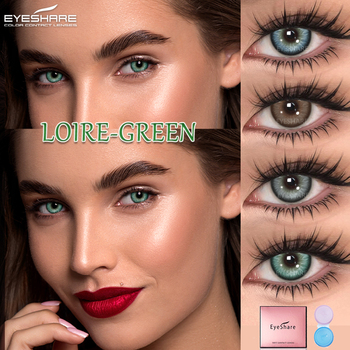
Crystal Emerald CE Toric Cosmetic Lens
CE Class IIa38% HEMASandwich CastPlano to -8.00 D
Compliant with European medical device regulations. Offers ultra-thin peripheral stabilization flanges that significantly minimize foreign-body sensation under the eyelids.
MOQ 10 pairsUS$1.90–3.35
OEM Custom
High-Oxygen OEM Toric Cosmetic Series
14.5 mm DIACustom CYL/AxisPrivate LabelVial / Blister
Tailored for established brand owners seeking custom dot-matrix color designs combined with personalized blister labeling and regulatory barcoding assistance.
High luminosity light-scattering pigments create striking eye color transformation while dynamic stabilization prevents the astigmatic axis from drifting off-center.
MOQ 20 pairsUS$1.80–3.15
High Power Range
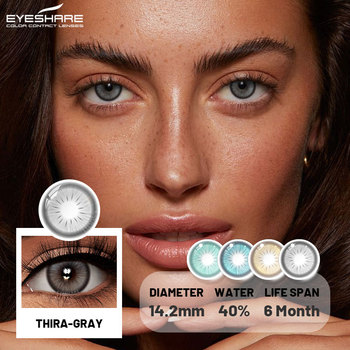
Pearl Grey Astigmatism Corrective Lens
SPH: Up to -8.00CYL: -1.75 / -2.25Soft Hydrogel14.2 mm
Designed specifically for patients suffering from compound myopic astigmatism. Smooth peripheral transition zone maximizes long-term tear exchange.
MOQ 30 pairsUS$1.90–3.25
Amethyst Violet 14.5 mm Toric Lens
14.5 mm EnlargeYearly WearPericon BallastCYL: -1.00 D
Combines subtle iris enlargement circle aesthetics with dedicated toric ballast mechanics, answering youthful consumer demand for doll-eye astigmatic wear.
MOQ 20 pairsUS$1.85–3.20
Caramel Brown 3-Tone Toric Lens
BC 8.6 mmNatural BlendDual Thin ZoneCYL: -0.75 to -2.00
A consistent top-seller across clinical optical stores. Highly delicate color transition mimics human iris crypts with zero artificial borders.
Future Sourcing Trends in Toric Cosmetic Contact Lenses
Comprehensive market analysis for procurement executives navigating changing regulatory frameworks, evolving patient demands, and material engineering advancements.
1. Acceleration of Daily Disposable (1-Day) Toric Formats
While yearly and half-yearly lenses retain commanding positions across emerging markets due to cost efficiency, Tier-1 European, North American, and East Asian markets are rapidly shifting procurement volume toward single-use daily disposable toric cosmetic contacts. Daily modalities maximize ocular health, eliminate lens-case biofilm contamination, and reduce end-user compliance liabilities for prescribing optometrists. Shenzhen Eyesharelenses Co., Ltd is continually investing in high-speed, automated blister packaging and rapid-curing casting lines to support scalable 1-Day private-label programs.
2. Adoption of Third-Generation Silicone Hydrogel Materials
Toric lenses inherently require greater profile thickness variations across the vertical and horizontal meridians to establish rotational ballast. As a consequence, conventional HEMA lenses experience localized oxygen flux bottlenecks. The ongoing transition toward high Dk/t silicone hydrogel matrices guarantees superior oxygen transmissibility across the stabilization prism, completely safeguarding the limbal stem cell microenvironment and dramatically cutting drop-out rates caused by contact-lens-induced dry eye (CLIDE).
3. Direct-to-Doctor (D2D) and Omnichannel Compliance Auditing
Regulatory enforcement bodies globally—including the UK MHRA, EU MDR 2017/745, and US FDA—classify toric cosmetic contact lenses strictly as Class IIa or Class II medical devices. Optical retailers and digital telehealth aggregators are demanding full supply-chain traceability. Forward-looking buyers are auditing manufacturing facilities for documented cleanroom particulate standards, bio-compatibility assays (ISO 10993), and lot-specific stability test data before finalizing vendor contracts.
Manufacturing & R&D Evolution
The Engineering Horizon: How Modern Toric Cosmetic Contact Lenses Are Made
The manufacturing complexity of a toric cosmetic contact lens exceeds that of standard spherical cosmetic lenses by several orders of magnitude. In a conventional cosmetic lens, the rotational position on the ocular surface is irrelevant because the optic zone is rotationally symmetrical. In a toric cosmetic lens, however, optical cylinder power must remain permanently anchored to the patient's specific steep or flat corneal meridian (10° through 180°), while simultaneously maintaining centered, uninterrupted iris pigmentation.
At Shenzhen Eyesharelenses Co., Ltd, our production methodology integrates multi-axis diamond turning of mold inserts with sub-micron CNC precision. By combining CAD-driven surface profiling with proprietary hydrophilic polymer formulations, our production lines achieve repeatable axis stability tolerances within ±3°.
Dynamic Stabilization without Prism Over-Thickness
Laser-Etched Orientation Scribe Marks for Slit-Lamp Verification
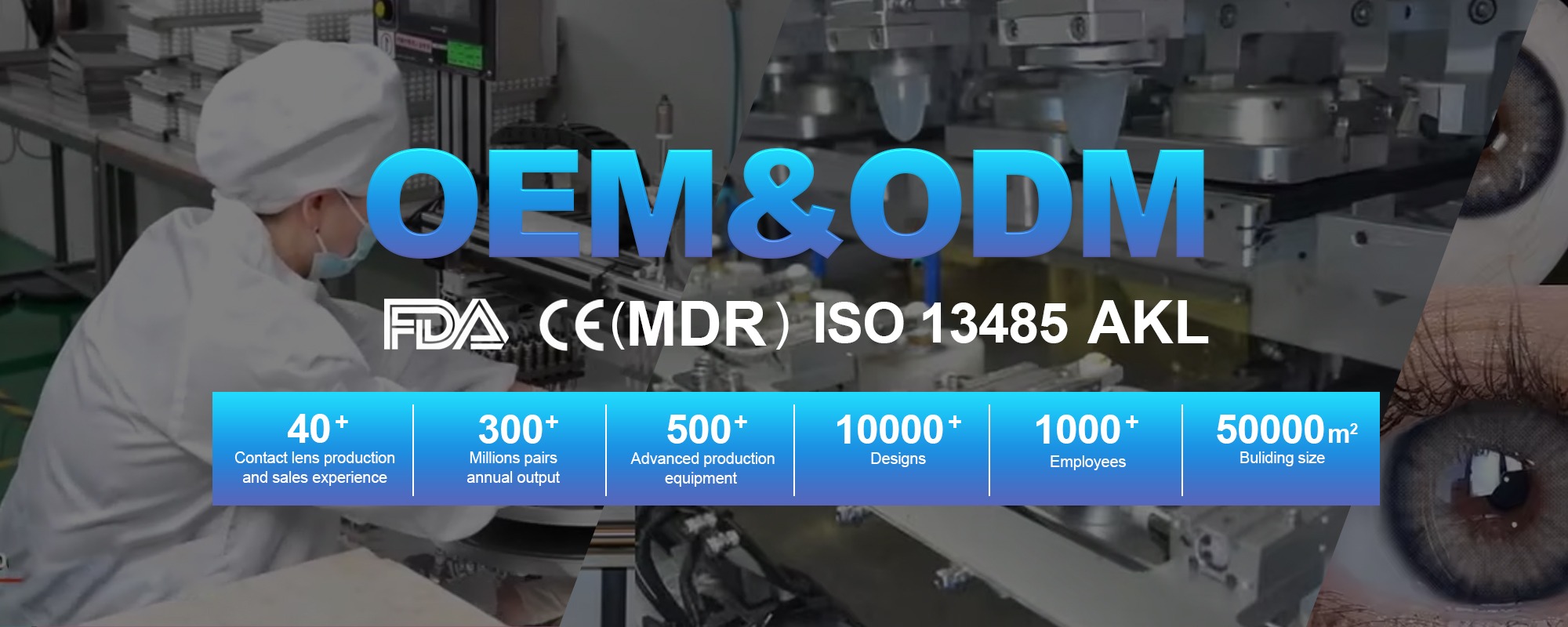
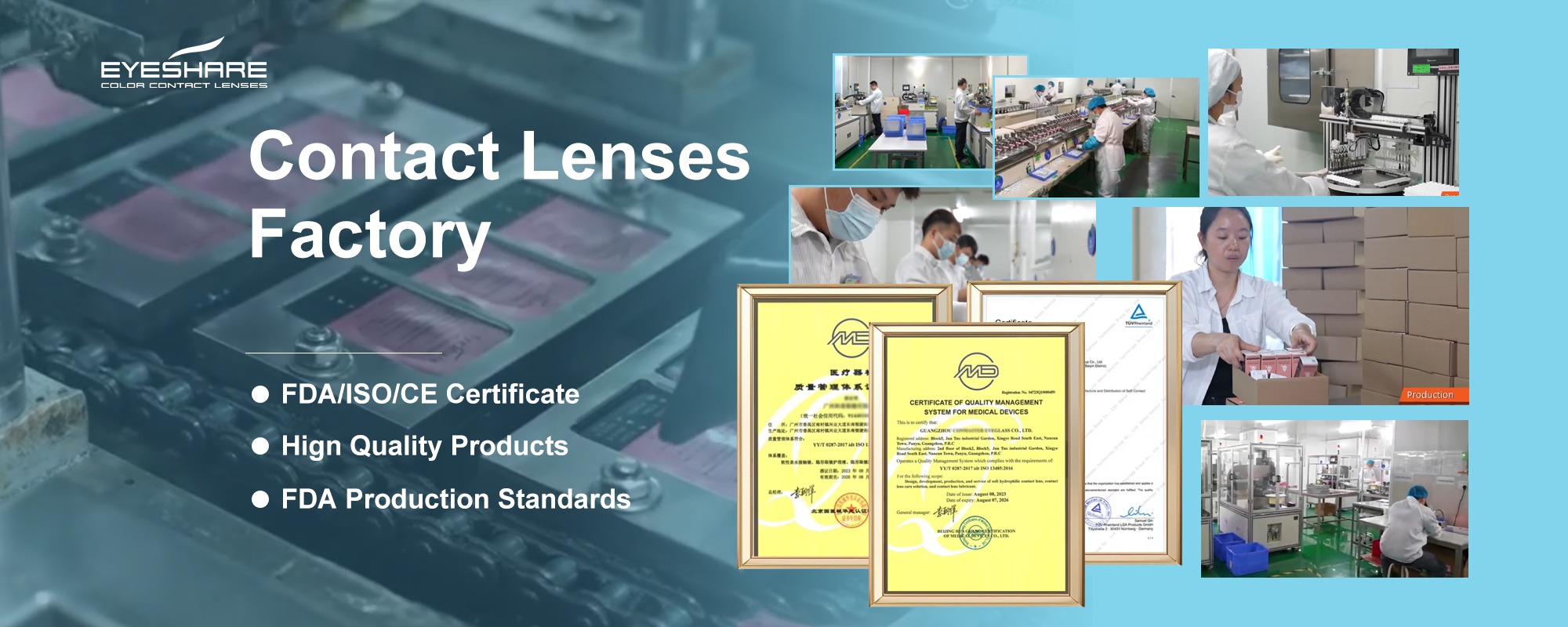
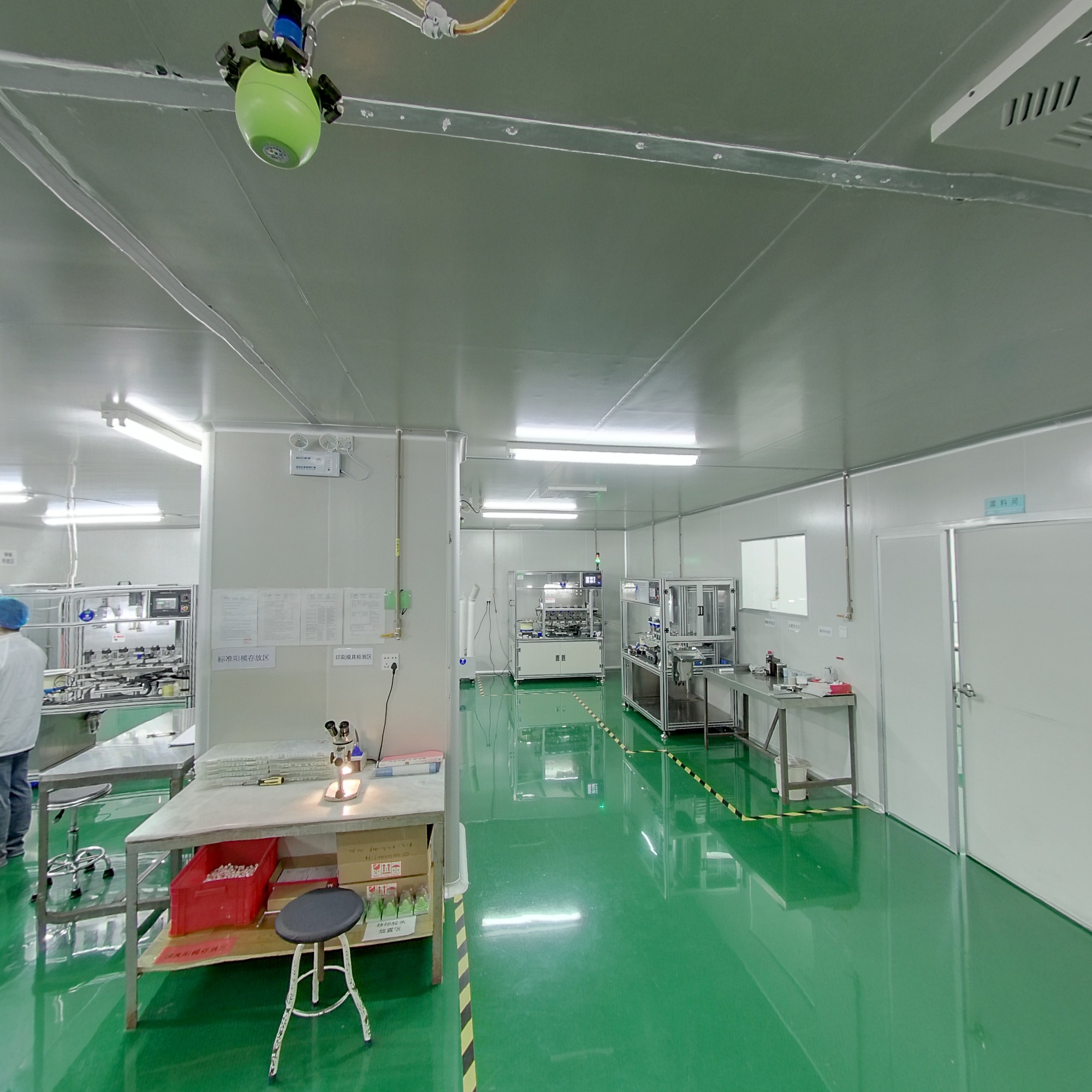
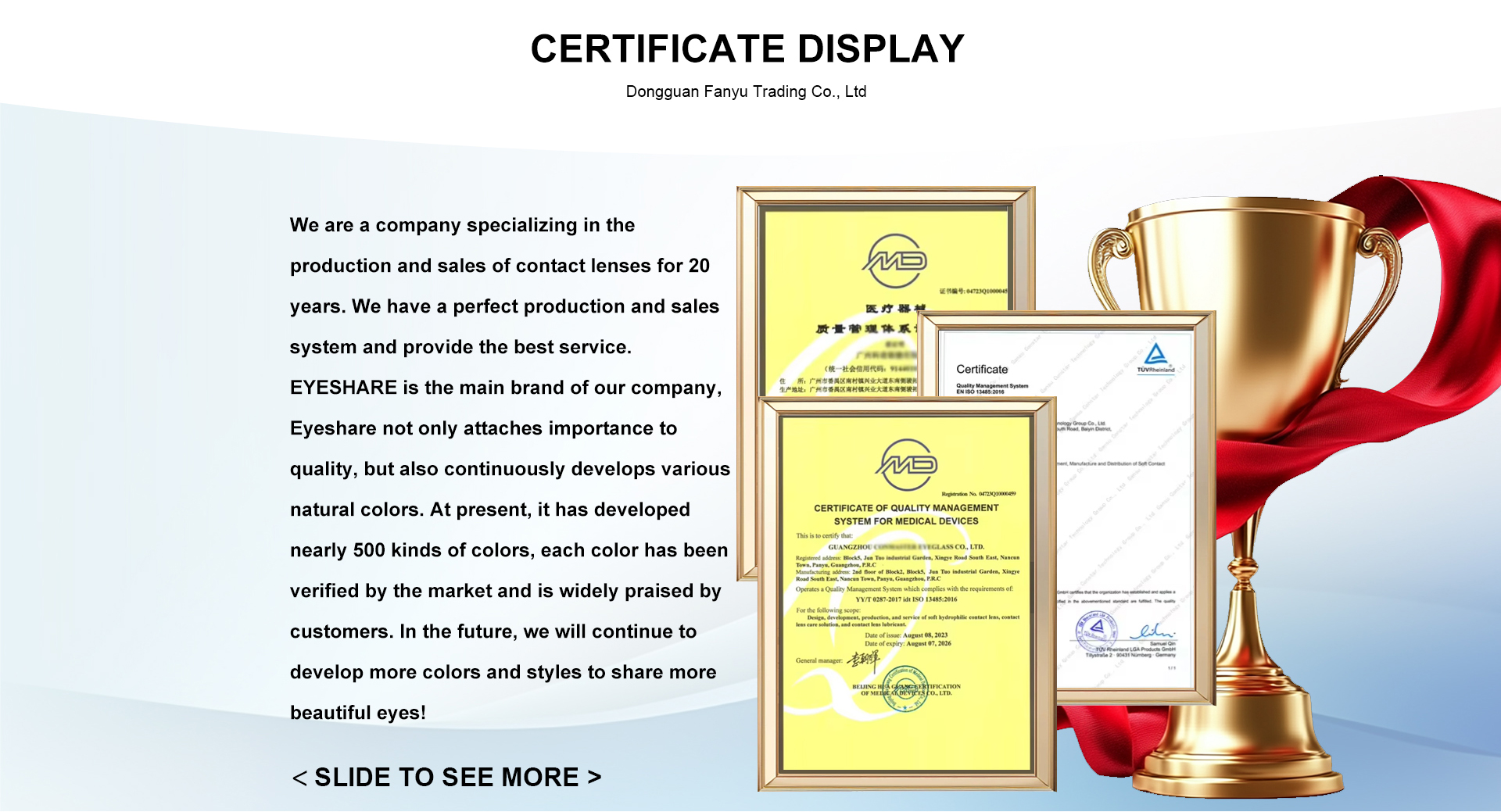
Audited Facility: Cleanrooms, optical test equipment, and QC protocols assessed by SGS Group.
0+Years Exporting
0/5Verified Buyer Rating
0Professional Staff
0+Certified Optical Engineers
Enterprise Capabilities
Why Global Distributors Choose Shenzhen Eyesharelenses Co., Ltd
Building a defensible private-label or clinical-tier toric contact lens brand requires manufacturing consistency, technical transparency, and rock-solid quality assurance.
Shenzhen Eyesharelenses Co., Ltd
SGS Verified Assessed Supplier · 6 Years Optical Leadership
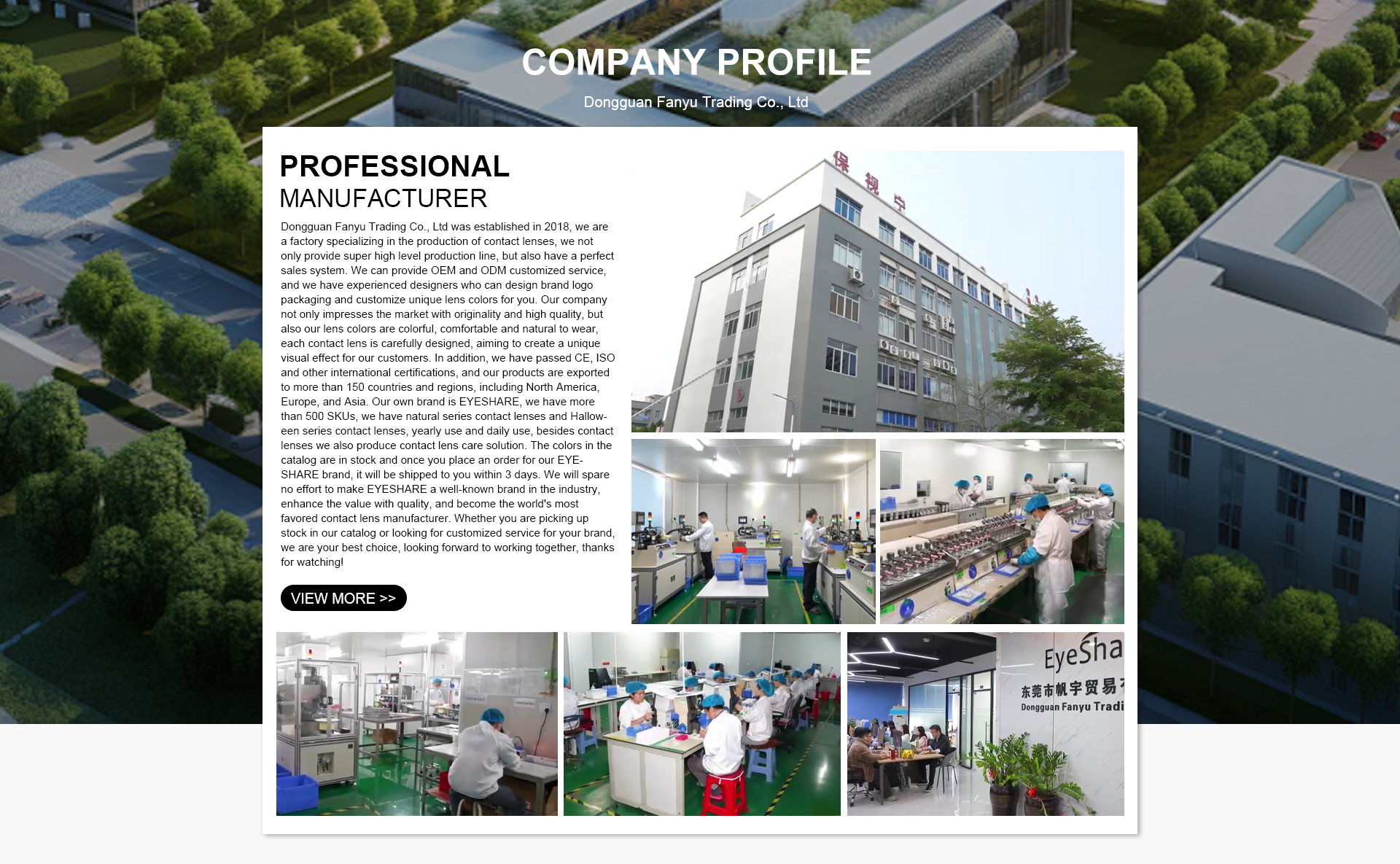
Production facilities, manufacturing equipment, and testing laboratories inspected onsite by SGS Group.
5+ Certified Optical Engineers: Each possessing over 5 years of precision toric mold design and polymer synthesis expertise.
Dedicated International Trade Division: 24 multilingual account managers providing end-to-end B2B order handling.
Multi-Point Interferometric QC: Sphere, cylinder, axis orientation, sag height, base curve, and edge profiles tested across every single production run.
Complete Regulatory Documentation: Technical dossiers, CE certificates, Free Sale Certificates, and batch sterility assurance reports available.
Medical Device Compliance: Guidelines for Global Wholesale Buyers
Because toric cosmetic contact lenses are medical devices that actively correct refractive errors, importing distributors must observe statutory market entry rules:
United Kingdom & EU: Lenses must satisfy MHRA and CE MDR transitional frameworks. In the UK, distribution must adhere to the Opticians Act 1989.
United States: All contact lenses—including decorative and zero-powered lenses—require valid prescription verification and 510(k) cleared pathways.
Batch Release Certification: Shenzhen Eyesharelenses Co., Ltd provides full batch traceability, autoclave validation curves, and biological safety testing data.
Production Campus OverviewCleanroom Production ZoneLogistics & Packaging Facility
End-to-End Solutions
OEM / ODM Private Label Process for Toric Cosmetic Brands
From custom dot-matrix color engineering to final shelf-ready packaging, our five-step turnkey manufacturing protocol turns optical concepts into compliant commercial products.
Prescription & Color Brief
Define desired sphere powers (0.00 to -8.00 D), cylinder ranges (-0.75 to -2.75 D), axis distributions, base curves, and bespoke color schemes.
Prototype & Axis Testing
Engineers produce pre-production samples. Rotational recovery rates and on-eye stabilization dynamics are verified under bio-microscopic simulation.
Custom Packaging Artwork
Turnkey design of sterile blister foils, glass vial caps, retail paperboard packaging, and multi-language Instructions for Use (IFU) leaflets.
Cast Molding & 100% QC
Automated cast molding, wet hydration, 121°C terminal steam sterilization, and full optical interferometric cylinder verification.
Global Air Logistics
Customs clearance documentation, Certificates of Analysis (COA), and expedited freight delivery directly to your regional warehouse.
Reputation & Performance
Verified B2B Procurement Scores
Authentic feedback from licensed optical chains, beauty distributors, and online contact lens brands worldwide.
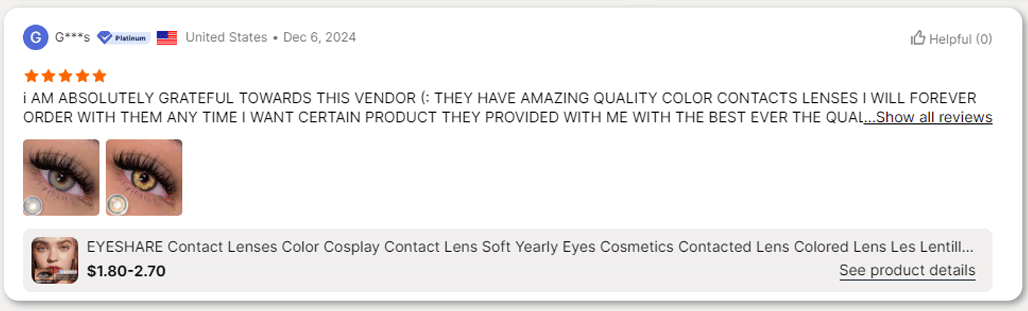
4.8 / 5
Aggregated customer satisfaction rating based on product conformity, cylinder precision, on-time shipping, and packaging integrity.
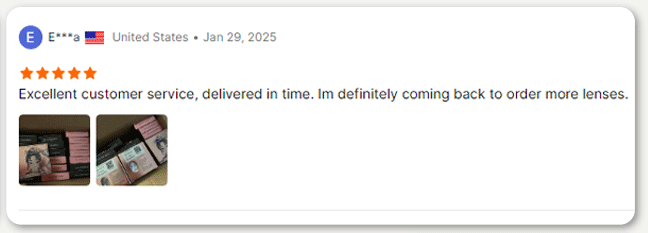
"Our optometry clinics tested Shenzhen Eyesharelenses Co., Ltd toric samples against international standards. Axis alignment error was under 3 degrees, with excellent patient tolerance."
Rapid Communication & Tech Support
"Their optical engineering and trade support answered our bespoke packaging and IFU regulatory questions within 12 hours. Flawless communication from day one."
Reliable Lead Times
"Toric lenses are notoriously difficult to deliver on time due to multi-axis cast complexity. Eyeshare delivered our 10,000-piece order right on schedule."
Packaging & Sterility Seal Quality
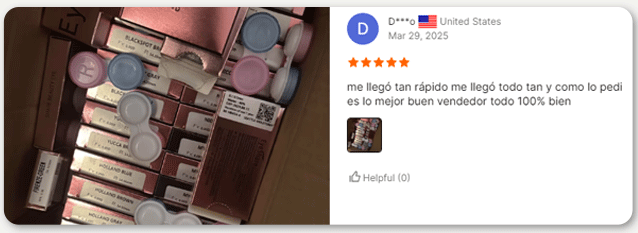
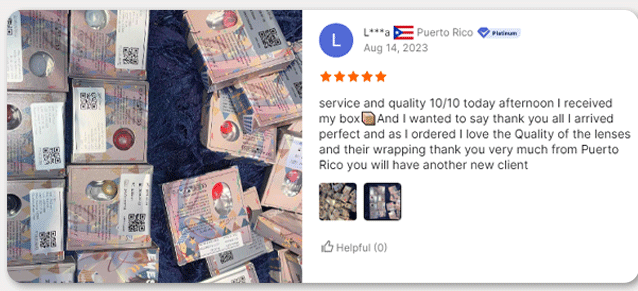
"Zero leakage in international transit. Sterile blister seals and vial aluminum peel-offs survived long-haul freight in perfect condition."
Comprehensive Procurement FAQ
Frequently Asked Questions About Toric Cosmetic Contact Lenses
Clear, authoritative answers to the primary technical, commercial, and regulatory inquiries submitted to our optical engineering team.
What stabilization mechanism do your toric cosmetic contact lenses use?
Our toric cosmetic contact lenses incorporate dual-thin-zone dynamic stabilization combined with a modified pericon prism ballast geometry. This engineered thickness gradient utilizes blink dynamics rather than gravitational pull alone. When the eyelid closes during blinking, the squeeze pressure naturally drives the thicker ballast zones into equilibrium, maintaining the lens within ±5° of the designated cylinder axis. This ensures crisp visual acuity without causing excessive bottom-edge thickness or corneal hypoxia.
How does sandwich colour encapsulation prevent pigment exposure on toric lenses?
We employ a precision micro-sandwich casting technique where the cosmetic pigments are hermetically embedded between two ultra-smooth layers of bio-compatible HEMA polymer. The color pigments never come into contact with corneal epithelial cells or the palpebral conjunctiva. This preserves ocular surface integrity, minimizes friction, and eliminates risks of dye leaching into the tear film.
What cylinder (CYL) and axis parameters are available for wholesale orders?
For wholesale and OEM orders, we provide cylinder powers ranging from -0.75 D to -2.25 D in 0.50 D steps (extended to -2.75 D for bespoke batches), with axis angles available around the clock from 10° to 180° in 10° increments. Sphere powers span from plano (0.00 D) down to -8.00 D in 0.25 D increments (0.50 D increments beyond -6.00 D). Custom base curves (8.5 mm and 8.6 mm) and diameters (14.0 mm to 14.5 mm) can also be scheduled.
Can opticians and private brands order custom toric shades with low MOQs?
Yes. While our standard catalog toric cosmetic models maintain low minimums starting from 20 to 50 pairs per specification for clinical sampling, bespoke OEM color formulation and custom blister/vial packaging projects are offered with industry-competitive production minimums. Our design team assists with blister foil prepress artwork, outer box structuring, and regulatory barcoding.
Are Eyeshare toric cosmetic contact lenses certified for medical device export?
Yes. Shenzhen Eyesharelenses Co., Ltd is an audited medical device supplier with onsite assessments conducted by SGS Group. Lenses conform to ISO 13485 standards, hold CE regulatory documentation, and can be supplied with complete Declarations of Conformity, technical files, and compliant multi-language Instructions for Use (IFU) suitable for submission to regional health authorities.
How can optical practitioners confirm the lens is sitting on the correct axis?
Every toric cosmetic contact lens produced by Shenzhen Eyesharelenses Co., Ltd features micro-laser-etched orientation scribe marks located at the 6 o'clock position (or dual orientation marks at 3 and 9 o'clock depending on the stabilization design). During slit-lamp bio-microscopy, the optician or practitioner can easily visualize these marks to measure rotational misalignments and apply LARS (Left-Add, Right-Subtract) compensation rules if required.
Request Your Wholesale Toric Cosmetic Contact Lens Catalog
Partner with Shenzhen Eyesharelenses Co., Ltd. Connect directly with our optical engineering and private label specialists to receive wholesale volume pricing, sample kits, and complete regulatory compliance dossiers.